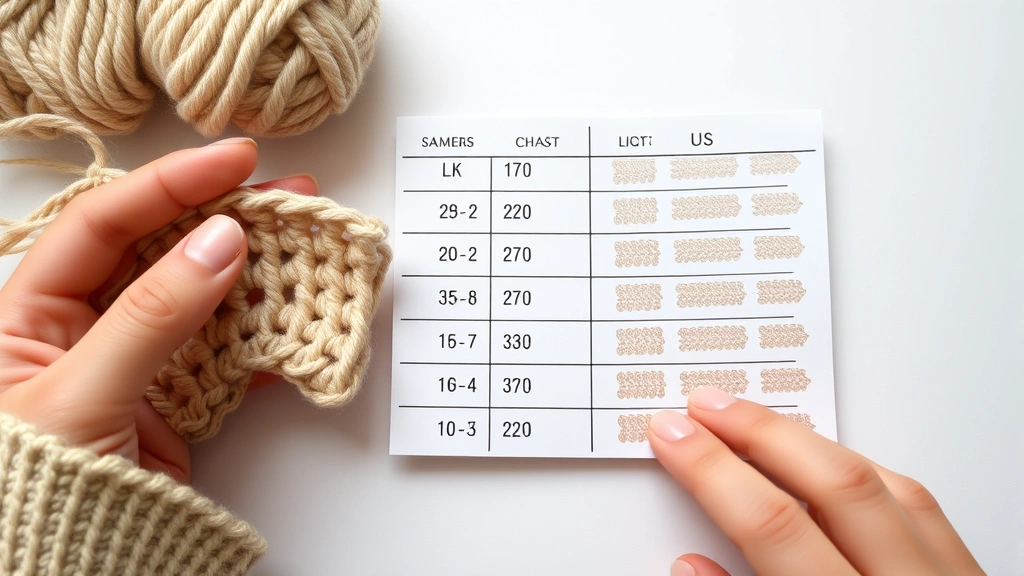
You know that feeling when you’re scrolling through Pinterest at 2 AM and stumble across the most gorgeous crochet blanket pattern? Your heart skips a beat, you save it immediately, and then reality hits – it’s written in UK crochet terms, and you’re sitting there with your US pattern brain trying to figure out what the heck a “treble crochet” is supposed to be.
I’ve been there more times than I care to admit. Nothing kills the crafting excitement quite like realizing that what you thought was going to be a simple single crochet project is actually calling for something completely different. The confusion between US and UK crochet terminology has probably caused more frogging (that’s ripping out stitches, for the newbies) than dropped stitches and tangled yarn combined.
Here’s the thing that really gets me: the same stitch names mean completely different things depending on which side of the pond the pattern comes from. A UK double crochet is actually a US single crochet. Mind-blowing, right? It’s like speaking two different languages that sound almost the same but will leave you with a project that’s either too tall or too short.
Quick Answer
UK crochet terms are one step “higher” than US terms – a UK double crochet equals a US single crochet, UK treble equals US double crochet, and so on. Always check which terminology your pattern uses before starting to avoid sizing disasters.
The Basic Differences Between US and UK Terms
The fundamental difference between US and UK crochet terminology comes down to how each system counts and names stitches. In the US system, we start counting from the single crochet as our baseline. The UK system, however, starts counting from what we Americans call a slip stitch, which they don’t really count as a “proper” stitch.
This means that every UK stitch name is essentially one level “higher” than its US counterpart. When a UK pattern calls for a double crochet, they’re talking about a stitch that has one yarn over – which is exactly what we call a single crochet in the US. It’s not that one system is right and the other is wrong; they just developed different naming conventions over time.
Think of it like this: imagine if one country decided to call the ground floor “floor one” while another country called it “floor zero.” Same floor, different names, but if you’re trying to meet someone and you don’t know which system they’re using, you’re going to end up on different levels entirely.
The historical reason for this difference goes back to how crochet developed in different regions. US crochet terminology evolved separately from UK terminology, and by the time international pattern sharing became common, both systems were already well established. Now we’re stuck with this delightful confusion, but once you understand the pattern, it’s actually pretty straightforward to navigate.
Complete Stitch Name Conversion Chart
Here’s the conversion chart that I keep bookmarked on my phone, because let’s be honest, I can never remember whether a UK treble is a US double or triple crochet when I’m standing in the yarn aisle at 9 PM:
| UK Term | US Term | Abbreviation (UK) | Abbreviation (US) |
|---|---|---|---|
| Slip Stitch | Slip Stitch | ss | sl st |
| Double Crochet | Single Crochet | dc | sc |
| Half Treble | Half Double Crochet | htr | hdc |
| Treble Crochet | Double Crochet | tr | dc |
| Double Treble | Triple Crochet | dtr | tr |
| Triple Treble | Double Triple Crochet | ttr | dtr |
The slip stitch is the only one that stays the same – thank goodness for small mercies! Everything else shifts up by one level. I’ve found that the easiest way to remember this is to think “UK is one up from US.” When you see a UK pattern calling for double crochet, automatically think “single crochet” in your US brain.
Now, here’s where it gets a bit tricky with the abbreviations. UK patterns often use “dc” for double crochet (which is our single crochet), while US patterns use “dc” for double crochet. Same abbreviation, completely different stitches. This is why checking which system your pattern uses is absolutely crucial before you start.
Pro tip: I always write the US equivalent next to UK terms when I’m working from a UK pattern. It saves me from having to flip back to a conversion chart every few minutes.
How to Identify Which System Your Pattern Uses
Most well-written patterns will tell you upfront which terminology they’re using, but not all of them do. Here are the detective skills I’ve developed over the years to figure out which system I’m dealing with:
First, look for explicit statements. Good patterns will say something like “This pattern uses US terminology” or “Written in UK terms” right at the beginning. If you see this, you’re golden – no guessing required.
If there’s no clear statement, look at the stitch abbreviations and context clues. UK patterns often use “tr” for what they call treble crochet, while US patterns use “dc” for double crochet when talking about the same stitch height. If you see a lot of “tr” abbreviations, you’re probably looking at a UK pattern.
Another dead giveaway is the language used throughout the pattern. UK patterns might use terms like “tension” instead of “gauge,” or “yarn over hook” instead of “yarn over.” They might also reference yarn weights differently – UK patterns often use ply numbers (like 4-ply or 8-ply) while US patterns use the Craft Yarn Council weight system (DK, worsted, bulky, etc.).
When working with crochet patterns, pay attention to the designer’s location or website. If the pattern comes from a UK, Australian, or European designer, there’s a good chance it uses UK terminology. US designers obviously tend to use US terms, but international designers can go either way.
Quick Visual Test
Here’s a sneaky trick I use: look at the finished measurements and the stitches called for. If a pattern is calling for mostly “double crochet” but the finished piece seems unusually small for the amount of work described, it might be using UK terminology where “double crochet” actually means single crochet.
Understanding Height and Size Differences
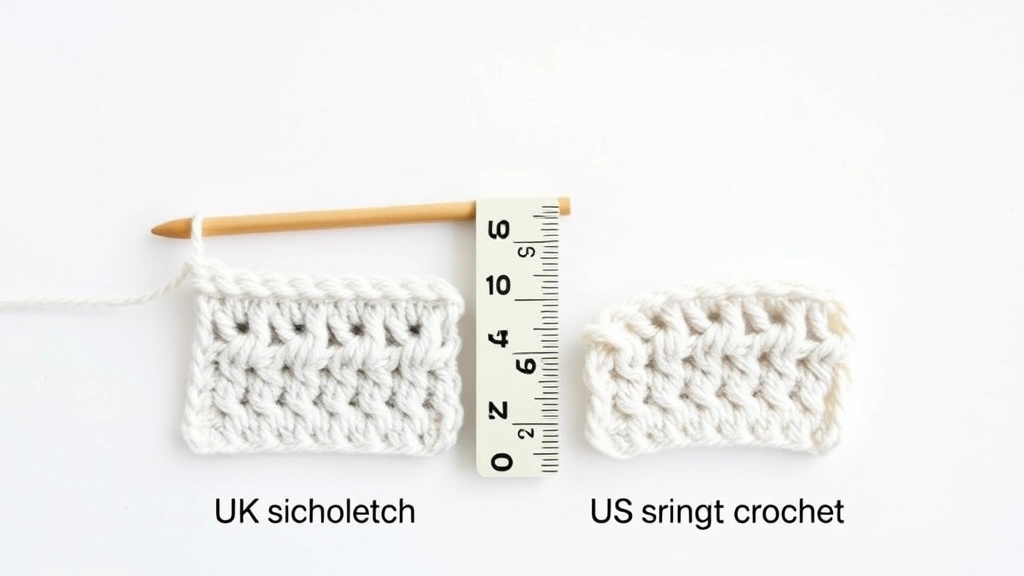
The height difference between equivalent stitches in US and UK terminology can seriously affect your finished project if you get it wrong. A UK double crochet (US single crochet) creates a much shorter, denser fabric than a US double crochet (UK treble crochet).
Let me give you a real example that happened to me: I was making a baby blanket pattern that I thought called for US double crochet throughout. After about 10 rows, I realized the blanket was growing way faster than the pattern suggested it should. Turns out, it was a UK pattern, and I should have been using single crochet. My “baby” blanket was turning into a queen-size bedspread!
The height differences are pretty significant:
- UK double crochet (US single crochet): About 1/4 inch tall
- UK treble crochet (US double crochet): About 1/2 inch tall
- UK double treble (US triple crochet): About 3/4 inch tall
This means if you accidentally use US double crochet when the pattern calls for UK double crochet, your project will be roughly twice as tall as intended. That’s not just a little oops – that’s a complete do-over situation.
The density of the fabric changes too. Single crochet creates a tight, sturdy fabric that’s great for items that need structure, like amigurumi projects or pot holders. Double crochet creates a more open, drapey fabric that works well for blankets and scarves. Using the wrong stitch doesn’t just change the size – it changes the entire character of the finished piece.
Always make a gauge swatch when switching between US and UK patterns, even if you think you know what you’re doing. The difference in fabric drape can be surprising.
Most Common Mistakes and How to Avoid Them
After years of helping other crocheters troubleshoot their projects, I’ve noticed the same mistakes happening over and over again. Here are the big ones and how to dodge them:
The “dc” Trap
This is the biggest culprit. Both systems use “dc” as an abbreviation, but they mean completely different stitches. In UK patterns, “dc” means double crochet (which is US single crochet). In US patterns, “dc” means double crochet (which is UK treble crochet). I’ve seen people work entire granny squares with the wrong stitch because of this confusion.
My solution: When I’m working with a pattern that uses unfamiliar terminology, I actually write out the full stitch names instead of using abbreviations until I’m confident I’ve got it right.
Assuming All Online Patterns Use US Terms
Just because you found a pattern on Pinterest or Ravelry doesn’t mean it uses US terminology. International designers share patterns globally, and many don’t think to specify which system they’re using because it’s obvious to them.
I always check the designer’s profile or website to see where they’re located. If they’re from the UK, Australia, or Europe, I assume UK terminology unless stated otherwise.
Not Checking Gauge with the Right Stitch
This one’s sneaky. You might think you’re making gauge, but if you’re using the wrong stitch equivalent, your gauge swatch is meaningless. I learned this the hard way with a sweater pattern that ended up three sizes too big because I was essentially using a taller stitch throughout.
Always confirm which terminology the pattern uses before making your gauge swatch. Better yet, make two gauge swatches – one with what you think is the right stitch, and one with the equivalent stitch from the other system, just to be absolutely sure.
Mixing Systems in the Same Project
Sometimes you’ll find a pattern that references other tutorials or techniques that might use different terminology. For example, a UK pattern might link to a US tutorial for a specific technique. If you’re not paying attention, you might switch systems mid-project without realizing it.
Quick Conversion Tips and Tricks
Here are the strategies I’ve developed to make conversions as painless as possible:
The “One Up” Rule
Remember that UK terms are generally “one up” from US terms. When you see a UK stitch name, think of the US stitch that’s one level shorter. UK treble = US double, UK double treble = US triple, and so on. This mental shortcut works for about 90% of conversions.
Create Your Own Pattern Notes
When I’m working from a UK pattern, I go through and write the US equivalent next to every stitch instruction before I start. It takes an extra 10 minutes upfront, but it saves me from constantly stopping to convert while I’m in the flow of crocheting.
For example, if the original pattern says “Row 1: 1 ch, 1 dc in each st to end,” I’ll write “Row 1: 1 ch, 1 sc in each st to end” right underneath it.
Use Online Conversion Tools
There are several good online converters that can translate entire patterns from one system to another. While I don’t rely on them completely (they can miss context clues), they’re great for getting a quick overview of what stitches you’ll actually be using.
Learn Both Systems
This might sound crazy, but I actually recommend learning to read both US and UK terminology fluently. It opens up so many more pattern options! UK designers often have different aesthetic sensibilities and construction techniques that are really worth exploring.
Start by working small projects in the “foreign” terminology until the conversions become automatic. I started with dishcloth patterns because they’re quick, forgiving, and use basic stitches.
Don’t be afraid to reach out to pattern designers if you’re unsure about terminology. Most are happy to clarify, and they often appreciate the feedback about making their patterns more internationally accessible.
Common Questions
How do I know if a free pattern online uses US or UK terms?
Look for explicit statements first, then check the designer’s location and the abbreviations used. UK patterns often use “tr” frequently, while US patterns use “dc” for similar stitch heights. When in doubt, look at the finished size compared to the stitches called for – if it seems off, you might be dealing with a different terminology system.
Can I just use a conversion app for the whole pattern?
Conversion apps are helpful for getting started, but they can miss nuances and context. I recommend using them as a starting point, then going through the pattern manually to make sure everything makes sense. Some stitch combinations and techniques don’t translate directly through automated tools.
What happens if I use the wrong terminology accidentally?
Your project will likely be the wrong size – either much larger or much smaller than intended. The fabric texture will also be different, which can affect drape and structure. If you catch the mistake early, you can usually frog back and restart. If you’re well into the project, you might need to adjust the pattern or embrace the new size.
Are there any stitches that are the same in both systems?
Yes! Slip stitches, chain stitches, and most specialty stitches (like popcorns or clusters) are typically the same in both systems. It’s mainly the basic height stitches (single, double, triple, etc.) that have different names between the systems.
Why don’t all patterns just specify which system they use?
Many designers assume their audience will know which system they’re using based on their location or previous patterns. It’s becoming more common to specify, especially as international pattern sharing increases, but it’s not universal yet. Always check if you’re unsure!
Should I learn both systems or just stick with one?
I’d recommend at least familiarizing yourself with both systems, even if you primarily use one. It dramatically expands your pattern options and helps you understand the global crochet community better. Plus, once you understand the conversion pattern, it becomes pretty automatic.
Do yarn weights and hook sizes differ between US and UK patterns?
Hook sizes can be listed differently – UK patterns might use metric measurements while US patterns use letter/number systems. Yarn weights are often described differently too, with UK patterns using ply numbers instead of the US weight categories. Always check the actual yarn specifications rather than just the category names.
What’s the best way to practice converting between systems?
Start with simple projects like basic scarves or dishcloths using patterns from the “other” system. Work through the conversions slowly and make notes. After a few projects, the pattern recognition becomes much more natural. I also recommend joining international crochet communities online where both systems are used regularly.
Understanding the differences between US and UK crochet terminology might seem overwhelming at first, but it’s honestly one of those things that clicks once you get the basic pattern down. The “one up” rule covers most situations, and after working through a few international patterns, you’ll start recognizing the differences automatically.
Don’t let terminology confusion keep you from trying beautiful patterns from around the world. Some of my favorite projects have come from UK designers who approach construction and shaping in completely different ways than I was used to. The slight extra effort of conversion has been so worth it for the expanded creative possibilities.
Keep that conversion chart handy, take your time with the first few international patterns, and remember that every experienced crocheter has made the US/UK terminology mistake at least once. It’s practically a rite of passage! Now go forth and explore all those gorgeous patterns you’ve been bookmarking – regardless of which side of the pond they come from.