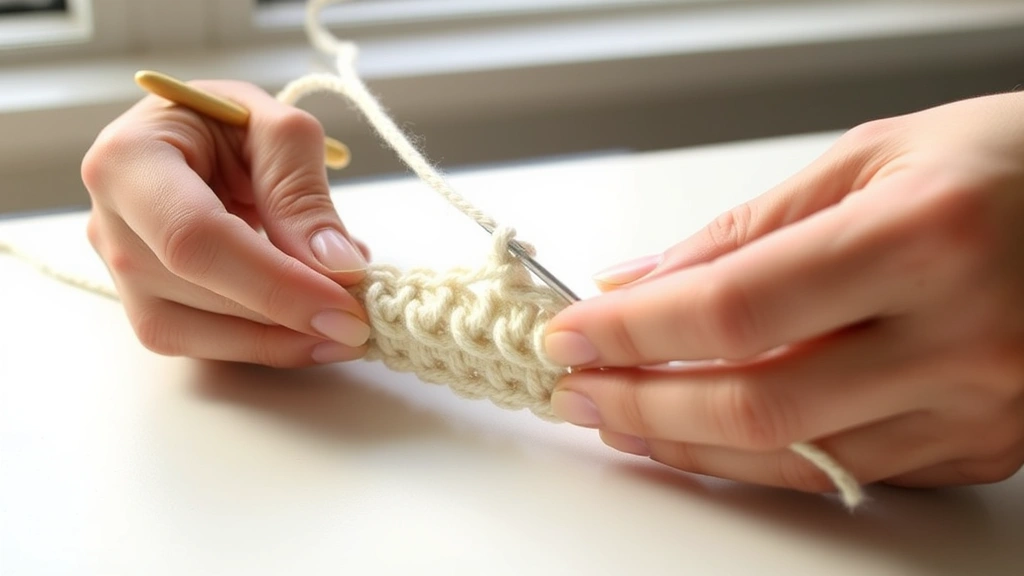
You know that feeling when you’re scrolling through crochet patterns and see “Foundation Single Crochet” in the instructions, and your heart sinks a little? I totally get it. For the longest time, I’d see FSC in patterns and either skip them entirely or try to substitute with a regular chain and single crochet row – which never quite worked out the way I hoped.
Here’s the thing though: once you actually learn foundation single crochet, it becomes one of those techniques you wonder how you ever lived without. It’s like discovering that you can actually make your starting edge as stretchy and neat as the rest of your project, instead of dealing with that tight, unforgiving chain foundation that never seems to match your gauge.
I remember the first time I successfully used foundation single crochet for a baby blanket pattern. The difference was immediate – the bottom edge had the same lovely drape as the sides, and when I went to add a border later, everything laid perfectly flat. No more wrestling with that stiff chain edge that seemed determined to curl up on itself.
The technique itself isn’t actually complicated once you break it down, but like most crochet skills, it takes a bit of practice to get the rhythm down. What I love about foundation single crochet is that it combines your starting chain and first row into one step, which means you’re essentially getting a head start on your project while creating a much more professional-looking foundation.
Quick Answer
Foundation single crochet (FSC) creates your starting chain and first row simultaneously, resulting in a stretchy, professional edge. Start with 2 chains, work your first FSC, then continue building both the chain and single crochets together as you go.
What is Foundation Single Crochet
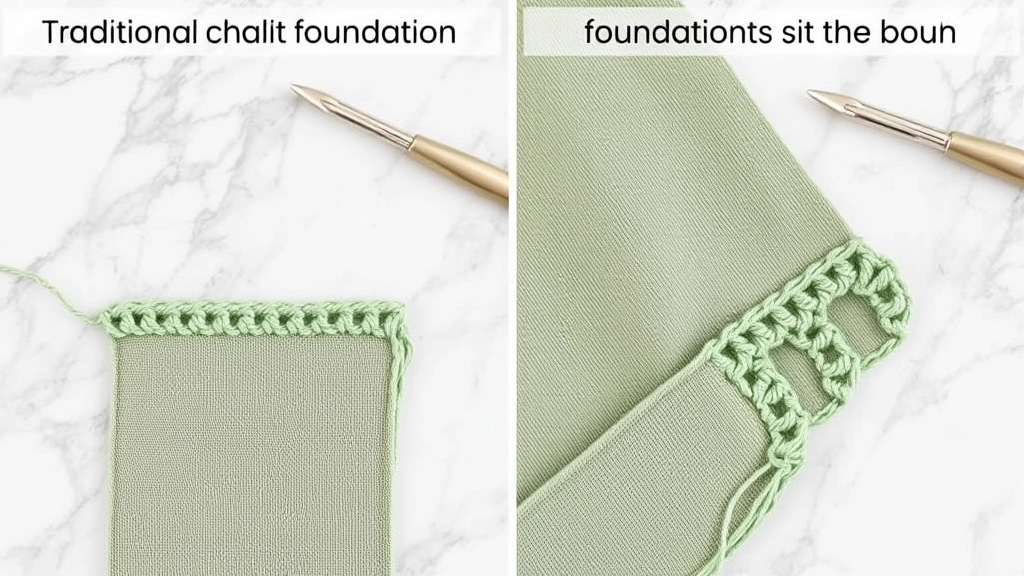
Foundation single crochet is a technique that combines making your foundation chain and working your first row of single crochet stitches into one continuous process. Instead of chaining a specific number and then working back across, you’re literally building your foundation as you create your first row of actual stitches.
Think of it like this: with traditional crochet, you make a chain, then work into that chain. With foundation single crochet, you’re making the chain and the stitches at the same time. Each foundation single crochet creates both a chain stitch below and a single crochet stitch above.
The beauty of this technique lies in its flexibility and appearance. Traditional chain foundations can be notoriously tight and inflexible, especially if you’re a tight crocheter. They also tend to look different from the rest of your work – sometimes looser, sometimes tighter, and often with a different texture altogether.
Why Foundation Stitches Matter
The Craft Yarn Council recognizes foundation stitches as an important technique for creating professional-looking crochet work. When you use foundation single crochet, your starting edge has the same stretch and appearance as your working rows, which makes blocking easier and gives your finished project a more polished look.
I’ve found this particularly helpful when working on dishcloth patterns where you want all edges to behave similarly, or when making garments where the foundation edge will be visible and needs to match the overall fabric tension.
Pro Tip: Foundation single crochet uses about 20% more yarn than a traditional chain foundation, so factor that into your yardage calculations for larger projects.
When to Use Foundation Single Crochet
Not every project needs foundation single crochet, but there are definitely times when it’s the superior choice. I’ve learned to automatically reach for this technique in specific situations, and it’s made my crochet life so much easier.
First, any project where the foundation edge will be visible benefits enormously from FSC. Think scarf patterns, blankets, or garments where that starting edge isn’t hidden in a seam. The foundation edge looks intentional and finished rather than like an afterthought.
Second, if you’re working with stretchy yarns or creating items that need flexibility, foundation single crochet is your friend. Cotton yarns, bamboo blends, and especially anything with elastic fibers work beautifully with this technique because the foundation can stretch along with the fabric.
Best Project Types for FSC
| Project Type | Why FSC Works | Alternative Consideration |
|---|---|---|
| Blankets | Even drape, easier border attachment | Traditional chain for very large projects |
| Dishcloths | All edges match in stretch and appearance | Skip if using stiff cotton |
| Scarves | Professional finish, no curling edges | Consider yarn weight and drape |
| Garment panels | Consistent gauge, easier seaming | Check pattern requirements first |
I particularly love using foundation single crochet when I’m working bottom-up on sweaters or cardigans. The hem edge stays put and doesn’t flip up or curl, which is especially important with lighter weight yarns that tend to be more mobile.
One thing I learned the hard way: if your pattern specifically calls for a certain number of chain stitches, double-check whether the designer intended for you to work into the back bump of the chain or just the top loops. This affects how many foundation single crochets you’ll need to achieve the same width.
Step-by-Step Tutorial
Let me walk you through foundation single crochet step by step. I’m going to assume you’re comfortable with basic single crochet and chain stitches, but I’ll break this down so it makes sense even if you’re feeling uncertain.
- Start with your slip knot and initial chains
Make a slip knot on your hook, then chain 2. These two chains are crucial – the first chain will become part of your foundation, and the second gives you the height you need for your first single crochet.
- Create your first foundation single crochet
Insert your hook into the second chain from your hook (the first chain you made). You’ll work this just like a regular single crochet: yarn over, pull through (2 loops on hook), yarn over, pull through both loops. You now have your first foundation single crochet complete.
- Set up for the next stitch
Here’s where it gets interesting. Chain 1, then insert your hook into the bottom of the stitch you just made – specifically, into that chain-like loop at the base of your single crochet. This is what creates your foundation as you go.
- Continue the pattern
Work another single crochet into that base chain: yarn over, pull through, yarn over, pull through both loops. Chain 1, then insert into the base of this new stitch. Repeat this process for each foundation single crochet you need.
- Finish your foundation row
Continue until you have the number of stitches your pattern calls for. Your last stitch doesn’t need the final chain 1 since you’re moving on to the next row.
Getting the Tension Right
The trickiest part of foundation single crochet is maintaining consistent tension. Your foundation chains need to be loose enough to work into easily, but not so loose that they create gaps in your work. I find it helpful to use a hook one size larger than my pattern calls for, just for the foundation row, then switch to the correct size for subsequent rows.
Counting Tip: Each foundation single crochet counts as one stitch in your stitch count, just like regular single crochet. The chain portions don’t count separately.
Common Mistakes and How to Fix Them
I’ve made pretty much every mistake possible with foundation single crochet, so let me save you some frustration by sharing the most common ones and how to avoid them.
The biggest mistake I see (and definitely made myself) is working into the wrong part of the previous stitch. You want to insert your hook into that chain-like loop at the very bottom of your stitch, not into the side or into the actual single crochet portion. It takes a few tries to train your eye to see exactly where this is.
Another common issue is inconsistent tension in the foundation chains. Some crocheters make them too tight, which makes it nearly impossible to work the next stitch. Others make them too loose, creating gaps and uneven edges. The key is finding that sweet spot where the chain is loose enough to insert your hook easily but not so loose that it looks sloppy.
Fixing Tension Problems
If you’re struggling with tight foundation chains, try holding your yarn a bit looser or using a larger hook just for the chain portions. You can even practice the motion without yarn first to get the muscle memory down.
For loose chains, focus on maintaining consistent yarn tension throughout the process. I like to anchor my working yarn with my pinky and use my index finger to control the flow – this gives me more control over how much yarn I’m allowing for each chain.
Here’s something that really helped me: practice foundation single crochet with a smooth, light-colored yarn first. Dark or textured yarns make it harder to see exactly where you should be inserting your hook, especially when you’re learning.
If you mess up and need to frog back a few stitches, go slowly. Foundation stitches can be trickier to unravel than regular rows because you’re undoing both the chain and the single crochet portions. Take your time and make sure you’re picking up the right loops when you put your hook back in.
Best Projects for Foundation Single Crochet
Now that you’ve got the technique down, let’s talk about where foundation single crochet really shines. I’ve used this technique on everything from quick coaster patterns to complex afghan designs, and there are definitely projects where it makes a huge difference.
For hat patterns worked from the brim up, foundation single crochet creates a professional-looking edge that doesn’t need additional finishing. The stretch matches the rest of the hat, so you don’t get that weird tight band around the forehead that can happen with traditional chain foundations.
Baby items are another category where FSC really excels. When you’re making receiving blankets or baby sweaters, that soft, stretchy foundation edge is so much more comfortable against delicate skin than a stiff chain foundation. Plus, it holds up better to frequent washing and stretching.
Yarn Weight Considerations
| Yarn Weight | Hook Size | FSC Benefits | Special Notes |
|---|---|---|---|
| Lace/Fingering | 2.25-3.5mm | Prevents tight foundation edge | Use good lighting, go slowly |
| Sport | 3.5-4.5mm | Great for garments | Perfect for learning FSC |
| DK | 4.5-5.5mm | Versatile for most projects | Most forgiving weight |
| Worsted | 5.5-6.5mm | Excellent stitch definition | Easy to see your work |
| Chunky | 6.5mm+ | Quick, dramatic results | Watch for loose chains |
I’ve found that foundation single crochet works particularly well with natural fiber yarns that have some give to them. Cotton, bamboo, and wool blends all respond beautifully to this technique. Acrylic yarns work too, but you might need to pay extra attention to your tension since they don’t have the natural stretch of fibers like wool.
Project Planning: When adapting a pattern to use foundation single crochet instead of chain + single crochet, you’ll typically need the same number of FSC stitches as the pattern calls for single crochet stitches, not chains.
Troubleshooting Your Foundation Chain
Even after you’ve got the basic technique down, foundation single crochet can still throw you some curveballs. Let me share some troubleshooting tips that have saved my sanity more than once.
If your foundation edge is coming out wavy or ruffled, you’re probably making your foundation chains too loose. This creates extra length in the foundation that the single crochet portion can’t accommodate, so the fabric has to ruffle to fit. Try tightening up those chain stitches just a bit.
On the flip side, if your foundation edge is pulling in or cupping, your chains are too tight. This restricts the width of your foundation, forcing the fabric to cup inward. Loosen up those chains, or consider going up a hook size just for the foundation row.
Gauge Issues with Foundation Single Crochet
Here’s something that caught me off guard initially: foundation single crochet can affect your overall gauge. Because you’re essentially creating a different type of first row, your gauge swatch might measure differently than if you’d used a traditional chain foundation.
Always make your gauge swatch using the same foundation method you plan to use in your project. If your pattern calls for foundation single crochet, use FSC in your swatch. If you’re adapting a pattern to use FSC instead of regular chains, make two gauge swatches to compare.
I learned this lesson while making a cardigan where I substituted foundation single crochet for the original chain foundation. My gauge was off by just enough that the finished cardigan was a size smaller than intended. Now I always swatch with the exact techniques I plan to use.
If you’re finding it difficult to maintain even stitches, try working more slowly at first. Foundation single crochet requires a bit more coordination than regular single crochet since you’re essentially doing two operations at once. Speed comes with practice.
Variations and Similar Techniques
Once you’re comfortable with foundation single crochet, there’s a whole world of foundation stitches to explore. Foundation double crochet, foundation half double crochet, and even foundation treble crochet all work on the same principle but create different heights and textures.
Foundation double crochet is particularly useful for projects that start with a row of double crochet stitches. Instead of chaining 3 for height plus however many chains your pattern calls for, you can create your foundation and first row simultaneously. The technique is similar to FSC, but you’ll chain 3 initially and work double crochets instead of single crochets.
Some crocheters prefer what’s called the “chainless foundation” method, which is essentially the same technique but with slightly different terminology. Ravelry has tons of patterns that use various foundation stitch methods, and you’ll often see them listed interchangeably.
When to Choose Alternatives
Sometimes foundation single crochet isn’t the best choice, even when you want a flexible foundation edge. If you’re working with very thick or bulky yarn, the foundation stitches can become quite thick and unwieldy. In these cases, you might want to stick with a traditional chain foundation but work it with a larger hook to maintain flexibility.
For projects where you need to count chains precisely – like when working complex stitch patterns that depend on specific multiples – a traditional chain foundation might be easier to manage. You can always work the chains loosely to maintain flexibility.
Advanced Tip: You can combine foundation techniques within the same project. Start with foundation single crochet for stability, then switch to foundation double crochet if your pattern changes stitch heights.
Common Questions
How much extra yarn does foundation single crochet use?
Foundation single crochet typically uses about 15-20% more yarn than a traditional chain foundation plus first row. For a small project like a dishcloth, this might only be a few extra yards, but for larger projects like blanket patterns, plan for an additional 50-100 yards depending on the size.
Can I use foundation single crochet with any pattern?
Most patterns that start with a chain foundation can be adapted to use foundation single crochet, but you’ll need to adjust the stitch count. If a pattern says “chain 31, sc in 2nd ch from hook and in each ch across (30 sc),” you’d work 30 foundation single crochet stitches instead.
Why does my foundation single crochet look different from the pattern photos?
This usually comes down to tension differences. Foundation single crochet creates a slightly different texture than a traditional chain foundation, and your personal tension affects how it looks. As long as your gauge matches and the fabric lays flat, small visual differences are normal.
How do I count foundation single crochet stitches?
Count the single crochet portions, not the chain portions. Each foundation single crochet counts as one stitch in your total count. The chains are just the foundation – they don’t add to your stitch count any more than a regular starting chain would.
Can I use foundation single crochet for working in the round?
Foundation single crochet is primarily for working in rows. For circular projects, you’ll still want to start with a magic ring or traditional chain ring. However, you can use foundation stitches for the foundation round of some square or rectangular motifs that are worked outward from the center.
What’s the best yarn for learning foundation single crochet?
Start with a smooth, light-colored worsted weight yarn like Lion Brand Vanna’s Choice or similar. Avoid dark colors, fuzzy textures, or very thin yarns until you’ve got the technique down. The goal is to clearly see where you’re inserting your hook.
How do I fix a mistake in the middle of my foundation row?
Carefully unravel back to the mistake, making sure to pick up both the chain loop and the single crochet loop when you put your hook back in. Go slowly – foundation stitches are a bit trickier to frog than regular rows because you’re undoing two elements at once.
Should I use a different hook size for foundation single crochet?
Some crocheters find it helpful to use a hook one size larger for just the foundation row, then switch to the pattern-specified size for subsequent rows. This can help if you tend to crochet tightly and struggle with inserting your hook into the foundation chains.
Ready to Transform Your Crochet Projects
Foundation single crochet might seem intimidating at first, but once you get the hang of it, you’ll wonder why you waited so long to learn. That professional, stretchy edge it creates makes such a difference in the finished look of your projects, especially when you’re working on items where the foundation edge is visible.
The key is to start small and practice with forgiving materials. Grab some light-colored worsted weight yarn and work up a few practice swatches until the motion feels natural. Don’t worry if your first attempts look a bit uneven – that’s completely normal, and consistency comes with practice.
Remember that foundation single crochet is just one tool in your crochet toolkit. It’s not necessary for every project, but when you need that flexible, polished foundation edge, it’s absolutely worth the small learning curve. Whether you’re working on cardigan patterns that need professional-looking hems or simple dishcloths where you want all edges to match, foundation single crochet delivers results that regular chain foundations just can’t match.
Give it a try on your next project – I think you’ll be pleasantly surprised by the difference it makes. Happy crocheting!