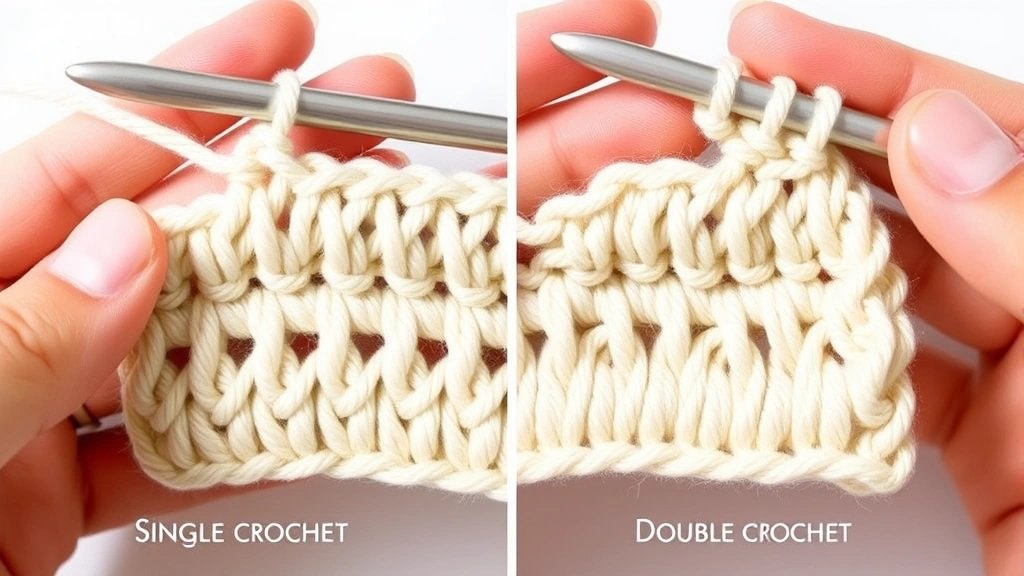
Last weekend, I was teaching my neighbor how to crochet, and she asked me something that stopped me in my tracks: “What’s the difference between single crochet and double crochet?” It seems like such a basic question, but honestly, it’s one of the most important things to understand when you’re starting out. These two stitches are the backbone of probably 90% of all crochet patterns, yet I see so many beginners getting confused about when to use which one.
Here’s the thing – I’ve been crocheting for over fifteen years, and I still remember the frustration of not knowing whether a pattern calling for “sc” meant I should be making those short, tight stitches or the taller ones. The terminology doesn’t help either, especially if you’re looking at British patterns where everything has different names. But once you get these two stitches down, you’ll be amazed at how many projects suddenly become accessible to you.
The difference isn’t just about height, though that’s the most obvious part. It’s about texture, drape, yarn usage, and even how long your project will take. Single crochet creates a dense, sturdy fabric that’s perfect for amigurumi projects and structured items. Double crochet works up faster and creates a more flexible fabric that drapes beautifully for shawls and blankets. Understanding when to choose each one will completely change how your finished projects look and feel.
Quick Answer
Single crochet creates short, dense stitches perfect for sturdy projects, while double crochet makes taller stitches that work up faster and create more drape. Single crochet uses more yarn and takes longer, but double crochet covers more ground quickly with an airier texture.
Understanding the Basic Techniques
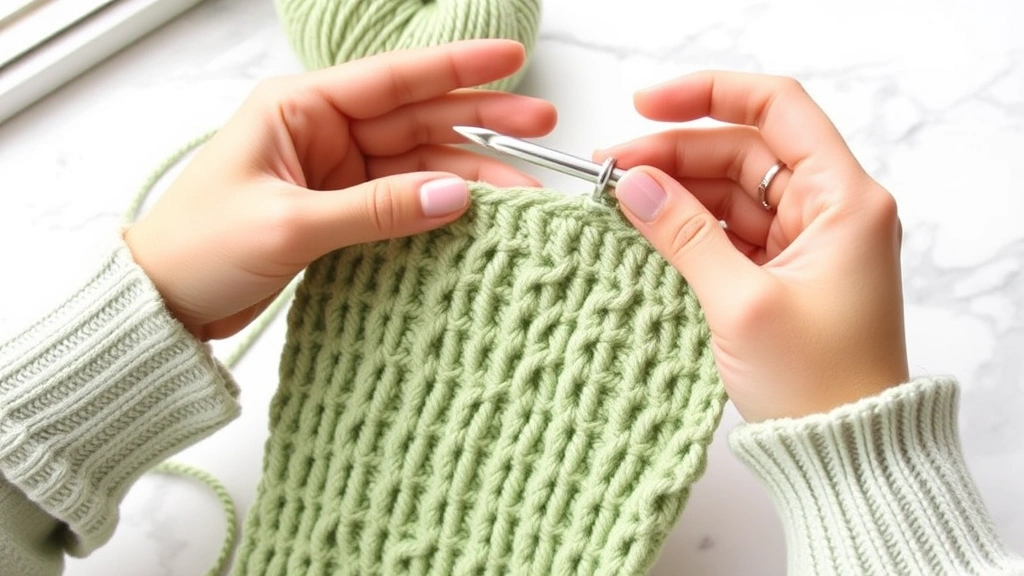
Let me walk you through exactly how these stitches work, because the construction method is where everything starts to make sense. Single crochet is the most basic stitch in crochet – you insert your hook, yarn over, pull through (two loops on hook), yarn over again, and pull through both loops. That’s it. Simple, straightforward, and creates a solid stitch that’s about as tall as it is wide.
Double crochet adds one extra step that changes everything. You start with a yarn over before inserting your hook, then insert, yarn over, pull through (three loops on hook), yarn over and pull through two loops (two loops remain), yarn over and pull through the final two loops. That initial yarn over is what gives double crochet its extra height and creates the distinctive post structure.
The muscle memory for these stitches feels completely different once you get used to them. Single crochet has this satisfying, rhythmic pull-pull motion, while double crochet has more of a yarn-over, pull, yarn-over-pull, yarn-over-pull rhythm. I always tell beginners to practice both until they can do them without thinking, because switching between them mid-project becomes second nature.
Pro tip: When you’re learning, use a light-colored worsted weight yarn like Lion Brand Vanna’s Choice in white or cream. Dark colors hide your stitch definition, making it harder to see what you’re doing.
The hook insertion is the same for both stitches – under the top two loops of the stitch from the previous row (unless the pattern specifies otherwise). But here’s something that trips up a lot of people: the turning chain. Single crochet uses a chain 1 to turn, while double crochet needs a chain 3. That turning chain counts as your first double crochet stitch, which is why you skip the first actual stitch when you start the new row.
Height and Structure Differences
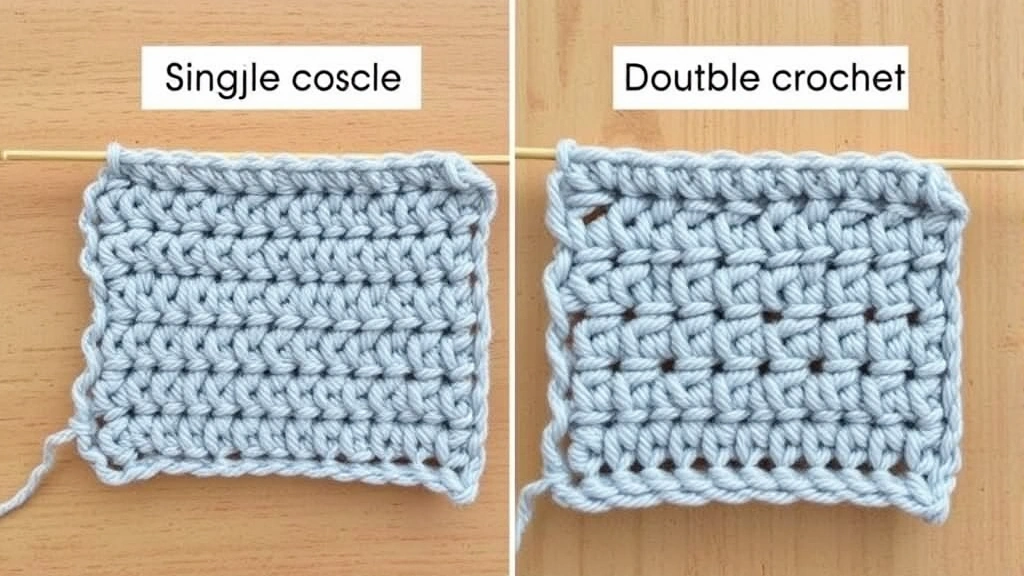
The height difference between these stitches is dramatic and affects everything about your finished project. A single crochet stitch is roughly the same height as one chain, while a double crochet is about three chains tall. This means if you’re working a 20-row project in single crochet, switching to double crochet would give you the same height in about 7 rows.
But it’s not just about height – the internal structure is completely different. Single crochet creates what I call a “brick wall” effect. Each stitch sits directly on top of the one below it, creating a dense, stable fabric with minimal stretch. This makes it perfect for items that need to hold their shape, like basket weave patterns or structured bags.
Double crochet, on the other hand, creates more of a “ladder” structure. The tall posts create natural spaces between stitches, and the fabric has more give in all directions. This is why double crochet blankets feel so different from single crochet ones – they’re more flexible and have better drape.
| Stitch Type | Height | Turning Chain | Fabric Density | Best For |
|---|---|---|---|---|
| Single Crochet | 1 chain tall | Chain 1 | Very dense | Amigurumi, bags, washcloths |
| Double Crochet | 3 chains tall | Chain 3 | Open, airy | Blankets, shawls, garments |
The gauge difference is significant too. With the same hook size and yarn, you’ll get more stitches per inch with single crochet than double crochet, but fewer rows per inch. This is why it’s crucial to make a gauge swatch when switching between stitch types in a pattern – your finished measurements could be way off if you don’t.
Visual Impact on Projects
Here’s something I wish someone had told me earlier: the visual impact of these stitches is completely different. Single crochet creates a smooth, almost knit-like surface that’s perfect for colorwork techniques because the stitches are so uniform and close together. You can create detailed pictures and intricate color patterns that stay crisp and defined.
Double crochet has more texture naturally built in because of those tall posts. It creates subtle vertical lines that add visual interest even in solid colors. This texture can either work for or against you depending on what you’re making. For a baby blanket, that gentle texture is lovely. For a detailed colorwork project, it might interfere with your design.
Yarn Usage and Time Factors
This is where things get really practical. Single crochet is a yarn hog – there’s no nice way to put it. Because you’re creating such dense fabric, you need significantly more yarn to cover the same area compared to double crochet. I’ve seen projects where switching from single to double crochet cut the yarn requirements by almost 40%.
Let me give you some real numbers. For a standard baby blanket (about 30″ x 36″), you’d typically need around 1,200-1,400 yards of worsted weight yarn in single crochet. The same blanket in double crochet would use roughly 800-1,000 yards. That’s not just a cost difference – it’s also a weight difference that matters for wearable items.
Time is another huge factor. Double crochet works up about three times faster than single crochet for the same coverage area. I timed myself making identical 6-inch squares: single crochet took me 45 minutes, double crochet took 18 minutes. When you’re making a large project like an afghan, that time difference adds up to hours and hours.
Budget-Friendly Tip: If you’re working with expensive yarn, double crochet stretches your budget further. But if you’re using budget yarn and want maximum durability, single crochet gives you more bang for your buck in terms of wear resistance.
The yarn weight you choose also interacts differently with these stitches. Single crochet in bulky yarn creates an incredibly thick, almost felt-like fabric that’s perfect for winter accessories but might be too stiff for garments. Double crochet in the same bulky yarn creates a cozy, drapey fabric that works beautifully for oversized sweaters and throws.
Hook Size Considerations
Here’s something interesting: you might want to use different hook sizes for the same yarn depending on which stitch you’re using. With single crochet, I often go up a hook size from what the yarn label recommends because the dense nature of the stitch can make the fabric too tight and stiff. With double crochet, I usually stick to the recommended size or even go down slightly for more structure.
For example, with worsted weight yarn that calls for a 5mm (H) hook, I might use a 5.5mm (I) for single crochet projects and a 4.5mm (G) for double crochet projects where I want good stitch definition. This is especially important for granny square projects where you want the stitches to have good definition.
Best Project Applications
Choosing the right stitch for your project can make the difference between something you love and something that sits in a drawer. I’ve learned this the hard way by making blankets in single crochet that were too heavy to actually use and bags in double crochet that stretched out of shape after a few uses.
Single crochet shines in projects that need structure and durability. Think amigurumi – those tight, dense stitches are what keep the stuffing from showing through and give your creatures their shape. Dishcloths and washcloths work better in single crochet because they need to scrub and hold up to repeated washing. Market bags and totes benefit from single crochet’s stability, especially at the handles where stress is highest.
For home decor items like plant pot covers or storage baskets, single crochet maintains its shape better over time. I made a set of storage baskets in single crochet five years ago, and they still look exactly the same. A similar basket I made in double crochet started sagging within months.
Double Crochet Applications
Double crochet is your go-to for projects where you want drape, coverage, and speed. Blankets and throws work beautifully because the fabric falls naturally and isn’t too heavy. Shawls and wraps need that flexibility to move with your body. Garments like cardigans and pullovers benefit from double crochet’s stretch and recovery.
Scarves in double crochet have a lovely drape that single crochet can’t match. The open structure also means they’re not as bulky around your neck. For baby items, double crochet creates softer, more flexible fabric that’s gentler against sensitive skin, though you need to be careful about the gaps if you’re making items for very young babies.
Personal experience: I made my first cardigan in single crochet because I thought it would be more durable. It was so stiff I could practically stand it up on its own! The double crochet version I made later became one of my favorite garments.
| Project Type | Best Stitch Choice | Why |
|---|---|---|
| Amigurumi | Single Crochet | Dense fabric prevents stuffing from showing |
| Blankets | Double Crochet | Better drape, works up faster, uses less yarn |
| Dishcloths | Single Crochet | More durable for scrubbing |
| Garments | Double Crochet | Better fit and movement |
| Bags/Totes | Single Crochet | Holds shape under weight |
Common Problems and Solutions
Let me share some of the most common issues I see with these stitches and how to fix them. With single crochet, the biggest problem is tension. Because you’re pulling through two loops at once in that final step, it’s easy to pull too tight and create stitches that are nearly impossible to work into on the next row. If you find yourself struggling to insert your hook, you’re probably crocheting too tightly.
The solution is to consciously keep your yarn loose as you pull through. I tell my students to imagine they’re pulling the yarn through butter – smooth and easy, not yanking it tight. If you’re already several rows in and realize your tension is too tight, try going up a hook size for the rest of the project. The slight difference in stitch size usually isn’t noticeable in the finished piece.
With double crochet, the most common issue is losing track of where you are in the stitch sequence. Because there are more steps, it’s easy to accidentally skip the final yarn over and pull through, leaving you with what’s essentially a half-finished stitch. This creates uneven height and can throw off your stitch count.
Counting and Tracking Issues
Stitch counting is trickier with double crochet because of that turning chain. Remember, the chain 3 at the beginning of each row counts as your first double crochet. This means when you get to the end of the row, you need to work into the top of that turning chain from the previous row. I can’t tell you how many times I’ve seen people skip this and end up with decreasing stitch counts.
Here’s a trick that helps: when you make your turning chain, give it a little tug to make it stand up straight. This makes it easier to identify later when you need to work into it. Some people find it helpful to use a stitch marker in the top of their turning chain to mark where they need to work at the end of the next row.
Troubleshooting Tip: If your double crochet fabric is looking wonky, count your stitches at the end of every few rows until you get the hang of it. It’s much easier to fix mistakes early than to rip out 20 rows later.
Another common problem with both stitches is working into the wrong part of the stitch below. Unless specified otherwise, you should be inserting your hook under both loops at the top of the stitch. Working under just the front loop or just the back loop creates different effects that are sometimes used intentionally, but if you’re doing it accidentally, your fabric will look different than expected.
Reading Patterns and Abbreviations
Pattern abbreviations can be confusing, especially when you’re dealing with international patterns. In US terminology, “sc” means single crochet and “dc” means double crochet. But in UK patterns, “dc” means double crochet in the US sense, and what we call double crochet, they call “treble crochet” or “tr.” This has caused more confusion than I can count!
Always check the beginning of any pattern for a note about which terminology they’re using. Most patterns will specify “US terms” or “UK terms.” When in doubt, look at the gauge information – if they’re getting a lot of stitches per inch, they’re probably using single crochet (or UK double crochet). If the gauge shows fewer stitches per inch, they’re likely using US double crochet.
Here’s a quick reference for the most common abbreviations you’ll see:
- US Terms: sc = single crochet, dc = double crochet
- UK Terms: dc = double crochet (same as US sc), tr = treble crochet (same as US dc)
- Universal: ch = chain, st = stitch, rep = repeat
Pattern Modifications
Sometimes you’ll want to substitute one stitch for another in a pattern, and understanding the differences helps you make smart modifications. If you want to make a single crochet pattern work up faster, you can often substitute double crochet, but you’ll need to adjust your row count since each row will be taller.
The math isn’t perfect, but a rough conversion is that three rows of single crochet equals about one row of double crochet in height. So if a pattern calls for 60 rows of single crochet, you’d need about 20 rows of double crochet for the same height. You’ll also need to adjust your stitch count since double crochet stitches are wider.
This kind of modification works well for simple projects like blanket patterns, but be careful with shaped items like garments where the stitch choice affects the fit and drape significantly.
Texture and Drape Comparison
The feel of the finished fabric is probably the most noticeable difference between these stitches, and it’s something you really need to experience to understand. Single crochet creates what I describe as a “structured” fabric. It has body, it holds its shape, and it has minimal stretch. This makes it perfect for items that need to maintain their form, but it can feel stiff in larger pieces.
The texture of single crochet is relatively smooth, with subtle horizontal ridges created by the tops of the stitches. This makes it excellent for showcasing textured stitch patterns that rely on raised or recessed elements, because the base fabric doesn’t compete for attention.
Double crochet, in contrast, creates a fabric with natural drape and movement. The tall posts create vertical lines that add visual texture even in solid colors. The spaces between stitches give the fabric stretch and recovery, making it comfortable for wearables. However, this same openness can be a drawback for items that need to be dense or opaque.
Layering and Warmth
For winter accessories, the choice between these stitches affects warmth significantly. Single crochet creates a denser fabric that blocks wind better, making it ideal for mittens, hats, and scarves that need to provide real protection from the elements. The trade-off is that single crochet items can be less breathable and might feel bulky.
Double crochet allows more air circulation, which can actually be warmer in some situations because it traps warm air while still allowing moisture to escape. This makes it perfect for layering pieces like cardigans and wraps. The key is understanding what kind of warmth you need for your specific project.
Fabric tip: If you want the warmth of single crochet but the drape of double crochet, try using a softer yarn like bamboo or a cotton blend. The fiber content can significantly affect how stiff or flowing your finished fabric feels.
The way these fabrics behave after washing is different too. Single crochet tends to maintain its shape well through multiple wash cycles, while double crochet may relax and become more drapey over time. This isn’t necessarily good or bad – it depends on what you want from your finished project.
Common Questions
Which stitch should a beginner learn first?
Start with single crochet, hands down. It’s simpler to master, uses fewer steps, and helps you develop good tension control. Once you’re comfortable with single crochet, double crochet will feel much more manageable. Most beginner patterns use single crochet for good reason – it’s more forgiving of tension issues and easier to count.
How much more yarn does single crochet use compared to double crochet?
Single crochet typically uses 30-40% more yarn than double crochet for the same coverage area. For a worsted weight baby blanket, expect to use about 1,200 yards in single crochet versus 800 yards in double crochet. The exact difference depends on your tension and the specific yarn, but single crochet is always the yarn-hungry option.
Can I mix single and double crochet in the same project?
Absolutely! Many patterns combine both stitches for different effects. Just remember that double crochet stitches are taller, so you might need to adjust your approach. Some patterns use single crochet for borders and double crochet for the main body, or alternate between them for textural interest. The key is understanding how the height difference will affect your finished piece.
Why does my double crochet look uneven?
The most common cause is inconsistent tension during the multiple yarn-over steps. Practice maintaining the same loose tension for each yarn over and pull-through. Also check that you’re completing all the steps – it’s easy to accidentally skip the final pull-through when you’re learning. Using a consistent hook position and rhythm helps create more uniform stitches.
Which stitch is better for baby items?
It depends on the specific item. For blankets and clothing, double crochet creates softer, more flexible fabric that’s gentler against baby skin. For toys and items that need structure, single crochet is better because it’s more durable and won’t stretch out of shape. Always consider safety too – the more open structure of double crochet might not be appropriate for very young babies who could catch tiny fingers in the spaces.
How do I fix a project that’s too stiff in single crochet?
Try going up a hook size for a looser gauge, or switch to a softer yarn if you’re early in the project. For finished items, gentle blocking with steam can help relax the fabric. Sometimes the stiffness improves after washing – many yarns soften up after their first trip through the washer and dryer.
Can I use the same hook size for both stitches?
You can, but you might want to adjust based on the effect you want. Single crochet often benefits from going up a hook size to prevent overly tight fabric, while double crochet sometimes looks better with a slightly smaller hook for more defined stitches. Always make a gauge swatch first, especially for fitted items.
Which stitch works better for colorwork patterns?
Single crochet is generally better for detailed colorwork because the stitches are smaller and more uniform, creating crisp color changes. The dense fabric also prevents colors from showing through from behind. Double crochet can work for simple colorwork, but the taller stitches and more open fabric make fine details harder to achieve. For complex colorwork patterns, single crochet is almost always the better choice.
Understanding the difference between single crochet and double crochet opens up so many possibilities in your crochet journey. These aren’t just two different ways to make stitches – they’re tools that create completely different fabrics with their own strengths and best uses. The dense, sturdy nature of single crochet makes it perfect for structured projects, while the quick-working, drapey quality of double crochet excels in blankets, garments, and decorative pieces.
Don’t feel like you have to pick a favorite and stick with it. The best crocheters I know are fluent in both stitches and choose based on what their project needs. A cozy throw calls for the speed and drape of double crochet, while a child’s toy needs the durability and tight construction of single crochet. Understanding these differences helps you make better project choices and avoid the frustration of using the wrong stitch for your goal.
Take some time to practice both stitches until they feel natural, then experiment with different yarns and hook sizes to see how the fabric changes. Make sample squares in both stitches using the same yarn – feeling the difference in your hands will teach you more than any article ever could. Happy crocheting, and remember that every expert was once a beginner who kept practicing!