Crochet Yarn Weight Guide: Choose the Perfect Yarn for Every Project
If you’ve ever stood in front of a yarn wall—or scrolled through an online store—and felt completely overwhelmed by all those numbers and abbreviations, you’re not alone. Yarn weight can feel like a secret code that nobody bothered to explain, and honestly, it’s one of the biggest reasons people abandon projects halfway through or end up with something that doesn’t quite match their vision.
Here’s the thing though: once you understand yarn weight, everything clicks into place. You’ll know exactly which yarn to grab for that cozy blanket you’re imagining, why your cardigan pattern specifically calls for worsted weight, and how to confidently substitute yarns when inspiration strikes. It’s genuinely one of those skills that transforms crochet from confusing to fun.
What Is Yarn Weight and Why It Matters
Yarn weight isn’t about how heavy the yarn feels in your hand—it’s actually about the thickness of the strand and how much yardage you get per pound. Think of it like fabric: a thin silk thread is a different weight than a chunky wool cable. The thickness determines how quickly your project grows, what kind of drape you’ll get, and whether your finished piece will be delicate or substantial.
Why does this matter for your crochet? Because when a pattern says “worsted weight,” the designer has already calculated how many stitches you need, what hook size works best, and how your finished garment will fit and feel. If you swap in a different weight without adjusting, you’ll either end up with something way too small, way too big, or with a completely different texture than intended. It’s like following a recipe but using different sized cups—the proportions just don’t work.
The beauty of understanding yarn weight is that it gives you freedom. You’re not locked into specific brands or colors. Once you know what you’re looking for, you can pick yarn based on what you actually love—whether that’s a gorgeous merino blend or a budget-friendly acrylic—and make it work.
Understanding the Standard Yarn Weight System
The Craft Yarn Council established a standardized yarn weight system that goes from 0 to 7. It might seem like a lot, but you’ll quickly realize that most crochet projects fall into just three or four categories, so don’t stress about memorizing all of them.
Weight 0 (Lace): This is your ultra-fine stuff—think thread weight. You’re working with a thin, delicate strand that creates intricate, open-work pieces. Doilies, shawlettes, and fine garments live here. Expect 800+ yards per 50 grams. You’ll use a tiny steel hook, usually size US 000 to 1. It’s beautiful but honestly, it requires patience and good eyesight.
Weight 1 (Super Fine): Still quite delicate but slightly more forgiving than lace weight. You’ll get around 400-800 yards per 50 grams. This is great for baby items, delicate shawls, and light garments. Hooks typically range from US 1 to 3. Fingering weight yarn falls here.
Weight 2 (Fine): Getting into more practical territory. Around 300-400 yards per 50 grams. Perfect for amigurumi, baby blankets, and lighter garments. You’ll use hooks in the US 1-5 range. Sport weight yarn is your friend here.
Weight 3 (Light Worsted): This is where a lot of everyday crochet happens. You’re looking at roughly 200-300 yards per 50 grams. DK weight and light worsted weight yarns fall here. Hooks typically run US 5-7. Projects work up faster than finer weights but still have nice stitch definition.
Weight 4 (Worsted/Medium): The workhorse of crochet. This is what you’ll see in most mainstream patterns. Around 180-220 yards per 50 grams. Standard worsted weight yarn works beautifully for everything from blankets to sweaters to afghans. Hooks are usually US 7-9. If you’re just starting out, this is probably what you should keep on hand.
Weight 5 (Bulky): Things move fast with this one. You’re getting maybe 90-180 yards per 50 grams. Projects work up quickly, which is deeply satisfying. Perfect for chunky blankets, cozy scarves, and quick gift projects. Hooks range from US 9-11. The downside? Less stitch definition, so intricate patterns don’t show up as well.
Weight 6 (Super Bulky): The speed-demon weight. Around 50-90 yards per 50 grams. A blanket can genuinely come together in a weekend. Hooks are US 11 and up. Great for dramatic statement pieces and when you want instant gratification. The trade-off is that detailed stitches get lost in the bulk.
Weight 7 (Jumbo): This is the “look, I made a blanket in three hours” weight. Less than 50 yards per 50 grams. You’re working with chunky cords or even arm-knitting-style materials. It’s more novelty than practical, but it’s undeniably fun.
Here’s a practical tip: when you’re choosing yarn for different projects, weights 3-5 cover about 80% of what you’ll actually want to make. Master those, and you’ll be golden.
How to Read Yarn Labels Like a Pro
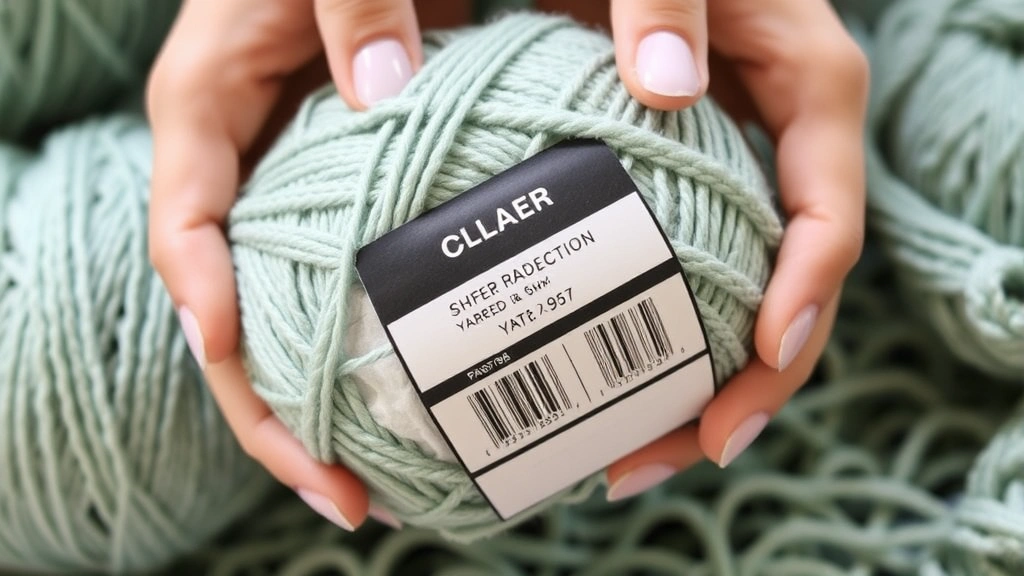
Every yarn label tells you a story, but you’ve got to know where to look. Let’s break down what you’re actually reading so you can make confident choices every time.
The Fiber Content: This tells you what the yarn is actually made from—acrylic, merino wool, cotton, a blend, whatever. This matters because it affects how the yarn behaves, how it feels, and how durable it’ll be. A 100% acrylic yarn is budget-friendly and easy to care for, but it won’t drape like a wool-silk blend. Neither is “better”—they’re just different, and knowing which you’re working with helps you pick the right project.
The Yardage (or Meterage): This is crucial. It tells you how many yards you get in that ball or skein. When a pattern calls for 800 yards of worsted weight, you need to know your yarn’s yardage to figure out if one ball is enough or if you need five. Always go by yardage, not weight, when substituting yarns. Two yarns might weigh the same but have totally different yardages.
The Weight Category: Most labels clearly state the weight (worsted, bulky, DK, etc.). Some use the Craft Yarn Council numbers, some use traditional names. If it’s not obvious, you can estimate based on the recommended hook size.
The Recommended Hook Size: This is your starting point. If the label says US 8-9, that’s what the yarn manufacturer tested and approved. You might adjust slightly based on your tension or the effect you want, but it’s a reliable baseline.
Care Instructions: This matters more than people realize. If you’re making something that’ll get washed a lot—like a baby blanket—you probably want yarn that can handle machine washing. Delicate hand-wash-only yarns are gorgeous but require more commitment.
The Dye Lot: This little number is your secret weapon for consistent color across a large project. If you’re buying multiple balls for a sweater or blanket, try to get yarn from the same dye lot. Colors can shift slightly between dye lots, and it’s noticeable when you’re working on something big.
Pro move: take a photo of the label before you start a project. That way, if you need to buy more yarn later or troubleshoot something, you’ve got all the specs right there.
Yarn Weight and Hook Size: The Perfect Match
This is where the magic happens. The relationship between yarn weight and hook size determines how tight or loose your fabric is, which affects drape, stitch definition, and how quickly projects come together.
Here’s the basic principle: a thicker yarn needs a bigger hook to avoid creating a stiff, dense fabric. A thinner yarn paired with a huge hook creates loose, lacy openness. The label recommendation gives you the sweet spot where the yarn manufacturer knows the stitches’ll look good and the fabric’ll behave nicely.
But here’s where it gets interesting: you can deliberately deviate for effect. If you want a denser, more structured piece, go down a hook size. If you want something airier and more flowy, go up a size. Just know that changing hook size will affect yardage requirements and finished dimensions. A garment made with a larger hook will be bigger and looser than the same pattern made with a smaller hook.
Let’s get specific. If you’re working with worsted weight yarn, the label probably recommends a US 7-9 hook. Try making a gauge swatch with a US 8. Does it feel right? Does the stitch definition look good? Does it have the drape you want? If yes, you’re set. If it feels too stiff, bump up to a US 9. If it feels too loose and floppy, try a US 7.
This is exactly why checking gauge before you start a project matters. It only takes ten minutes, and it saves you from heartbreak later.
Best Yarn Weights for Popular Projects
Different projects have different needs. Let me walk you through what weights work best for the stuff you probably actually want to make.
Baby Blankets: Go with weights 2-4 (fine to light worsted). You want something soft and delicate but with enough substance to be useful. A 400-yard ball of DK weight or 600 yards of worsted weight typically works beautifully. Acrylic or a wool-acrylic blend is practical here since baby blankets get washed constantly.
Afghans and Throw Blankets: Weights 4-5 (worsted to bulky) are your sweet spot. These projects need enough yardage to cover your lap, so going with a heavier weight means fewer balls to buy and faster work. A 50×60 blanket typically needs 3000-4000 yards of worsted weight or 1500-2000 yards of bulky weight. The bulky option is done faster, but the worsted gives you more stitch options.
Amigurumi: Stay with weights 1-3 (super fine to light worsted). Tighter stitches mean less stuffing shows through, and the finished pieces look more polished. A weight 2 yarn with a smaller hook creates those adorable, compact animals that feel professional.
Garments (Sweaters, Cardigans, Vests): Weights 3-5 work depending on the look you want. A lightweight sweater might be DK weight (weight 3), while a cozy cardigan could be worsted (weight 4) or even bulky (weight 5). The key is checking the pattern’s recommended weight and sticking with it unless you’re comfortable adjusting for fit.
Scarves and Cowls: This is flexible. A delicate, drapey scarf? Weight 2-3. A chunky, cozy scarf? Weight 5-6. You really can’t go wrong here. Pick whatever weight feels right for the effect you want and the time you want to invest.
Hats: Weights 3-5 work well. A fitted, close hat might use DK weight, while a slouchy beanie could be bulky. The weight affects how the hat drapes on your head, so consider that when choosing.
Dishcloths and Kitchen Items: Cotton yarn in weights 3-4 is traditional, but honestly, you can use whatever you have. Cotton holds its shape nicely, and the weight determines how sturdy the finished cloth is. A thinner weight creates something more delicate; a heavier weight gives you durability.
The real secret? Pick projects that match the weights you love working with. If you adore the speed of bulky yarn, focus on projects designed for it. If you love the precision of finer weights, lean into that. You’ll enjoy the process way more, and the results’ll show it.
Substituting Yarn Weights Successfully
Sometimes you find the most gorgeous yarn, but it’s a different weight than what the pattern calls for. Or maybe the recommended yarn’s sold out. Can you make it work? Yes—but you’ve got to be strategic about it.
Step 1: Understand What’s Changing
When you swap yarn weights, three things shift: the finished size, the yardage requirement, and the appearance. A sweater pattern written for worsted weight will be noticeably bigger if you make it with bulky weight, even if you use the same number of stitches. The fabric’ll also look different—bulky yarn shows less stitch detail.
Step 2: Calculate Yardage
This is the most important part. Let’s say your pattern calls for 1200 yards of worsted weight, but you want to use bulky weight instead. Bulky yarn is roughly twice as thick, so you’ll need roughly half the yardage—around 600 yards. But here’s the catch: you need to account for the specific yardage-per-weight of your chosen yarn, not just guess.
Look up both yarns’ yardage per 50 grams. Divide the pattern’s yardage by the original yarn’s yardage-per-50g, then multiply by your chosen yarn’s yardage-per-50g. That math tells you what you actually need. It sounds complicated, but it’s just a quick calculator moment.
Step 3: Test Your Gauge
Make a swatch with your substitute yarn and the hook size recommended for that yarn. Measure your gauge. If it’s significantly different from the pattern’s gauge, your finished piece will be a different size. Sometimes that’s okay. Sometimes it’s a dealbreaker. Understanding gauge helps you decide if the substitution’ll work.
Step 4: Consider the Project Type
Some projects are flexible about weight swaps. A blanket? You can usually work with different weights—it’ll just be bigger or smaller. A fitted garment? You need to be more careful because sizing matters. A shawl or scarf? Super flexible. Amigurumi? You probably want to stay close to the original weight so stuffing doesn’t show through.
Step 5: Be Ready to Adjust
Even with the math right, you might find your fabric doesn’t drape the way you want or the finished size is off. That’s okay. You can adjust by changing your hook size slightly, adding or removing rows, or just accepting that your version’ll be a little different. Sometimes “different” is actually better.
Here’s real talk: I’ve successfully substituted yarn weights plenty of times, and I’ve also had projects where it didn’t work out. The successful ones? They’re the ones where I did the math, made a swatch, and was willing to adjust. The failures? I got lazy and just grabbed something close. You can learn from my mistakes here.
Common Mistakes and How to Avoid Them
After years of crochet, I’ve seen (and made) every yarn weight mistake in the book. Here’s how to sidestep the most common ones.
Mistake 1: Buying by Weight Instead of Yardage
Two 100-gram balls of yarn can have wildly different yardages. One might be 400 yards; the other might be 250. If you buy based on weight alone, you might end up short on yardage partway through. Always check yardage. Always.
Mistake 2: Ignoring the Recommended Hook Size
The label recommendation exists because the manufacturer tested it. Sure, you might adjust by half a size, but if the label says US 7-9 and you’re thinking about using a US 5, that’s a red flag. Make a swatch first. Your tension might be tighter than the manufacturer’s, or it might be loose. A quick gauge check prevents a lot of heartbreak.
Mistake 3: Not Accounting for Fiber Content
A 100% acrylic worsted weight yarn behaves differently than a merino-wool worsted weight. The acrylic’s stiffer and less stretchy; the merino’s softer and more drapey. If you’re substituting yarns, consider the fiber content, not just the weight. A pattern designed for wool might not work as well with acrylic, even if the weight’s the same.
Mistake 4: Skipping the Gauge Swatch
I know, I know. Gauge swatches feel like busywork. But they’re genuinely the difference between a sweater that fits and one that doesn’t. Spend ten minutes making a swatch. It’s insurance against a full project disaster.
Mistake 5: Choosing Weight Based on Speed Alone
Bulky weight finishes fast, which is seductive. But if you hate how bulky yarn looks or feels, you’re going to resent your project. Pick a weight you actually enjoy working with. If that means a worsted-weight blanket takes longer than a bulky one, so be it. You’ll actually finish it and love it.
Mistake 6: Not Buying Enough for Large Projects
It’s easy to underestimate yardage for blankets or garments. Calculate generously. It’s way better to have leftover yarn than to run out two rows from the end. Plus, that leftover yarn? It becomes the start of your next project.
IMG_2
Mistake 7: Assuming All DK Weight (or Worsted, or Whatever) Is the Same
Yarn weight categories are guidelines, not absolutes. One brand’s “worsted” might be slightly thinner than another’s. That’s why reading the label and checking yardage-per-50g matters. It’s the real measurement, not just the category name.
FAQ
What yarn weight should a beginner start with?
Worsted weight (weight 4) is ideal. It’s substantial enough to see your stitches clearly, thick enough that small tension inconsistencies don’t show as much, and there are tons of patterns available. Once you’re comfortable, branch out to other weights.
Can I use a different yarn weight than the pattern calls for?
You can, but you need to do the math and test your gauge. Substituting yarn weights successfully requires understanding yardage and how it affects sizing. It’s doable, just not as simple as grabbing a different color of the same weight.
How do I know if yarn is actually the weight the label says?
Check the yardage-per-50g. That’s your real measurement. If two yarns labeled “worsted” have significantly different yardages, one’s probably mislabeled or the categories are interpreted differently. The yardage doesn’t lie.
Does yarn weight affect how long a project takes?
Absolutely. Heavier weights work faster because each stitch covers more fabric. Bulky weight projects move twice as fast as worsted weight, roughly. If speed matters to you, go heavier. If you love the meditative process of crochet, lighter weights give you more time with the yarn.
What’s the difference between yarn weight and yarn thickness?
They’re related but not identical. Yarn weight is the standardized category. Yarn thickness is the actual diameter of the strand. A yarn’s thickness is measured by its yardage-per-weight ratio. They’re basically the same thing, just described differently.
Can I mix different yarn weights in one project?
You can, but it requires planning. The different weights’ll create visual and textural interest, which some patterns specifically design for. If you’re improvising, test how they look together and make sure the transitions feel intentional, not accidental.
Is expensive yarn always better?
Not necessarily. Expensive yarn is often made from premium fibers (merino, silk, cashmere blends) that feel luxurious and perform beautifully. But a well-made acrylic can be perfect for certain projects. Pick based on what you’re making and what you’ll actually enjoy working with, not just price.
How do I store yarn so it doesn’t get damaged?
Keep it in a cool, dry place away from direct sunlight. Moths love yarn, so if you’re in a climate where they’re a concern, store yarn in sealed containers or use cedar. Keep it away from pets who might bat at it. Honestly, most yarn’s pretty hardy. Just use common sense.