Choosing Yarn for Different Crochet Projects: A Practical Guide
Let’s be real—standing in front of a yarn wall can feel absolutely overwhelming. There are so many colors, textures, and fiber blends staring back at you, and honestly, it’s easy to panic and just grab whatever’s on sale or matches your current mood. But here’s the thing: picking the right yarn for your project isn’t some mysterious art form that only experienced crocheters understand. It’s actually pretty straightforward once you know what to look for, and I’m here to walk you through it.
Whether you’re working on your first beginner-friendly blanket, attempting an intricate shawl, or crafting gifts for everyone on your list, the yarn you choose will make or break your entire experience. The wrong yarn can leave you frustrated, watching your stitches slip around like they’re on ice, or struggling with yarn that’s so stiff it feels like you’re crocheting with rope. The right yarn? It’ll make you actually excited to pick up your hook every single day.
I’ve made plenty of mistakes in my crochet journey—trust me, I’ve got a whole bin of projects started with yarn that absolutely wasn’t right for the pattern. But those mistakes taught me exactly what questions to ask before I even get to the register. Let me share what I’ve learned so you can skip the frustration and jump straight to the satisfaction.
Understanding Yarn Weight and When It Matters
Yarn weight is literally the thickness of your yarn strand, and it’s probably the most important thing you’ll check when selecting yarn for a project. The Craft Yarn Council standardizes yarn weights from 0 (lace) all the way up to 7 (jumbo), but most everyday crocheters work with weights 2 through 5.
Here’s what you actually need to know: if your pattern calls for a specific yarn weight, using something dramatically different will completely change your finished project. It won’t just be a slightly different size—the drape, the texture, the way it looks and feels will be totally transformed. I once tried to make a delicate shawl with a chunky yarn because I had it on hand, and instead of that flowing, ethereal piece I was imagining, I ended up with something that looked like a stiff, chunky triangle. It wasn’t bad exactly, but it absolutely wasn’t what I’d envisioned.
When you’re starting out with crochet blanket patterns, most designers recommend workhorse weights like DK, light worsted, or worsted (weights 3, 4, and 5). These weights work up relatively quickly, they’re easy to control while you’re still building your tension consistency, and they showcase stitch definition beautifully. You can actually see what you’re doing, which is huge when you’re learning.
The label on your yarn will always tell you the recommended weight range. It’s usually shown as a little symbol with a number, or sometimes as text. Match that number to what your pattern recommends. It’s that simple, and honestly, it’s the single best way to ensure your project turns out looking like the picture.
Fiber Content: Natural vs. Synthetic vs. Blends
This is where things get really personal, and there’s no universally “right” answer. But let me break down what each type actually does so you can make the choice that fits your specific project and your values.
Natural fibers like wool, cotton, linen, and bamboo have been used for centuries because they genuinely work beautifully. Wool is warm, elastic, forgiving when you’re learning, and it blocks gorgeously. Cotton is perfect for summer projects, breathable, and ideal for items that need durability. The downside? Natural fibers cost more, and some people have sensitivities or preferences against them.
Synthetic fibers like acrylic are the budget-friendly workhorses of the yarn world. Acrylic is durable, washable, affordable, and comes in literally every color imaginable. It’s fantastic for practice, for projects you’re gifting to people with sensitivities, and for items that’ll get hard wear. The honest truth is that acrylic has gotten so much better over the years. Newer acrylic yarns are softer and more pleasant to work with than they used to be.
Blends are often the sweet spot. A wool-acrylic blend gives you the elasticity and feel of wool with more affordability and easier care. A cotton-acrylic blend offers breathability with durability. Blends let you get the best qualities of multiple fibers in one yarn.
Here’s my honest take: there’s nothing wrong with any of these choices. Work with what feels right for your project, your budget, and your personal values. If you love the feel of natural fibers and have the budget, go for it. If you’re practicing or creating something that needs to survive multiple washes, acrylic is genuinely excellent. Don’t let anyone make you feel bad about your yarn choices.
Yarn for Blankets and Cozy Projects
Blanket projects are where so many of us fall in love with crochet, and choosing the right yarn here is absolutely crucial. You want something that’s going to feel amazing against skin, drape nicely, and hold up through countless washes and cuddles.
For afghans and throws, I almost always recommend a worsted weight (weight 4) or light worsted (weight 3) yarn. These weights work up relatively quickly—you’re not spending six months on a single blanket—but they’re substantial enough that you can actually see your stitch pattern. If you’re making a chunky weighted blanket vibe, you might go heavier with a bulky weight (weight 5 or 6).
Fiber content matters here too. If this is a blanket someone will actually snuggle under, consider:
- Wool or wool blends: Incredibly warm, naturally temperature-regulating, and they block beautifully so your finished blanket looks polished. Fair warning: wool needs gentle care, so make sure your recipient is okay with hand-washing or using a delicate cycle.
- Cotton or linen: Perfect for summer blankets or lightweight throws. They’re breathable and cool against skin. They don’t have quite as much stretch as wool, so tension consistency matters more.
- Acrylic or acrylic blends: Machine-washable, budget-friendly, and available in endless colors. For a blanket that’s going to get heavy use (think: toddler blankets, pet blankets, blankets for college dorms), acrylic is genuinely the practical choice.
Pro tip: if you’re making a blanket and you’re not sure about fiber content, pick something machine-washable. Blankets get used, they get dirty, and nobody wants to hand-wash a king-size blanket. I learned this the hard way with a beautiful merino blanket that ended up requiring too much maintenance for its actual use.
Delicate Yarns for Lacy Garments
Lacy shawls, lightweight wraps, and delicate garments are where yarn weight and fiber really shine. These projects showcase stitch definition, so you want yarn that’s smooth enough to let your stitches be the star.
For lacy crochet patterns, you’re typically working with lace weight (weight 0), fingering weight (weight 1), or sport weight (weight 2) yarn. These thinner yarns create that ethereal, flowing quality that makes lacy projects so gorgeous. The trade-off is that they take longer to work up and require more focus on tension consistency.
Fiber content for lacy projects should ideally be something that:
- Drapes beautifully (this is where wool and silk shine)
- Blocks well (crucial for lacy pieces to reach their full potential)
- Isn’t so slippery that your stitches slide around
- Shows stitch definition clearly
I’m genuinely partial to merino wool or merino blends for lacy projects. They have enough elasticity that you can adjust tension as you go, they block like a dream, and the finished piece has this beautiful flow that lighter-weight acrylic sometimes can’t quite achieve. That said, there are absolutely gorgeous lace-weight acrylics out there now, especially if you’re working with a tight budget.
One thing I always do with lacy projects: I make a gauge swatch and block it before committing to the whole thing. Lacy projects change dramatically after blocking, and you want to make sure you’re happy with how it transforms before you’ve spent weeks on it.
Durable Yarns for Amigurumi and Toys
When you’re making amigurumi and stuffed toys, you need yarn that’s going to stand up to love—and I mean that literally. These projects get squeezed, thrown, possibly chewed on by pets, and washed repeatedly. Your yarn choice here is about durability first, aesthetics second.
I always reach for acrylic or acrylic blends for amigurumi. Here’s why: acrylic is incredibly durable, machine-washable, and it holds its shape through repeated handling. It doesn’t pill easily, and it can survive the kind of wear and tear that a beloved stuffed animal gets. Plus, acrylic comes in such vibrant colors that your toys end up looking amazing.
Weight-wise, worsted weight (weight 4) is the standard for amigurumi. It creates nice stitch definition so you can see where you’re going, and it works up at a good pace. Some people use light worsted for smaller, more delicate toys, but honestly, worsted is the goldilocks zone for most amigurumi projects.
Here’s a pro move: when you’re shopping for amigurumi yarn, pick colors that are slightly saturated rather than pastels. The saturation helps your stitches pop visually, and it’s more forgiving if the yarn gets a little dingy from handling and washing.
Budget-Friendly Yarn Options
Listen, I get it. Yarn can get expensive, especially when you’re working on large projects like blankets or sweaters. The good news? You absolutely don’t need to spend a fortune to make beautiful things.
Some of my favorite budget-friendly options:
- Quality acrylic from mainstream brands: Red Heart Super Saver, Caron Simply Soft, and Lion Brand Vanna’s Choice are workhorses that are available everywhere and genuinely pleasant to work with. They’re affordable, durable, and come in tons of colors.
- Discount yarn stores: Many areas have local yarn shops with discount bins, and online retailers like Ravelry have community forums where people share deals and swaps.
- Natural fiber sales: Wool and cotton go on sale seasonally. If you’re flexible about your timeline, waiting for a sale can mean getting premium fiber at mid-range prices.
- Yarn from reputable indie dyers: Supporting small businesses doesn’t always mean paying more. Many indie dyers offer beautiful, quality yarn at comparable prices to big brands, especially if you follow them and catch their sales.
The real secret to budget-conscious crochet? Pick patterns that work with the yarn you love at the price you can afford, rather than falling in love with a pattern and then hunting for specific yarn. That’s the path to a lot of cart additions and impulse purchases.
Reading Labels and Making Smart Purchases
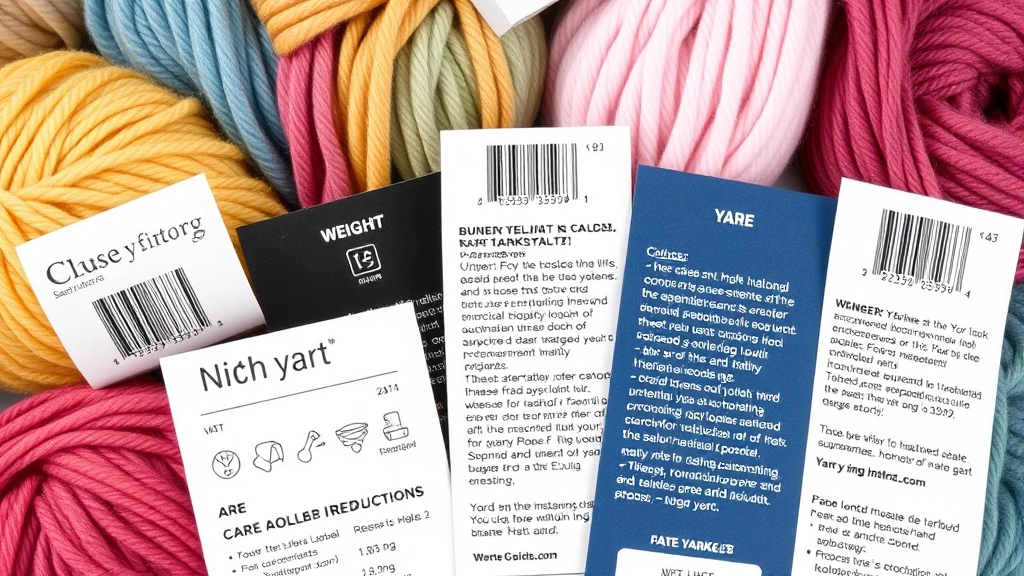
Every yarn label tells you a story if you know how to read it. Before you buy, take a minute to actually look at the information provided. It’s genuinely worth it.
Weight/Yardage: The label tells you how much yarn you’re getting (usually in grams and yards or meters). Multiply the weight by the number of balls to figure out your total yardage. This matters because patterns call for yardage, not ball counts. Two different yarns might have different yardages in the same weight category.
Fiber content: This tells you exactly what you’re getting. If it says “100% acrylic,” that’s what it is. If it’s a blend, the percentages are listed in order from highest to lowest.
Care instructions: This is non-negotiable. If the label says hand-wash only and you’re making a blanket for a toddler, that’s important information. Don’t ignore this.
Recommended needle/hook size and gauge: This tells you the intended weight category and the gauge the manufacturer recommends. Your pattern should align with this.
Here’s my personal workflow when I’m shopping: I check the weight matches my pattern, I verify the total yardage is enough, I read the care instructions and make sure they match my project’s needs, and I feel the yarn if I’m shopping in person. That last part matters—you want to like how it feels in your hands because you’re going to be holding it for hours.
If you’re shopping online (and let’s be real, we all do), look for detailed photos that show the yarn’s texture. Read reviews from other crocheters. Check if the dye lot matters for your project—for blankets and large projects, you want consistent dye lots. For small projects or where color variation adds charm, it’s less critical.
” alt=”Colorful yarn balls arranged by weight and fiber type in natural lighting”>
Matching Yarn to Your Skill Level
Here’s something I wish someone had told me when I started: certain yarns are genuinely easier to work with when you’re learning. It’s not about the yarn being “better”—it’s about it being more forgiving while you’re building consistency.
As a beginner, you want yarn that:
- Shows your stitches clearly (so you can see what you’re doing)
- Has a bit of grip (so it doesn’t slip around in your hands)
- Isn’t so dark you can’t see individual stitches
- Is forgiving of tension inconsistencies
Light to medium-colored worsted weight in wool or wool blends is genuinely the sweet spot for beginners. It’s why so many beginner patterns recommend it. As you get more confident with your tension and stitch consistency, you can experiment with everything else—slippery silks, delicate lace weights, dark colors that hide tension issues.
When you’re trying something new (like lace-weight yarn or a new stitch pattern), go back to basics with fiber content and weight. Give yourself one variable to master at a time. Once you’re comfortable with lace weight, then experiment with a slippery silk blend. Once you’ve got your tension rock solid, then try working with dark charcoal yarn. Build your skills methodically, and the yarn choices become easier.
Common Yarn Mistakes and How to Avoid Them
I’ve made basically every yarn mistake possible, so let me save you some grief:
Buying yarn without checking yardage: You fall in love with a skein, buy three balls because they’re pretty, and then realize you needed 800 yards and you only have 450. Check yardage before you buy. Always.
Ignoring care instructions: You make a gorgeous wool sweater and then accidentally felt it in the wash. Read the label. Genuinely read it.
Assuming all yarn in the same weight works the same: A lace-weight mohair yarn and a lace-weight wool yarn will behave completely differently. Check fiber content, not just weight.
Buying based on color alone: That stunning variegated yarn might look amazing in the skein but create a busy, muddled look in a stitch pattern that has lots of texture. Touch it, think about your stitch pattern, and imagine how the colors will work together.
Not making a gauge swatch: I know, I know, gauge swatches feel like a waste of time. But they’re genuinely not. A gauge swatch tells you whether your tension matches the designer’s expectations and whether the finished project will actually fit. Spend 20 minutes on a gauge swatch rather than weeks on a project that doesn’t fit.
” alt=”Hands holding different yarn textures and weights displayed together”>
FAQ
What’s the difference between yarn weight and thickness?
Yarn weight is a standardized system (0-7) that tells you the thickness category. All weight 4 yarns are roughly the same thickness, but they might be made of different fibers. Thickness is just how thick the strand physically is. The terms are often used interchangeably, but weight is the official category.
Can I substitute one yarn for another if I can’t find the exact one?
Yes, but carefully. You need to match the weight category, check the yardage, and ideally make a gauge swatch. The fiber content will affect how the finished project looks and feels, so think about that too. If you’re substituting, go for fiber that’s similar in behavior to what the pattern calls for.
How do I know if yarn will be soft enough?
Touch it. If you’re shopping in person, literally feel the yarn. If you’re shopping online, read reviews from other crocheters. They’ll tell you if yarn is scratchy or soft. Also, many yarn brands have softer and scratchier options, so sometimes it’s about picking the right brand rather than the right fiber.
Is expensive yarn always better?
Not necessarily. Expensive yarn is sometimes better because of superior fiber quality or construction, but sometimes it’s expensive because it’s a luxury brand or indie-dyed. Budget yarn can be genuinely excellent. The “best” yarn is the one that works for your specific project and your budget. Period.
How much yarn do I actually need?
Your pattern will tell you yardage. Always go by yardage, not ball count, because different yarns have different amounts of yardage per ball. When in doubt, buy slightly more than the pattern calls for. You can always return extra yarn or use scraps for future projects.
Should I wash yarn before using it?
Not usually. Most commercial yarn is clean. If you’re using hand-dyed or vintage yarn, a gentle wash might be nice, but modern commercial yarn is ready to use straight from the ball.