Crochet Project Organization: Master Your Stash and Patterns Like a Pro
You know that feeling when you’re halfway through a project and suddenly can’t remember which yarn you bought for it? Or you’ve got three different patterns bookmarked, but they’re scattered across your phone, Pinterest, and that one email from three months ago? Yeah, I’ve been there too. Crochet project organization might sound like the least fun part of this whole creative journey, but honestly? Getting it right changes everything. When your patterns are easy to find, your yarn is sorted, and you know exactly what you’re working on, you actually get to focus on the meditative, joyful part of making things with your hands. That’s the stuff we’re really here for.
The beautiful thing about crochet is that it’s flexible—kind of like the projects themselves. There’s no “one right way” to organize your stash or keep track of your patterns. But there are definitely some approaches that work better than others, and I’m going to walk you through exactly what I’ve learned from years of making things, messing up, and finally figuring out a system that actually sticks.
Why Organization Actually Matters for Crocheters
Here’s the thing nobody tells you when you’re just starting out: organizing your yarn stash isn’t just about aesthetics (though those Instagram-worthy baskets are definitely nice). It’s actually about protecting your creative practice. When you can quickly find the right yarn for a project, you’re more likely to actually start that project instead of letting it live in your brain as a “someday” thing. When your patterns are organized, you’re not spending an hour searching for that blanket pattern you saved last year. You’re actually crocheting.
There’s also a practical money angle here. A well-organized stash helps you avoid buying duplicate yarn or colors you already own. I can’t tell you how many times I’ve bought “just one more skein” of a color only to discover I already had three of them buried in a box somewhere. Once you can see what you’ve got, impulse purchases become way less appealing—or at least, they’re intentional rather than accidental.
Beyond that, organization reduces stress. Crochet should feel like a break from the chaos of daily life, not add to it. When everything has a place and you know where to find it, you can actually relax into your projects instead of feeling anxious about your materials.
Assessing Your Current Stash
Before you can organize anything, you need to know what you’re actually working with. This is the hardest part for a lot of people because, let’s be honest, taking inventory of your yarn stash can feel like opening Pandora’s box. But it’s necessary, and it’s actually kind of satisfying once you get going.
Start by gathering everything. Pull yarn out of baskets, boxes, bags, closets—everywhere you’ve stashed it. Yes, everywhere. This might take a while, and it might feel chaotic, but you need a complete picture. As you’re pulling things out, start making notes about what you’ve got:
- Yarn weight and fiber content – Check the labels. If the label’s gone, feel the yarn and make your best guess based on yarn weight guidelines.
- Yardage – This matters for project planning. A ball with 200 yards is going to work for different projects than one with 2,000 yards.
- Color – Be specific. “Blue” isn’t helpful when you’ve got five shades.
- How much you love it – Seriously. Some yarn you’ll be excited to use, and some you’ll realize you bought on a whim and never want to touch again. That’s okay. Acknowledge it.
This inventory process is also a perfect time to be honest about what you’re actually going to use. If you’ve got yarn you genuinely don’t like, consider donating it to a local yarn shop, school art program, or community center. Keeping yarn you hate just adds clutter and guilt.
Storage Solutions That Work
Now that you know what you’ve got, let’s talk about where it’s going to live. The best storage solution is the one that works with your space and your lifestyle, not against it.
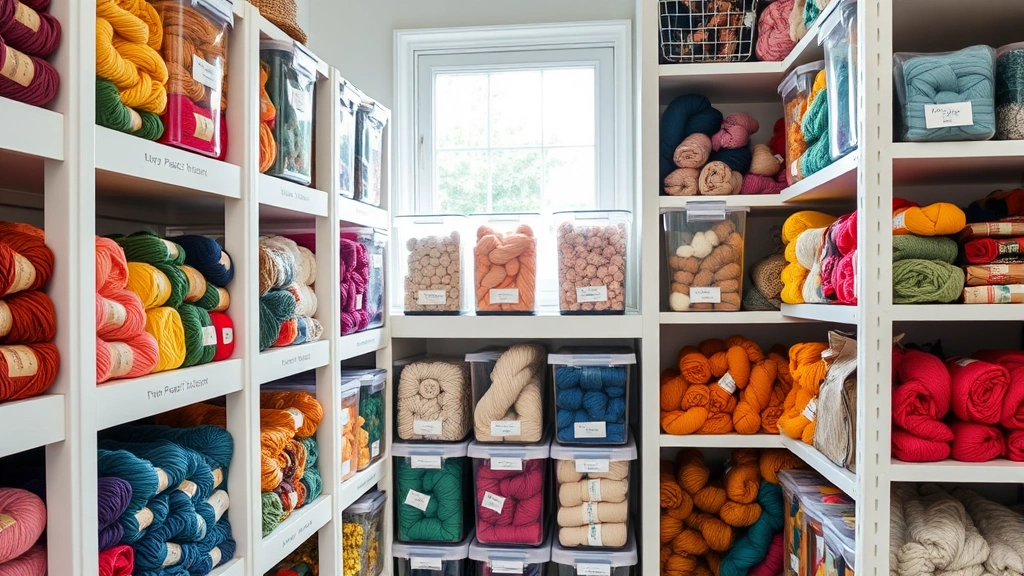
Clear plastic containers are my go-to for most of my stash. They stack, you can see what’s inside without opening them, and they protect yarn from dust and pests. Label each container by weight, color family, or however makes sense for how you think. I use a label maker because I’m that person, but a permanent marker works just fine.
Baskets and bins are beautiful and work great if you’re organized enough to actually put things back. (No judgment—I’m not always that person either.) The key is making sure they’re easy to access and that you’re not just shoving yarn in there and hoping for the best. Open shelving with baskets is perfect if you’ve got a dedicated craft space.
Wall-mounted yarn storage is fantastic if you want your stash to be part of your decor. Pegboards, wall-mounted organizers, or even a simple shelving unit can display your yarn beautifully while keeping it accessible. This works especially well if you don’t have a ton of yarn and you love looking at colors.
Drawer dividers are underrated. If you’ve got a dresser or cabinet with drawers, dividing them by weight or color keeps everything visible and organized. This is particularly good for works in progress that you want to keep separate from your main stash.
A few practical tips regardless of what you choose: keep your storage away from direct sunlight to prevent fading, make sure it’s in a cool, dry place (moisture and yarn don’t mix well), and keep it away from pets if they’re the type to bat at yarn balls. I learned this the hard way with my cat, and let me tell you, rescuing yarn from under the couch at 2 AM isn’t fun.
Pattern Management Systems
Patterns are where a lot of crocheters struggle organizationally. You’ve got Pinterest boards, PDFs you’ve downloaded, printed patterns in a folder, bookmarks in your browser, screenshots on your phone—it’s chaos. Let’s fix that.
The digital approach: If you’re comfortable with digital tools, consolidating everything into one platform makes sense. Many crocheters swear by Ravelry, which is basically the social network for fiber artists. You can save patterns, organize them into projects, track your yarn stash, connect with other makers, and honestly, it’s kind of a game-changer. It’s free to use (though premium membership adds features), and the community is incredibly supportive. You can also use Google Drive or Dropbox to organize PDF patterns in folders by project type, difficulty level, or whatever system makes sense to you.
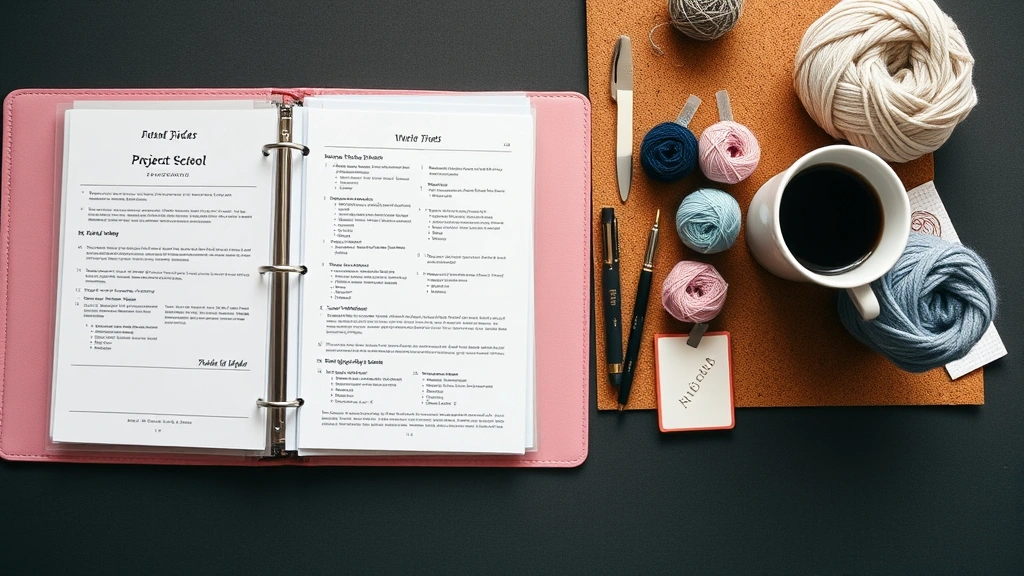
The hybrid approach: Some people print their patterns and keep them in a binder with dividers organized by type (blankets, amigurumi, accessories, etc.). Then they photograph or scan the pattern and save it digitally as backup. This works great if you like having a physical reference while you’re working, and it’s less dependent on technology.
The physical approach: If you’re not super digital, a filing system works perfectly fine. Use a filing cabinet or accordion file with tabs for different project types. Keep patterns in plastic sleeves so they stay clean while you’re working. This is old-school, but it absolutely works, and there’s something satisfying about flipping through actual patterns when you’re trying to decide what to make next.
Regardless of which system you choose, here’s what matters: every pattern should be in ONE place. No more searching through five different apps to find that baby blanket pattern. Pick your system, commit to it, and actually put new patterns there instead of just bookmarking them and hoping you remember.
Tracking Projects in Progress
This is where a lot of organizational systems break down for me personally. Works in progress need different treatment than your main stash because you’re actively using them, and they need to be easily accessible.
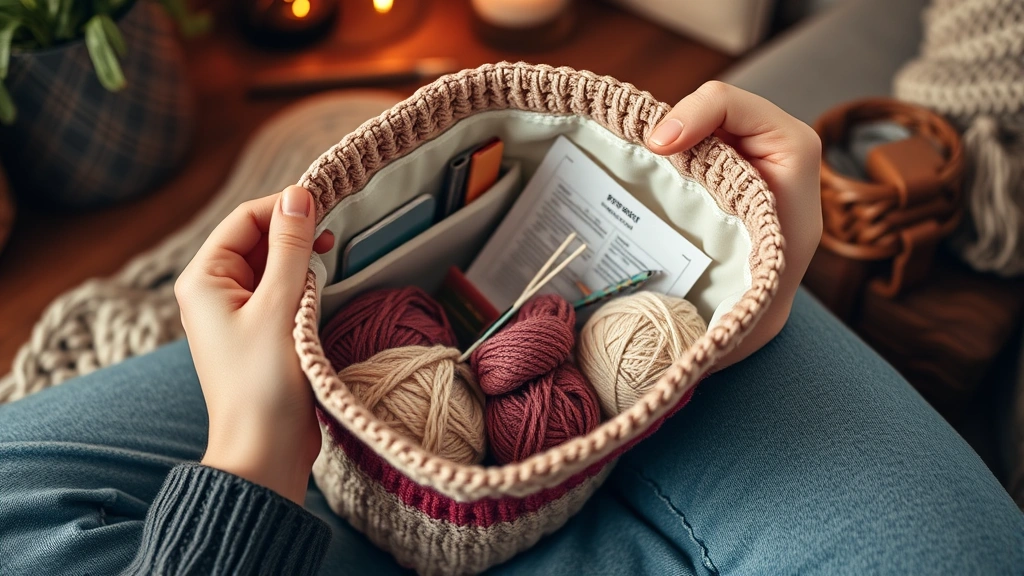
I keep my current projects in a separate basket near my favorite crocheting spot. Each project gets its own gallon-size ziplock bag or small project bag that contains: the yarn I’m using, the pattern (whether printed or printed from my phone), any stitch markers or tools I need, and a note about where I left off. That last part is crucial—write down which row you’re on, which color you’re using, or any pattern notes that’ll help you jump back in without having to puzzle it out.
Some crocheters use a simple spreadsheet to track projects: project name, yarn used, pattern source, start date, estimated finish date, and notes. You can update it as you go, and it gives you a quick overview of what you’ve got on the needles (okay, hooks). This is especially helpful if you’re juggling multiple projects at once.
For larger projects like blankets or afghans, I sometimes use a project bag specifically made for yarn crafts—something with compartments to keep everything organized. Yarnspirations has some great patterns and resources, and they also sell project bags if you want something purpose-built.
The golden rule here: make it easy to pick up a project and keep going without any friction. The harder it is to find everything you need, the less likely you are to actually work on it.
Digital Tools and Apps
There are some genuinely useful apps and tools beyond Ravelry that can help you stay organized. Stitch Counter apps let you track rows, rounds, and stitches directly on your phone so you don’t lose count. Some have built-in timers and notifications, which is clutch when you’re doing something repetitive.
Project management apps like Notion or Asana might sound like overkill, but some serious fiber artists use them to track multiple projects, plan future makes, and keep notes about what worked and what didn’t. If you’re into organizing your creative practice at a deeper level, these can be surprisingly helpful.
Pinterest and Instagram are great for inspiration, but don’t let them become your organizational system. It’s too easy to save things and never find them again. If you’re using Pinterest for pattern inspo, create a board specifically for “patterns to make” and then move things to other boards or your Ravelry queue once you’ve actually decided to make them.
Google Sheets or Excel are honestly underrated for stash management. Create a simple spreadsheet with columns for yarn name, weight, yardage, color, where you bought it, and how much you spent. Add a column for “projects used in” so you can see what you’ve already made. It takes 20 minutes to set up, and it’s incredibly useful.
Creating a Sustainable System
Here’s the real talk: the best organizational system is the one you’ll actually maintain. If you create something too complicated, you’ll abandon it after two weeks. So be honest with yourself about how much time and energy you want to put into organization.
Some people love meticulous systems and find them relaxing. If that’s you, go wild with spreadsheets and label makers. Other people just want to grab yarn and start crocheting without overthinking it. That’s valid too—just keep your system simple enough that you can actually stick with it.
Set a maintenance schedule. Once a month (or whenever you finish a project), spend 15 minutes putting things back. Return yarn to its container, file away the pattern, update your project list. This tiny bit of regular maintenance keeps things from spiraling into chaos.
Create a “project decision” system. When you’re deciding what to make next, have a clear process. Maybe you flip through your patterns and pick one that speaks to you. Maybe you look at your yarn and let that guide you. Maybe you have a list of projects you want to make and you work through them in order. Whatever it is, having a system prevents the decision paralysis that leads to projects sitting unstarted.
Be willing to evolve. Your organizational system doesn’t have to be permanent. If you realize your storage isn’t working, change it. If your digital system isn’t serving you, try something different. As you learn new tools and techniques, your needs might shift, and that’s okay.
Remember the purpose. You’re organizing your materials so you can spend more time actually making things. Organization is a means to an end, not the end itself. If you find yourself spending more time organizing than crocheting, scale it back.
FAQ
What should I do with yarn I don’t like?
Donate it. Seriously. Local yarn shops often accept donations, as do schools, community centers, and makerspaces. Some animal shelters even accept yarn scraps for enrichment. Keeping yarn you hate just takes up space and creates negative feelings about your stash. Life’s too short for yarn guilt.
How do I prevent moths and other pests?
Store yarn in sealed containers or bags, especially if you’re keeping it long-term. Cedar blocks or lavender sachets can help deter moths. Keep your storage area clean and dry. If you’re really concerned, you can freeze yarn for a few days before storing it to kill any potential pests, though this is usually overkill unless you live somewhere with a serious pest problem.
Is it okay to keep projects in progress for months or years?
Absolutely. Some of my best projects have taken years to complete, and that’s fine. Just make sure they’re organized so you can actually find them when you feel like working on them again. Label them clearly with the date you started, so you know how long they’ve been sitting there. Sometimes taking a break and coming back with fresh eyes actually improves the final project.
What’s the best way to track a large stash?
If you’ve got a ton of yarn, digital tracking is your friend. Use Ravelry, a spreadsheet, or even a simple document. Take photos of your yarn (organized by container or color) and keep those photos with your inventory. When you use yarn, update your list so you always know what you’ve got. This prevents buying duplicates and helps you use what you have before acquiring more.
Should I organize by weight, color, or project type?
Whatever makes sense for how you actually crochet. If you usually pick projects first and then choose yarn, organize by project type. If you like to let your yarn inspire projects, organize by weight or color. There’s no “right” answer—just pick what feels intuitive for you and stick with it.
How do I organize patterns if I’m not tech-savvy?
Print them out and put them in a binder with dividers. Use folders on your computer even if you’re not comfortable with apps. Take screenshots of online patterns and organize them in folders. Ask a friend to help you set up a simple system. There are zero points for being fancy—functional is what matters.
For more inspiration and resources, check out The Crochet Association, explore craft yarn brands, and browse pattern communities like Etsy for indie crochet designers.