You know that moment when you’re scrolling through Pinterest at 2 AM and stumble across the most gorgeous crochet blanket you’ve ever seen? The colors are perfect, the pattern looks cozy and inviting, and you immediately think “I NEED to make this.” But then you click through to the pattern and see those dreaded words: “Intermediate skill level required.”
Here’s the thing about intermediate crochet patterns – they’re not as scary as they seem. I remember feeling intimidated by anything beyond basic single and double crochet for the longest time. But intermediate patterns are really just combinations of stitches you already know, maybe with some new techniques thrown in that aren’t actually that hard once someone explains them properly.
The jump from beginner to intermediate isn’t about mastering some mysterious advanced magic. It’s about building confidence with slightly more complex stitch combinations, learning to read patterns that assume you know the basics, and tackling projects that might take a bit more patience. Most intermediate patterns still use the same fundamental stitches – they just combine them in more interesting ways.
What makes a pattern “intermediate” usually comes down to a few key factors: stitch variety (using 4-6 different stitches instead of just 2-3), pattern reading skills (following charts or more detailed written instructions), shaping techniques (increasing and decreasing in specific patterns), and project complexity (larger items or those requiring assembly). None of these are impossible to learn, and honestly, most crocheters are ready for intermediate patterns sooner than they think.
Quick Answer
Intermediate crochet patterns typically use 4-6 stitch types, require basic shaping skills, and involve following more detailed instructions. Most crocheters can tackle intermediate projects after mastering single crochet, double crochet, and basic increases/decreases.
What Makes a Pattern Intermediate
The difference between beginner and intermediate patterns isn’t always obvious at first glance. I’ve seen patterns labeled “easy” that were actually trickier than some intermediate ones, and vice versa. The key is understanding what specific elements bump a pattern up to the intermediate level.
Stitch Variety: While beginner patterns might stick to single crochet, half double crochet, and double crochet, intermediate patterns typically incorporate 4-6 different stitches. You might see treble crochet, front post and back post stitches, clusters, shells, or bobbles. None of these are particularly difficult once you know how to do them, but having multiple stitch types in one pattern requires more attention and pattern-following skills.
When working with different hook sizes, you’ll often find that intermediate patterns are more specific about gauge and tension. A beginner scarf might work fine with slight gauge variations, but an intermediate sweater absolutely won’t fit properly if your gauge is off.
Shaping and Construction: This is where things get interesting. Intermediate patterns often involve strategic increases and decreases to create shaped pieces. Think about the difference between a basic rectangular blanket and one with a curved border, or between a simple hat and one with ear flaps. The shaping techniques aren’t hard, but they require following instructions more carefully.
Pro tip: If you can comfortably make a granny square and a basic beanie, you probably have the skills for most intermediate patterns. The main difference is patience and attention to detail.
Pattern complexity also plays a role. Intermediate patterns might have multiple sections that need to be sewn together, color changes at specific points, or stitch patterns that repeat over multiple rows rather than just one. I’ve found that learning to read patterns fluently makes a huge difference in tackling these more complex projects.
Essential Skills You Need
Before diving into intermediate patterns, let’s talk about the foundation skills that’ll make your life so much easier. I wish someone had given me this checklist when I was starting out – it would’ve saved me from frogging so many projects halfway through.
Tension Control
This is probably the most important skill that separates confident intermediate crocheters from frustrated beginners. Your stitches need to be consistent – not necessarily tight or loose, but consistent. When I started paying attention to my tension, suddenly my projects looked so much more professional.
Practice with worsted weight yarn and a size H (5mm) hook until your stitches look even. If you’re struggling with tension, try holding your yarn differently or switching to ergonomic hooks that feel more comfortable in your hand.
Gauge Awareness
I know, I know – gauge swatches are boring. But for intermediate projects, especially wearables, gauge actually matters. You don’t need to stress about being exactly perfect, but you should be within about 10% of the pattern’s measurements.
Here’s what I do: I make a quick 4×4 inch square in the pattern stitch, measure it, and adjust my hook size if needed. Go up a hook size if your gauge is too small, down a size if it’s too big. It’s that simple.
| Your Gauge | Pattern Gauge | Action Needed |
|---|---|---|
| 16 sts = 4″ | 18 sts = 4″ | Go up one hook size |
| 18 sts = 4″ | 18 sts = 4″ | Perfect! Continue |
| 20 sts = 4″ | 18 sts = 4″ | Go down one hook size |
Basic Shaping
Increases and decreases are your friends in intermediate patterns. The good news is that most patterns use the same basic techniques: single crochet increases (2 sc in one stitch), single crochet decreases (sc2tog), and double crochet increases/decreases work the same way.
What’s different in intermediate patterns is where you place these increases and decreases. Instead of just adding stitches randomly, you’ll be creating specific shapes – the crown of a hat, the armholes of a sweater, or the curve of a blanket border.
Key Stitch Techniques
Let’s talk about the specific stitches and techniques you’ll encounter in intermediate patterns. Don’t worry – most of these build on what you already know.
Post Stitches
Front post double crochet (fpdc) and back post double crochet (bpdc) are game-changers for creating texture. Instead of working into the top of the stitch, you work around the post (the vertical part) of the stitch from the previous row.
These create raised and recessed lines that add incredible dimension to your work. I love using post stitches for ribbed edges on sweaters and hats – they look so professional and stretchy.
Cluster Stitches
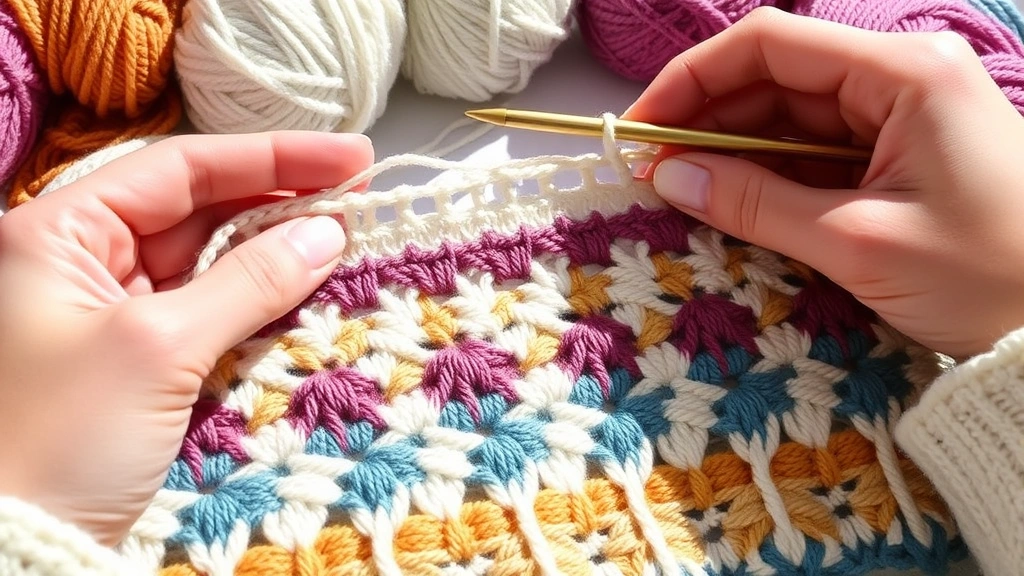
Clusters sound fancy, but they’re just multiple incomplete stitches worked together and then completed all at once. A 3-dc cluster means you start three double crochets (yarn over, insert hook, pull through, yarn over, pull through 2 loops) but stop before the final step. Then you yarn over and pull through all the loops on your hook at once.
Clusters create beautiful texture and are often used in shell patterns and decorative borders. Once you get the rhythm, they’re actually quite relaxing to make.
Shell and Fan Patterns
Shells are groups of stitches worked into the same space, usually with chain spaces between them. A basic shell might be “5 dc in same st, skip 2 sts, sc in next st, skip 2 sts.” Fan patterns work similarly but often use different stitch heights.
When working shells, count your stitches in each shell rather than trying to count total stitches across the row. It’s much easier and less likely to drive you crazy.
These patterns create beautiful drape and are perfect for shawls, baby blankets, and decorative borders. The Craft Yarn Council has great resources for understanding how different stitch patterns affect fabric drape and structure.
Color Work
Intermediate patterns often involve changing colors, whether it’s simple stripes or more complex colorwork. The key is learning to carry yarn neatly and change colors at the right point in your stitch.
For clean color changes, complete your last stitch in the old color until you have 2 loops on your hook, then yarn over with the new color and complete the stitch. This puts the color change exactly where you want it.
Reading Complex Patterns
Pattern reading is where a lot of crocheters get stuck when moving to intermediate level. The instructions assume you’re comfortable with abbreviations and can follow more complex sequences without getting lost.
Understanding Repeats
Intermediate patterns love repeats, and they’re usually written like this: “*dc in next 3 sts, ch 2, skip 2 sts; rep from * across, ending with dc in last st.” The asterisk marks the beginning of the repeat, and the semicolon shows where it ends.
I always read through the entire repeat section before starting, sometimes even writing it out in plain English if it’s particularly complex. It saves so much time and frustration later.
Charts vs Written Instructions
Many intermediate patterns include both charts and written instructions. Charts can look intimidating at first, but they’re actually incredibly helpful once you learn to read them. Each symbol represents a specific stitch, and you can see the overall pattern structure at a glance.
If you’re more comfortable with written instructions, that’s totally fine. But I’d encourage you to at least try following a simple chart – they’re especially helpful for understanding how stitches relate to each other in complex patterns.
Pattern Notes and Special Instructions
Don’t skip the pattern notes! Intermediate patterns often include important information about construction methods, special techniques, or modifications. I learned this the hard way after frogging a sweater because I missed a crucial note about seaming.
Some patterns also include multiple sizes or variations. Make sure you’re following the right set of numbers throughout – I like to highlight my size in a different color before I start.
Common Intermediate Projects
Certain types of projects naturally fall into the intermediate category because of their construction or the skills they require. Here are the most common ones you’ll encounter.
Garments and Wearables
Sweaters, cardigans, and fitted tops are classic intermediate projects. They require gauge awareness, shaping skills, and often involve seaming multiple pieces together. The good news is that even if your first sweater isn’t perfect, you’ll learn so much in the process.
Start with a simple pullover or cardigan in worsted weight yarn. Avoid anything with complex colorwork or unusual construction for your first garment. Basic sweater patterns are perfect for building confidence.
I always recommend making the smallest size first, even if it’s not your size, just to learn the construction. You can always make it again in your size once you understand how it goes together.
Textured Blankets and Throws
Moving beyond basic granny square blankets opens up a world of beautiful textured patterns. Think cables, bobbles, shell patterns, or geometric designs that require careful stitch placement.
These projects teach you to maintain pattern consistency over a large piece, which is a valuable skill. Plus, blankets are forgiving – small mistakes often blend into the overall texture and aren’t noticeable in the finished piece.
Shaped Accessories
Hats with brims, bags with structured shapes, or shawls with specific silhouettes all require intermediate shaping skills. These projects are great for practicing increases and decreases in a smaller, more manageable format than a full sweater.
Accessories are perfect intermediate practice projects because they work up relatively quickly, so you can try different techniques without committing to months of work.
When working on shaped pieces, understanding how increases and decreases affect the fabric structure becomes really important. You’re not just adding or removing stitches – you’re creating specific curves and angles.
Multi-Stitch Patterns
Patterns that combine multiple stitch types in interesting ways – like alternating rows of single crochet and shell patterns, or incorporating both smooth and textured sections. These teach you to switch between different stitch types fluidly and maintain consistent tension across varying stitch heights.
Troubleshooting Common Issues
Even experienced crocheters run into problems with intermediate patterns. Here are the issues I see most often and how to fix them.
Stitch Count Problems
This is the big one. Intermediate patterns often have complex stitch counts that don’t follow the simple “add one stitch per row” logic of beginner projects. When your count is off, it’s usually because:
- You missed a chain space or treated it as a regular stitch
- You worked into the wrong part of a cluster or shell
- You miscounted a repeat section
- You forgot about beginning chains that count as stitches
The fix? Count more frequently, especially when learning a new pattern. I count at the end of every row for the first few repeats until I’m confident I understand the pattern structure.
Tension Issues with Multiple Stitch Types
When you’re switching between single crochet and treble crochet in the same row, it’s easy for your tension to vary. Taller stitches naturally want to be looser, shorter stitches tighter.
Practice working different stitch heights with consistent yarn tension. It takes time to develop this muscle memory, so be patient with yourself. Using consistent yarn throughout your project also helps maintain even tension.
Pattern Confusion
Sometimes intermediate patterns are just poorly written or assume knowledge you don’t have yet. If you’re completely stuck, don’t be afraid to look up video tutorials for specific techniques or reach out to the Ravelry community for help.
I’ve found that most pattern confusion comes from trying to work too fast. Slow down, read each instruction carefully, and don’t hesitate to re-read sections multiple times.
Building Your Skills Gradually
The best way to tackle intermediate patterns is to build your skills gradually rather than jumping into a complex project all at once.
Practice New Techniques Separately
Before starting a pattern that uses post stitches, make a small swatch practicing just front post and back post double crochet. Get comfortable with the technique before you have to worry about stitch counts and pattern repeats.
Same goes for any new technique – clusters, shells, color changes, whatever. A 4×4 inch practice square will teach you the technique without the pressure of a full project.
Start with Smaller Projects
Your first intermediate project doesn’t have to be a king-size blanket. Try a dishcloth with a new stitch pattern, a small bag with shaping, or a simple hat with texture. These projects let you practice intermediate skills without a huge time commitment.
I love making textured dishcloths when I want to try a new stitch pattern. They work up quickly, use minimal yarn, and you end up with something useful even if it’s not perfect.
Choose Your Yarn Wisely
For your first intermediate projects, stick with smooth, worsted weight yarn in light colors. You want to be able to see your stitches clearly and easily fix mistakes. Save the fuzzy mohair and dark colors for when you’re more confident with the techniques.
Lion Brand Yarn and Red Heart both make excellent worsted weight yarns that are perfect for practicing new techniques. They’re affordable, widely available, and easy to work with.
Acrylic yarn is actually ideal for learning new techniques because it’s forgiving, doesn’t split easily, and you won’t feel bad about frogging it if you need to start over.
Document Your Learning
Keep notes about what works and what doesn’t. I wish I’d started doing this sooner – now I have a little notebook where I jot down hook size adjustments, yarn substitutions that worked well, or modifications I made to patterns.
Taking photos of your work in progress is also incredibly helpful. Sometimes you can’t see a mistake until you look at a photo, and progress photos help you remember how you solved problems in previous projects.
Common Questions
How do I know if I’m ready for intermediate patterns?
You’re probably ready if you can comfortably make a granny square, a basic hat, and a simple scarf without constantly referring to instructions. You should also be comfortable with single crochet, double crochet, and basic increases/decreases. Most importantly, you should feel confident reading pattern abbreviations and following multi-step instructions.
What’s the difference between intermediate and advanced patterns?
Advanced patterns typically involve complex construction techniques (like short rows or unusual shaping), intricate colorwork, or very detailed stitch patterns that require significant concentration. Intermediate patterns use familiar techniques in new combinations, while advanced patterns often introduce completely new concepts or require mastery of multiple complex skills simultaneously.
Should I make a gauge swatch for every intermediate project?
For wearables and fitted items, absolutely yes. For blankets, scarves, and other items where exact size isn’t critical, you can often get away with checking your gauge in the first few rows and adjusting if needed. But when in doubt, make the swatch – it takes 20 minutes and can save you weeks of work.
How long do intermediate projects typically take?
This varies enormously based on the project size and your crochet speed. A textured dishcloth might take 2-3 hours, while an intermediate sweater could take 40-60 hours spread over several weeks. Don’t compare your speed to others – focus on enjoying the process and learning new skills.
What should I do if I get completely stuck on a pattern?
First, take a break and come back with fresh eyes. Then try reading the problematic section out loud or writing it in your own words. Check if there are video tutorials for the specific technique. If you’re still stuck, reach out to online crochet communities – most crocheters are incredibly helpful and happy to explain confusing instructions.
Can I modify intermediate patterns or should I follow them exactly?
For your first few intermediate projects, I’d recommend following the pattern as written to learn the intended techniques. Once you understand how the pattern works, small modifications (like changing colors or adjusting length) are usually fine. Major modifications require understanding how the changes will affect the overall structure.
What yarn weight is best for learning intermediate techniques?
Worsted weight (size 4) yarn is ideal for most intermediate projects. It’s thick enough to see your stitches clearly, works up at a reasonable pace, and most patterns are written for this weight. DK weight (size 3) is also good for projects where you want a bit more drape, like shawls or lightweight sweaters.
How do I fix mistakes in complex stitch patterns?
The key is catching mistakes early by counting frequently. If you need to frog back several rows, use a smaller crochet hook to pick up the stitches – it’s much easier than trying to get them all back on your working hook. For small mistakes, sometimes you can fix them by adjusting the stitches around the error rather than frogging the entire section.
Ready to Level Up Your Crochet Game
Here’s what I want you to remember: intermediate crochet isn’t about being perfect or never making mistakes. It’s about being willing to try new techniques, read more complex patterns, and push yourself just a little bit outside your comfort zone.
Every crocheter I know has a story about their first “real” intermediate project – the one that challenged them, frustrated them, and ultimately taught them that they were capable of more than they thought. Mine was a cabled sweater that took me three tries to get right, but wearing that finished sweater felt like such an accomplishment.
Start with something that excites you but doesn’t overwhelm you. Practice new techniques on small swatches first. Don’t be afraid to frog and restart if something isn’t working. And remember that every expert crocheter was once exactly where you are now, wondering if they could handle anything more complex than a basic scarf.
The beautiful thing about intermediate patterns is that they open up so many more possibilities. Suddenly you can make those gorgeous textured blankets you’ve been admiring, try your hand at fitted garments, or create accessories with interesting shapes and details. Your crochet world is about to get so much bigger and more exciting.
Pick a pattern that speaks to you, gather your supplies, and dive in. You’ve got this, and I can’t wait to see what you create.