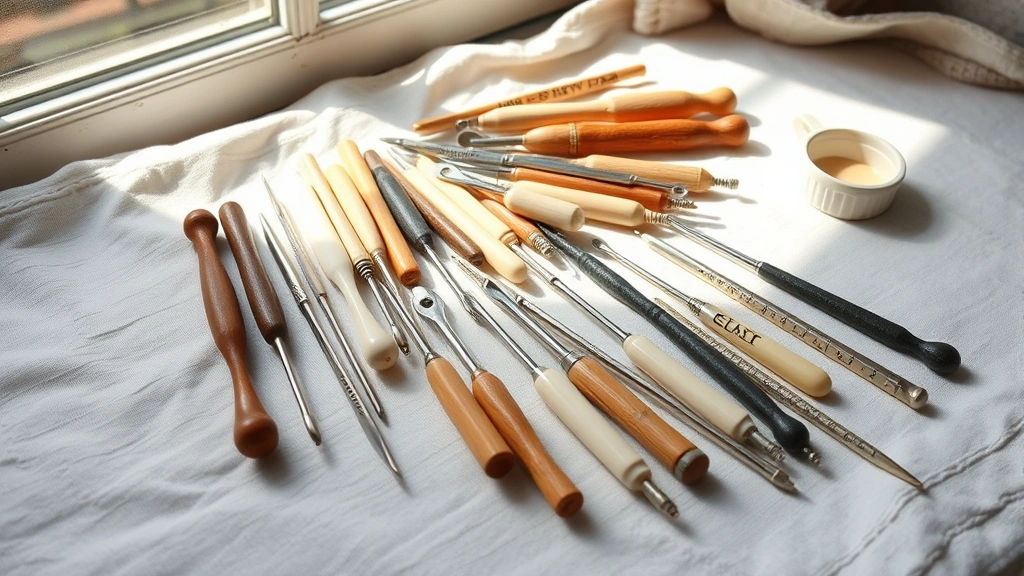
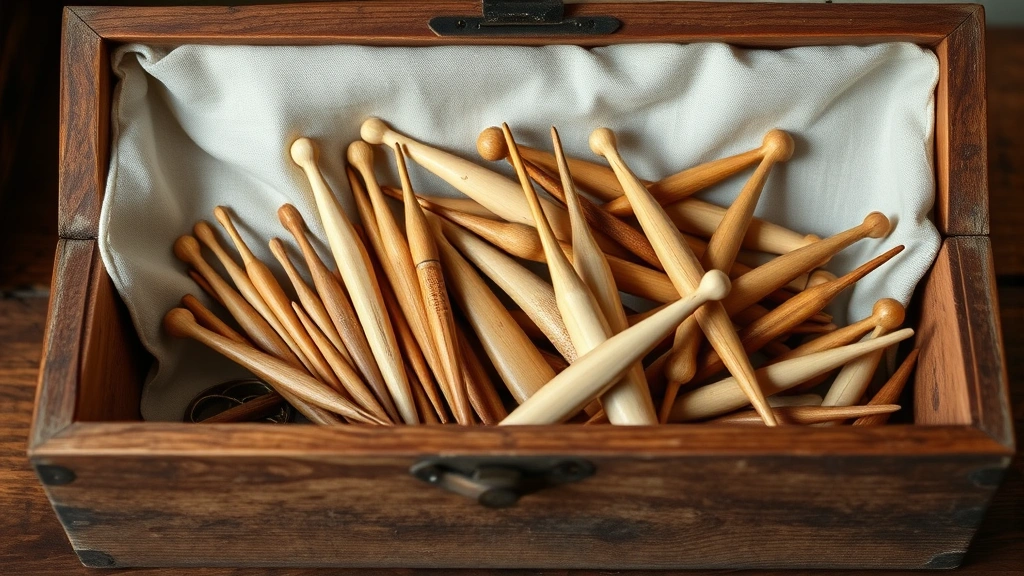
Last weekend, I was helping my neighbor sort through her grandmother’s crochet supplies when we found a box labeled “Vintage Hooks – Handle with Care.” Inside were the most gorgeous wooden and bone hooks I’d ever seen, some dating back to the 1940s. As we carefully examined each one, she asked me something I hear all the time: “How do I know if these old hooks are still good to use, and what sizes are they?”
It’s a question that comes up constantly in crochet groups and forums. Whether you’ve inherited hooks from a relative, found some treasures at an estate sale, or you’re just trying to figure out what you already own, identifying vintage crochet hook sizes can feel like solving a puzzle. The sizing systems have changed over the decades, and many older hooks don’t have clear markings or use completely different numbering systems than what we see today.
Here’s the thing though – once you know what to look for, identifying these hooks becomes much easier. And trust me, it’s worth the effort. Some of those vintage hooks are absolute gems to work with, often better quality than what you’ll find in many craft stores today.
Quick Answer
Vintage crochet hooks can be identified by measuring the diameter with a gauge tool or ruler, comparing to modern size charts, and looking for maker’s marks or patent numbers. Most vintage hooks follow older sizing systems that don’t match today’s standards, so measurement is more reliable than any numbers you might find stamped on them.
Why Vintage Hooks Are Sized Differently
Before we dive into the how-to, let’s talk about why vintage hook sizing is such a mess in the first place. The short answer? There wasn’t a standardized system for decades, and different manufacturers did their own thing.
In the early to mid-1900s, crochet hook manufacturers used various sizing systems. Some used letters (like today’s system), others used numbers, and some used completely proprietary systems. A size 5 hook from one company might be completely different from a size 5 from another company. It wasn’t until the 1980s that the Craft Yarn Council helped establish more standardized sizing that we mostly follow today.
European hooks often used metric measurements, while American hooks used their own numbering systems. British hooks had yet another system. If your vintage hooks came from different countries or eras, you might have three different “size 6” hooks that are all completely different sizes.
This is why measuring is so much more reliable than trying to decode old markings. When I’m working with vintage crochet patterns, I always measure my hooks first rather than trusting any numbers I see stamped on them.
Common Vintage Sizing Systems
Here are the main systems you’ll encounter:
- Old American Steel Hook System: Used numbers 00 through 14, but the actual sizes varied by manufacturer
- British Imperial System: Used different number ranges and didn’t align with American systems
- Early Aluminum Systems: Often used letters, but not the same letter-to-size ratio we use today
- Proprietary Brand Systems: Companies like Boye, Susan Bates, and others had their own unique numbering
How to Measure Your Vintage Hooks
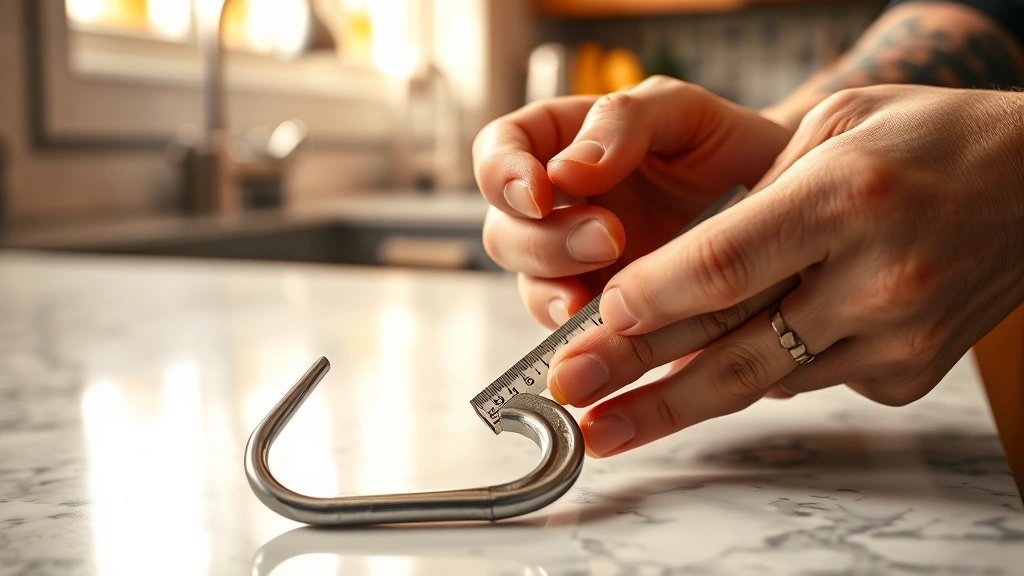
Measuring is hands-down the most accurate way to identify vintage hook sizes. You’ll need either a crochet hook gauge (my preferred method) or a ruler with millimeter markings.
Using a Hook Gauge
A crochet hook gauge is a small tool with holes of different sizes, each labeled with the corresponding hook size. You simply slide your hook through the holes until you find the one that fits snugly. I keep one in my crochet bag at all times – they’re incredibly handy for situations like this.
When using a gauge, make sure you’re measuring the actual working part of the hook, not the throat or the tip. The working diameter should slide through the hole with just a tiny bit of resistance – not loose, but not requiring force.
Pro tip: If your hook falls between two sizes on the gauge, go with the smaller size. It’s better to have a slightly smaller hook than you think than to be surprised by stitches that are too loose.
Measuring with a Ruler
If you don’t have a gauge, a ruler with millimeter markings works too. Measure the diameter of the shaft (the straight part of the hook, not the curved throat area). Here’s how the measurements typically convert:
| Millimeters | Modern US Size | Modern Letter |
|---|---|---|
| 2.25mm | US B | B-1 |
| 2.75mm | US C | C-2 |
| 3.25mm | US D | D-3 |
| 3.5mm | US E | E-4 |
| 3.75mm | US F | F-5 |
| 4.0mm | US G | G-6 |
| 4.5mm | US 7 | 7 |
| 5.0mm | US H | H-8 |
| 5.5mm | US I | I-9 |
| 6.0mm | US J | J-10 |
Remember, vintage hooks might not match these measurements exactly. A hook that measures 3.8mm might work perfectly fine as a modern G hook (4.0mm) for most projects.
Understanding Old Sizing Systems
Once you’ve measured your hooks, it helps to understand what those old markings actually meant. This knowledge becomes especially useful when you’re working with reading vintage crochet patterns that call for specific hook sizes using old terminology.
Steel Hook Numbering
Vintage steel hooks (used for thread crochet and fine work) used a completely different numbering system. The higher the number, the smaller the hook – opposite of today’s system. A vintage size 10 steel hook is much smaller than a vintage size 5.
These hooks were primarily used for crochet thread projects like doilies and lace work. If you find steel hooks in your vintage collection, they’re likely quite small – anywhere from 0.6mm to 1.75mm in diameter.
Early Aluminum and Plastic Systems
The aluminum and plastic hooks from the 1950s through 1970s often used letter systems, but they didn’t always match up with today’s letters. A vintage “F” hook might measure closer to what we’d call a G or H today.
Some manufacturers used color coding along with letters or numbers. Boye hooks, for example, often had colored handles that corresponded to sizes, but these color systems changed over the years.
I once spent an entire afternoon trying to figure out why a 1960s pattern wasn’t working with my “matching” vintage hook. Turns out the vintage G hook I was using was actually closer to a modern I hook. Always measure first!
Identifying Maker’s Marks and Brands
Many vintage hooks have maker’s marks, brand names, or patent numbers that can help you identify not just the size, but also the approximate age and origin of your hooks. This detective work can be pretty fun once you get into it.
Common Vintage Brands
Boye: One of the oldest American crochet hook manufacturers, dating back to the 1920s. Look for “Boye” stamped on the hook, often with a patent number. Early Boye hooks often have distinctive colored handles.
Susan Bates: Another major American brand. Vintage Susan Bates hooks often say “Bates” or “S.B.” and may include patent numbers from the 1940s-1960s.
Milward: A British company that made beautiful bone and ivory hooks. These are often unmarked but have distinctive craftsmanship.
Aero: Another British brand, known for their lightweight aluminum hooks with colored handles.
Patent Numbers and Dating
Patent numbers can help you date your hooks pretty accurately. Here’s a rough guide:
- Patents in the 1,000,000 range: 1910s-1920s
- Patents in the 2,000,000 range: 1930s-1940s
- Patents in the 3,000,000 range: 1950s-1960s
You can look up specific patent numbers on the Google Patents database if you want to get really specific about dating your collection.
Hook Materials and Dating Your Collection
The material your vintage hooks are made from can tell you a lot about their age and origin. Different materials were popular in different eras, and knowing this can help you date your collection and understand how to care for them.
Bone and Ivory Hooks
These are among the oldest hooks you’ll find, popular from the 1800s through the early 1900s. Real ivory is illegal to sell now, but you might find genuine antique pieces in inherited collections. Bone hooks are more common and were used well into the mid-1900s.
These hooks often have a beautiful patina and feel wonderful to work with. They’re usually unmarked for size, so measuring is essential. Handle them carefully – they can be brittle with age.
Steel Hooks
Steel hooks were the standard for fine thread work from the early 1900s through the 1980s. They’re incredibly durable and many vintage steel hooks are still perfectly usable today. Look for maker’s marks like “Boye” or “Milward” stamped near the handle.
The numbering system for steel hooks was more standardized than aluminum hooks, but it still doesn’t match modern sizing exactly.
Aluminum Hooks
Aluminum became popular in the 1940s and 1950s as a lighter alternative to steel for larger hooks. Early aluminum hooks often have a distinctive matte finish and may show some oxidation (white powdery spots) with age.
Many aluminum hooks from this era have colored handles – Boye was particularly known for this. The colors often corresponded to sizes, but the systems changed over time.
Early Plastic Hooks
Plastic hooks started appearing in the 1950s and became very common in the 1960s and 1970s. Early plastic hooks were often made of higher-quality materials than some modern plastic hooks and can still be excellent to work with.
Look for brand names molded into the plastic. The sizing on plastic hooks is often more reliable than on metal hooks from the same era.
Assessing Condition and Usability
Not every vintage hook you find will be in working condition, but many can be restored or are still perfectly usable as-is. Here’s what to look for when assessing your vintage collection.
What Makes a Hook Unusable
Deep scratches or gouges: These will catch on your yarn and make stitching frustrating. Minor surface scratches are usually fine.
Bent or damaged tips: The hook tip needs to be smooth and properly shaped to catch yarn effectively.
Loose or damaged handles: If the handle is coming apart or cracked, the hook might not be safe to use with any pressure.
Severe corrosion: While minor tarnish is fine, deep corrosion can create rough spots that snag yarn.
Hooks Worth Restoring
Many vintage hooks just need a good cleaning to be perfectly usable. Here’s my process:
- Gentle cleaning
Start with warm soapy water and a soft cloth. For stubborn dirt or tarnish, try a paste of baking soda and water.
- Polish if needed
For metal hooks, a gentle metal polish can restore shine and smooth out minor scratches. Test on an inconspicuous area first.
- Check the action
After cleaning, test the hook with some scrap yarn. The yarn should glide smoothly without catching.
I’ve restored dozens of vintage hooks over the years, and it’s amazing how many come back to life with just a good cleaning. Some of my favorite hooks to work with are 1950s aluminum Boyes that I cleaned up.
Safety note: If you suspect a hook might be made of ivory or other restricted materials, research the laws in your area before selling or giving it away. For personal use, vintage ivory hooks are generally okay to own and use.
Organizing Your Vintage Hook Collection
Once you’ve identified and assessed your vintage hooks, you’ll want to organize them in a way that makes them easy to use. I treat my vintage hooks a bit differently than my modern ones because they’re often more delicate and sometimes irreplaceable.
Storage Solutions
I keep my vintage hooks in a separate case from my everyday hooks. A soft roll-up case or individual sleeves work well to prevent them from banging against each other. Many vintage hooks have delicate finishes that can be damaged by metal-on-metal contact.
For hooks that are more for display than daily use, consider a shadow box or display case. Some of those old bone and ivory hooks are genuinely beautiful pieces of craftsmanship.
Labeling System
Since vintage hook markings aren’t reliable, I create my own labels. I use small adhesive labels with the measured size written in modern terms. For example, a vintage hook that measures 4.0mm gets labeled “G/4mm” regardless of what’s stamped on it.
I also note any interesting details – the brand, approximate age, or material. This information becomes part of the hook’s story and can be useful if you’re ever working with patterns from the same era.
Creating a Reference Chart
For hooks I use regularly, I keep a simple reference chart that lists:
- Original marking (if any)
- Measured size in mm
- Modern equivalent size
- Brand/material
- Condition notes
This saves me from re-measuring every time I want to use a particular hook. When I’m working on beginner crochet projects with students, having this reference makes it easy to grab the right vintage hook quickly.
Common Questions
How accurate do vintage hook measurements need to be?
For most projects, being within 0.25mm is perfectly fine. Crochet is more forgiving than knitting when it comes to hook size variations. If you’re working on something that requires precise gauge (like fitted garments), stick to modern hooks or test your gauge carefully with vintage ones.
Are vintage hooks better quality than modern ones?
Many vintage hooks, especially from the 1940s-1960s, were made with higher quality materials and better manufacturing standards than some modern budget hooks. However, today’s premium hooks often surpass vintage quality. It really depends on the specific hook and manufacturer.
Can I use vintage steel hooks with modern threads?
Absolutely! Vintage steel hooks work beautifully with modern crochet thread weights. Just remember that the sizing system was different, so always check your gauge. A vintage size 10 steel hook is much smaller than a modern size 10 regular hook.
What should I do if I can’t identify a vintage hook size?
Make a gauge swatch! Crochet a small sample with the mystery hook and compare it to swatches made with known hook sizes. This is actually more accurate than relying on measurements alone because it shows you how the hook performs with actual yarn.
Are there any vintage hooks I should avoid using?
Avoid hooks with deep scratches, bent tips, or loose handles. Also be cautious with very old ivory hooks – they can be brittle. If a hook feels rough or catches on yarn during testing, it’s better to display it than use it for projects.
How much are vintage crochet hooks worth?
Values vary widely depending on age, rarity, condition, and material. Common aluminum hooks from the 1950s-60s might be worth $1-5 each, while rare bone or ivory hooks from the early 1900s could be worth $20-50 or more. Brand name and unusual sizes tend to be more valuable.
Can I sell vintage hooks that contain ivory?
This depends on your local laws and the age of the hooks. In the US, antique ivory (pre-1976) can often be sold within state lines but not across state lines without special permits. Check your local regulations before selling any ivory items.
Should I use vintage hooks for everyday crocheting?
If they’re in good condition, absolutely! Many vintage hooks are wonderful to work with. I use several 1950s Boye hooks regularly – they have a great feel and produce even stitches. Just treat them with a bit more care than modern hooks, and have backups for important projects.
Identifying vintage crochet hook sizes might seem daunting at first, but once you get the hang of measuring and understanding the old systems, it becomes second nature. Those mystery hooks in your collection could become some of your favorites to work with – many crocheters swear by their vintage tools.
Take your time with the identification process. Measure carefully, do a bit of research on any maker’s marks you find, and don’t be afraid to test unknown hooks with scrap yarn. Some of my most treasured hooks came from estate sales and inherited collections, and the stories behind them make every project a little more special.
Whether you end up with a collection of working hooks or a few display pieces, vintage hooks connect us to the long history of crochet and the countless hands that created beautiful things before us. Happy hooking!