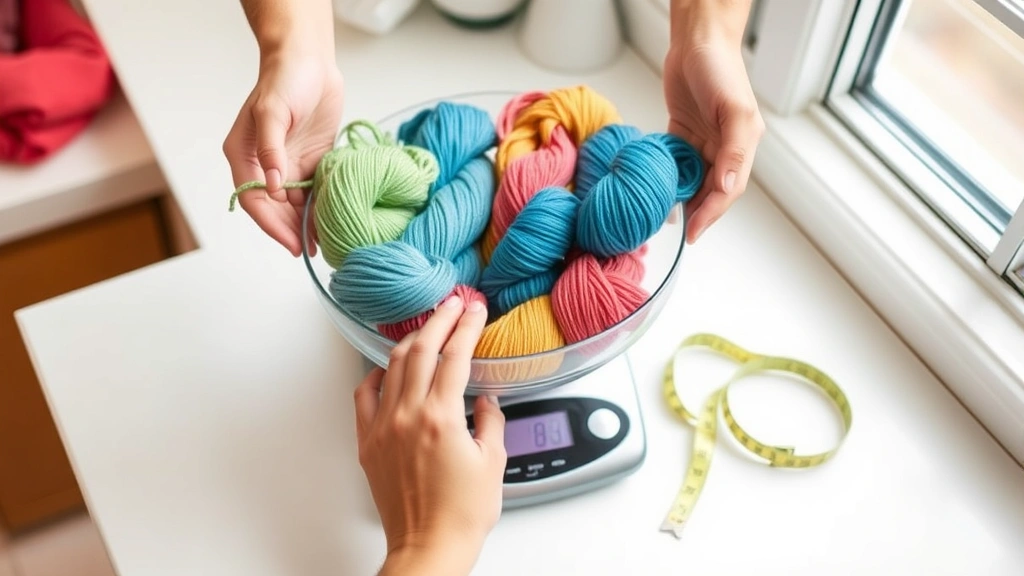
You know that moment when you’re halfway through a beautiful crochet project and suddenly realize you’re running dangerously low on yarn? Your heart sinks as you wonder if you’ll have enough to finish, or worse, if you’ll be able to find the same dye lot if you need more. I’ve been there more times than I’d like to admit, and it’s taught me the hard way that understanding yarn requirements isn’t just helpful – it’s essential for any crocheter who wants to avoid mid-project panic.
Learning to calculate yarn amounts accurately has saved me countless trips to the craft store and prevented numerous unfinished projects from languishing in my craft room. Whether you’re planning a delicate baby blanket or a chunky winter sweater, knowing how much yarn you need before you start can make the difference between a smooth, enjoyable crafting experience and a frustrating guessing game.
The truth is, yarn calculation isn’t as mysterious as it might seem. With a few key principles and some practical tips I’ve gathered over years of crocheting everything from dishcloths to king-size afghans, you’ll be able to estimate yarn requirements like a pro. Let’s dive into the methods that actually work in real life, not just on paper.
Quick Answer
Yarn requirements depend on project size, yarn weight, and stitch type. Use pattern recommendations as your starting point, then adjust based on your gauge and tension. Always buy an extra skein for larger projects, and keep dye lot numbers for future reference.
Understanding Yarn Weights and Their Impact
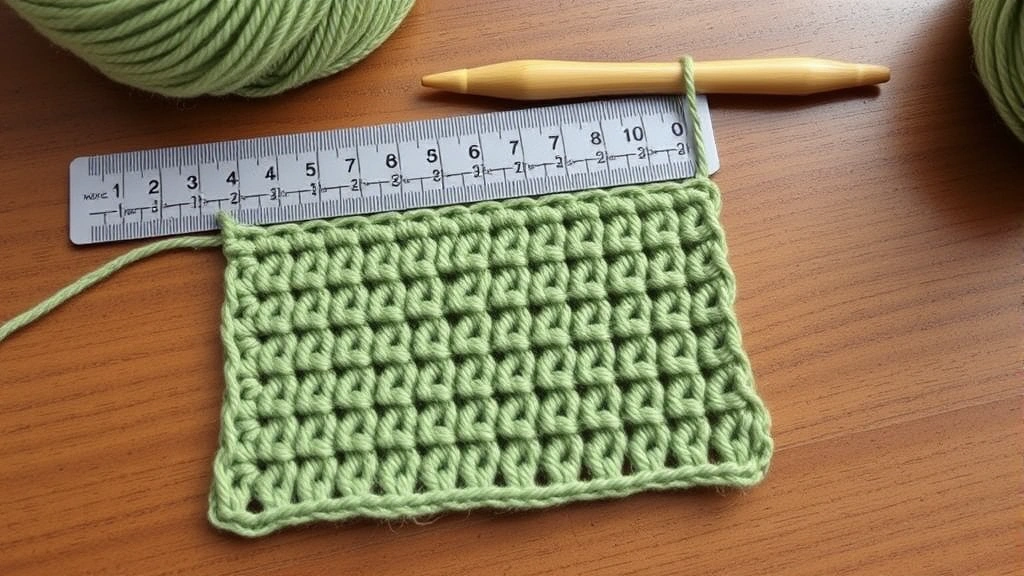
Yarn weight is probably the biggest factor in determining how much yarn you’ll need for any project. The Craft Yarn Council has standardized these weights, making it easier for us to predict usage across different brands and fibers.
Let me break down what I’ve learned about each weight category. Lace weight (0) and fingering weight (1) yarns are incredibly fine and require significantly more yardage than you might expect. I once made a shawl in fingering weight that used over 800 yards – the same pattern in worsted weight would have needed only about 400 yards. These lighter weights create delicate, drapey fabric but eat up yardage quickly.
| Yarn Weight | Typical Yardage per 50g | Hook Size Range | Best For |
|---|---|---|---|
| Lace (0) | 400-500 yards | 1.6-2.25mm | Delicate shawls, doilies |
| Fingering (1) | 350-400 yards | 2.25-3.5mm | Socks, lightweight garments |
| Sport (2) | 300-350 yards | 3.5-4.5mm | Baby items, light sweaters |
| DK (3) | 250-300 yards | 4.5-5.5mm | Sweaters, blankets |
| Worsted (4) | 200-250 yards | 5.5-6.5mm | Afghans, scarves, hats |
| Bulky (5) | 150-200 yards | 6.5-9mm | Quick projects, winter accessories |
Sport weight and DK weight yarns hit that sweet spot for many projects. They work up reasonably quickly while still giving you nice stitch definition. I particularly love DK weight yarn for baby blankets because it creates a substantial but not overly heavy fabric.
Worsted weight is the workhorse of the crochet world. Most patterns are written for worsted weight because it’s so versatile and widely available. When I’m teaching someone to crochet, I always start them with a good worsted weight acrylic like Lion Brand Vanna’s Choice or Red Heart Super Saver.
Pro Tip: When substituting yarn weights, remember that going down a weight category typically doubles your yardage needs, while going up a weight cuts it roughly in half. Always make a gauge swatch to be sure.
Practical Methods for Calculating Yarn Needs
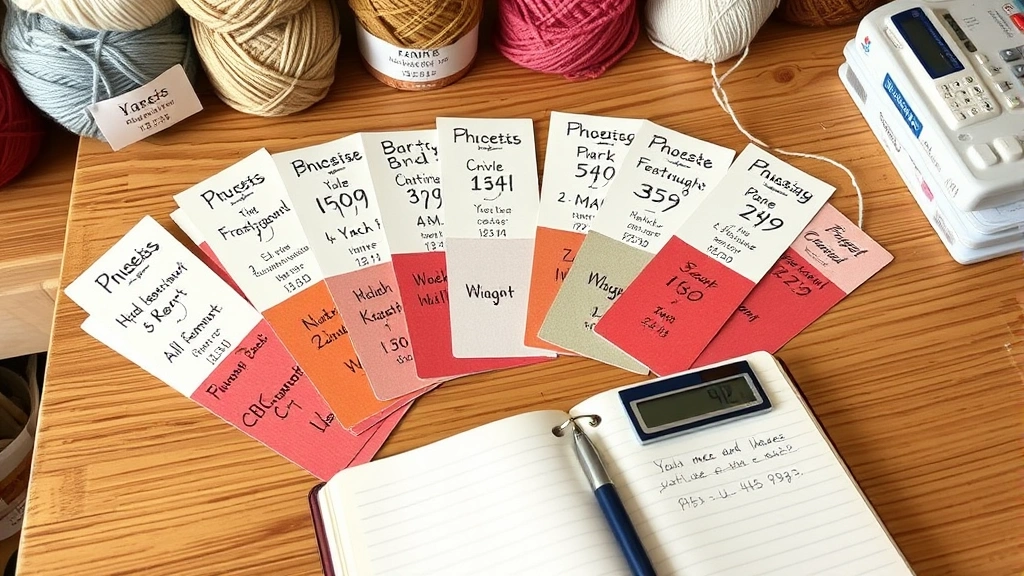
Over the years, I’ve developed several reliable methods for estimating yarn requirements, and I’ll share the ones that have served me best. The most straightforward approach is using pattern recommendations as your baseline, but there are times when you need to calculate from scratch.
The square inch method works particularly well for blankets and other rectangular projects. Crochet a 4-inch square using your chosen yarn and hook, then weigh it on a kitchen scale. Let’s say your square weighs 0.5 ounces and your finished blanket will be 40 inches by 50 inches. That’s 2,000 square inches total, divided by 16 square inches in your sample equals 125 sample squares needed. Multiply 125 by 0.5 ounces, and you need about 62.5 ounces of yarn.
For garments, I prefer the measurement method. Measure the circumference and length of each piece you’ll be making. A simple pullover might break down like this: front panel (20 inches wide × 24 inches long), back panel (same dimensions), and two sleeves (12 inches wide × 18 inches long each). That gives you a total of 1,296 square inches of fabric to create.
The yardage-per-ounce calculation becomes crucial here. Most yarn labels tell you both the weight and yardage of the skein. For example, if you have a 3.5-ounce skein with 220 yards, that’s about 63 yards per ounce. Using our garment example above, if your gauge swatch used 0.3 ounces for 16 square inches, you’d need about 24.3 ounces total, which translates to roughly 1,530 yards.
Always round up your calculations and add at least 10% extra for larger projects. I’ve learned this lesson the hard way when I calculated exactly what I needed and came up short during the finishing touches.
The Stitch Pattern Factor
Different stitch patterns consume vastly different amounts of yarn, even when worked in the same yarn weight. Single crochet creates a dense, yarn-hungry fabric, while mesh stitches use significantly less. Here’s what I’ve observed in my own projects:
- Single crochet: Uses the most yarn, creates dense fabric
- Half double crochet: Moderate yarn usage, good drape
- Double crochet: Less yarn than sc, works up quickly
- Treble crochet: Minimal yarn usage, very open fabric
- Shell stitches: Variable usage depending on shell size
- Lace patterns: Generally use less yarn due to open spaces
When I made two identical baby blankets – one in single crochet and one in a shell pattern – the single crochet version used nearly 40% more yarn. This difference becomes even more pronounced with chunky yarn projects where stitch choice dramatically affects both appearance and yarn consumption.
Project-Specific Yarn Guidelines
Different types of projects have their own yarn requirement patterns, and I’ve learned to estimate based on project categories. Let me share some realistic numbers based on projects I’ve actually completed.
For baby blankets, I typically plan for 800-1,200 yards of worsted weight yarn for a 30×36 inch blanket. If you’re working in DK weight, bump that up to 1,000-1,500 yards. The exact amount depends heavily on your stitch choice – a simple granny square blanket will use less yarn than a solid single crochet blanket of the same size.
Adult afghans are where yarn planning becomes critical because of the investment involved. A throw-sized afghan (approximately 50×60 inches) in worsted weight typically requires 1,800-2,500 yards. I always buy at least 2,800 yards to account for my tendency to make things slightly larger than planned and to ensure I have enough for a nice border.
Garment Yarn Requirements
Sweaters and cardigans require careful calculation because fit is so important. Here’s what I’ve learned from making garments in various sizes:
| Garment Type | Size Small | Size Medium | Size Large | Size XL |
|---|---|---|---|---|
| Pullover Sweater | 1,200-1,500 yards | 1,400-1,700 yards | 1,600-2,000 yards | 1,800-2,200 yards |
| Cardigan | 1,400-1,700 yards | 1,600-1,900 yards | 1,800-2,200 yards | 2,000-2,500 yards |
| Vest | 800-1,000 yards | 900-1,200 yards | 1,100-1,400 yards | 1,300-1,600 yards |
These numbers assume worsted weight yarn and standard stitch patterns. If you’re working with lace crochet patterns or very open stitches, you might use 20-30% less yarn. Conversely, textured patterns like bobbles or cables can increase yarn usage by 15-25%.
Accessories are generally more forgiving in terms of yarn planning, but it’s still worth being accurate. A standard adult scarf (about 8 inches wide by 60 inches long) typically uses 300-500 yards of worsted weight yarn. Hats usually need 150-250 yards, while mittens or gloves require 200-350 yards for a pair.
Sizing Tip: When making garments, always check the finished measurements in the pattern against actual body measurements. Patterns often include ease, and understanding this will help you choose the right size and calculate yarn needs more accurately.
How Gauge and Tension Affect Yarn Usage
Gauge is absolutely critical for accurate yarn calculation, and it’s something I see many crocheters skip to their detriment. Your personal gauge – how many stitches and rows you create per inch – directly impacts how much yarn you’ll use.
If you crochet tighter than the pattern gauge, you’ll use more yarn and create a smaller, denser fabric. Conversely, if you crochet looser, you’ll use less yarn but end up with a larger, more open fabric. I learned this lesson when I made a sweater without checking gauge and ended up with something that could fit two people!
Let me give you a concrete example. A pattern calls for 18 single crochet stitches and 20 rows to equal 4 inches using a size H hook. Your gauge swatch shows 16 stitches and 18 rows in 4 inches. This means you’re crocheting looser than the pattern assumes, so you’ll likely need about 15-20% less yarn than the pattern suggests.
The math works like this: if the pattern expects 18 stitches but you’re getting 16, you’re creating fewer stitches per inch. Fewer stitches generally means less yarn usage, though the relationship isn’t perfectly linear because your looser stitches might also be using slightly more yarn per stitch.
Adjusting for Personal Tension
Most experienced crocheters develop a consistent tension over time, but it can vary based on several factors. I notice my tension gets tighter when I’m stressed or watching an exciting TV show, and looser when I’m relaxed and chatting with friends.
Environmental factors matter too. Cold weather tends to make my hands stiffer, resulting in tighter stitches. Hot weather has the opposite effect. If you’re working on a large project over several months, these variations can add up to noticeable differences in yarn usage.
Keep detailed notes about your gauge and any adjustments you make. I maintain a project journal where I record my actual gauge, hook size used, and final yarn consumption. This has become an invaluable reference for future projects.
When working with cotton yarn, I’ve found that gauge can shift slightly as you work because cotton has less stretch and memory than wool or acrylic. This is another reason to make your gauge swatch substantial – at least 6 inches square – and to check your gauge periodically throughout larger projects.
Common Calculation Mistakes to Avoid
I’ve made plenty of yarn calculation mistakes over the years, and I want to help you avoid the most common ones. The biggest mistake I see crocheters make is underestimating yarn needs because they want to minimize their investment. This penny-wise, pound-foolish approach often leads to more expensive solutions later.
Another frequent error is not accounting for design changes during the project. You might start with a simple single crochet pattern but decide halfway through that you want to add a fancy border or change to a more complex stitch pattern. These modifications can significantly increase yarn usage.
Dye lot differences are a real concern that many newer crocheters don’t fully appreciate. Even if you can find the exact same yarn in the same color, different dye lots can look noticeably different, especially in natural lighting. I always buy all my yarn for a project at once, and I buy from the same dye lot when possible.
The Substitution Trap
Yarn substitution is where many calculations go wrong. You fall in love with a pattern written for a specific yarn, but you want to use something different. The key is understanding that yarns with the same weight classification can still behave very differently.
For example, I once substituted a cotton yarn for the wool called for in a sweater pattern. Both were worsted weight, but cotton has no stretch and is denser than wool. My finished sweater was smaller than expected and used about 20% more yarn than the pattern suggested. Now I always make a generous gauge swatch when substituting, and I research the characteristics of my chosen yarn.
Fiber content affects yarn usage in subtle ways. Wool has memory and bounce, so it can stretch slightly as you work, potentially using less yarn. Cotton is inelastic and heavy, often requiring more yarn to achieve the same coverage. Acrylic falls somewhere in between but can vary significantly between brands.
Substitution Rule: When substituting yarns, match the yardage per weight rather than just the weight classification. A 100g ball of one worsted weight yarn might have 180 yards, while another has 220 yards. Always calculate based on total yardage needed.
Smart Yarn Buying Strategies
Smart yarn buying goes beyond just calculating the right amount – it’s about protecting yourself against common pitfalls and ensuring project success. My approach has evolved over years of both under-buying and over-buying yarn.
For any project requiring more than 500 yards, I automatically buy one extra skein. This might seem wasteful, but I’ve learned that the cost of that extra skein is minimal compared to the frustration of running short. Plus, leftover yarn rarely goes to waste in my house – it becomes the start of the next project or gets added to my scrap yarn collection for smaller projects.
I also keep detailed records of my purchases, including where I bought the yarn, the exact color name and number, dye lot information, and the date of purchase. This information has saved me multiple times when I needed to buy additional yarn months later.
Timing your purchases strategically can save money and ensure availability. I’ve learned to buy yarn for large projects during sales, but only after I’ve calculated exactly what I need. It’s tempting to buy yarn just because it’s on sale, but that leads to a stash full of random amounts that don’t add up to complete projects.
Online vs. In-Store Purchasing
Online yarn shopping offers better selection and often better prices, but it comes with risks. Colors can look different on your monitor than in person, and you can’t feel the yarn before buying. When I shop online for a large project, I often order one skein first to evaluate the color and quality before committing to the full amount.
Ravelry has become an invaluable resource for checking how yarns look in actual projects. I search for projects made with the yarn I’m considering to see real photos and read reviews from other crocheters.
For in-store shopping, I bring my phone with the pattern details and my calculations written down. It’s easy to get overwhelmed by all the beautiful yarns and forget exactly what you need. I also bring a small notebook to jot down exact yarn information if I need to come back later.
Don’t forget to factor in shipping costs when buying online. Sometimes buying one extra skein locally is more economical than paying shipping for a single skein later if you run short.
When You Run Short: Troubleshooting Tips
Despite our best planning, sometimes we run short of yarn. I’ve developed several strategies for dealing with this situation that can often save a project without starting over completely.
The first step is always to check if you can find more yarn in the same dye lot. Contact the store where you originally purchased the yarn – they might have more in stock or be able to special order it. Online retailers sometimes have better luck tracking down specific dye lots, especially for popular yarns.
If you can’t find the exact match, consider how you can incorporate a slightly different yarn strategically. For blankets, I’ve successfully used a coordinating color for the final border, making it look like an intentional design choice. For garments, sometimes you can use the different yarn for cuffs, collars, or button bands.
Creative solutions can turn a yarn shortage into a design opportunity. I once ran short of the main color for a striped blanket and ended up creating a beautiful ombre effect by gradually introducing the new, slightly different yarn over several rows. The result was more interesting than the original plan.
Prevention for Next Time
When you do run short, use it as a learning opportunity. Calculate how much yarn you actually used versus what you originally estimated. Was your gauge different than expected? Did you make design changes during the project? Did you add extra length or width?
I keep a project log where I record these details. Over time, I’ve learned that I consistently use about 15% more yarn than patterns suggest because I tend to make things slightly larger and I prefer substantial borders. Knowing this about my crocheting style helps me plan better for future projects.
Consider the project’s end use when making shortage decisions. A baby blanket that will be washed frequently needs to be made from yarns with similar care requirements. A decorative throw that’s rarely used can incorporate different fibers more successfully.
Emergency Strategy: If you’re within a few yards of finishing and can’t find more yarn, try using a slightly smaller hook for the final rows. This will use less yarn per stitch and might give you just enough to complete the project.
Common Questions
How much extra yarn should I buy for a large project?
For projects requiring more than 1,000 yards, I recommend buying 10-15% extra yarn. This accounts for gauge variations, design changes, and the need for sufficient yarn to complete borders or finishing details. For smaller projects under 500 yards, one extra skein is usually sufficient. Always buy all your yarn from the same dye lot when possible.
Can I mix different brands of the same yarn weight?
While different brands of the same weight category can technically be mixed, they often have different characteristics that affect the finished project. Yarn thickness, twist, and fiber content can vary significantly even within the same weight class. I recommend making gauge swatches with each yarn to ensure they work up to similar dimensions and have compatible drape and texture.
How do I calculate yarn needs when making my own pattern?
Start by making a substantial gauge swatch (at least 6 inches square) in your chosen yarn and stitch pattern. Weigh the swatch and calculate the yarn used per square inch. Then measure or estimate the total square inches of your finished project and multiply by the yarn usage per square inch. Add 15-20% extra for a safety margin and finishing details.
What’s the difference between yarn weight and yarn thickness?
Yarn weight refers to the standardized categories (lace, fingering, sport, DK, worsted, bulky) that indicate the general thickness and recommended hook size. Actual thickness can vary within each weight category depending on fiber content, construction, and brand. Always check the yards per weight ratio on the label for more accurate calculations.
How much yarn do I need for a king-size blanket?
A king-size blanket (approximately 90×108 inches) typically requires 3,500-5,000 yards of worsted weight yarn, depending on the stitch pattern. Dense stitches like single crochet will use more yarn, while open patterns like shells or mesh will use less. I always buy at least 5,500 yards to ensure I have enough for borders and any size adjustments.
Should I buy all my yarn at once or as I need it?
Always buy all your yarn at once, preferably from the same dye lot. Dye lots can vary noticeably even in the same color, and popular colors may be discontinued or temporarily out of stock. The slight extra cost of buying everything upfront is much less than the frustration of not being able to complete your project with matching yarn.
How do I adjust yarn amounts when changing hook sizes?
Using a larger hook generally requires less yarn because it creates looser, more open stitches. Using a smaller hook uses more yarn and creates denser fabric. The difference is typically 10-20% per hook size change. Always make a new gauge swatch when changing hook sizes and recalculate based on your actual gauge rather than the pattern’s suggested gauge.
Can I use the yarn requirements from knitting patterns for crochet?
No, crochet typically uses 25-30% more yarn than knitting for the same project size because crochet stitches are generally taller and use more yarn per stitch. If you’re adapting a knitting pattern for crochet, increase the yarn requirements accordingly and make a gauge swatch to verify your calculations.
Understanding yarn requirements is one of those skills that improves with experience, but having solid calculation methods gives you confidence to tackle any project. Remember that it’s always better to have a little extra yarn than to run short partway through a project.
The key is finding the balance between being prepared and being wasteful. With the methods I’ve shared, you’ll be able to estimate yarn needs accurately for most projects while building your own database of what works for your crocheting style and preferences.
Start with smaller projects to practice these calculation techniques, and don’t be afraid to keep detailed notes about what worked and what didn’t. Before long, you’ll be able to walk into a yarn store with confidence, knowing exactly what you need for that next beautiful project. Happy crocheting!