The Complete Guide to Choosing Yarn Weight for Your Crochet Projects
There’s something almost paralyzing about standing in front of a yarn wall, isn’t there? Hundreds of colors, textures, and weights staring back at you, and you’re holding a pattern that just says “worsted weight” or “DK yarn.” If you’ve ever felt confused about what yarn weight actually means, or why it matters so much for your projects, you’re definitely not alone. I’ve been there—we all have. The good news? Understanding yarn weight isn’t rocket science, and once you get it down, choosing the right yarn becomes genuinely enjoyable instead of stressful.
Yarn weight is basically the thickness of the yarn strand, and it’s one of the most important factors in making sure your finished project actually looks like the picture on the pattern. Use the wrong weight, and you might end up with a blanket that’s stiff as cardboard or a sweater that looks like it belongs to a doll. The right weight? That’s when magic happens. Let’s walk through this together so you can confidently pick yarn for whatever you’re dreaming up next.
Understanding the Yarn Weight System
The yarn weight system exists because crocheters and knitters needed a universal language. Imagine if every yarn company just called their yarn whatever they wanted—”super thick” or “medium-ish.” Chaos, right? Back in 2007, the Craft Yarn Council standardized the system we use today, and honestly, it’s made everything so much clearer.
Yarn weight is measured by how many yards or meters are in one pound (or 100 grams) of yarn. Heavier yarns have fewer yards per pound because the strands are thicker. Lighter yarns pack more yardage into that same weight because they’re thinner. This is why a ball of worsted weight yarn might be 180 yards, while a ball of fingering weight could be 400+ yards at the same 50-gram weight. It’s all about density.
The system uses both numbers (0–7) and names, and both are important. You’ll see labels like “3 – DK” or “4 – Worsted,” and those numbers and names are your friends. They tell you instantly what you’re working with and help you find substitutes if you need them. Different yarn brands might have slightly different yardage even within the same weight category, which is why checking the actual yardage on the ball band matters just as much as the weight name.
Here’s something really practical: the ball band (that little label wrapped around the yarn) is your treasure map. It’ll tell you the weight, yardage, fiber content, care instructions, and usually recommended hook size. Snap a photo of it before you leave the store or save the digital version if you’re shopping online. Future-you will be so grateful when you’re halfway through a project and need to remember the exact yarn you used.
The Seven Standard Yarn Weights Explained
Let’s break down each weight category so you know exactly what you’re looking at. These are the official categories, and understanding them will completely change how you shop for yarn.
0 – Lace Weight: This is the finest yarn you’ll typically find. It’s delicate, airy, and gorgeous for intricate shawls, doilies, and lacy garments. You’ll use a tiny hook (steel hooks, often size 000 to 1) and create beautiful, open stitches. The downside? It requires patience. Lace weight projects take time, and the yarn can be slippery. But when you finish a lace shawl, the sense of accomplishment is unreal. Brands like Berroco and Knit Picks have beautiful lace-weight options.
1 – Superfine/Sock Weight: Despite the name, this isn’t just for socks (though it’s perfect for them). Superfine is delicate but workable, great for baby items, shawlettes, and lightweight garments. You’ll use a hook in the US 0–3 range. The yardage is generous—a 50-gram ball might have 300+ yards—so one ball can go surprisingly far. This weight is my go-to when I want something that feels refined without the intensity of lace weight.
2 – Fine/Sport Weight: Fine weight is where things start feeling more accessible. It’s still light and elegant, perfect for baby clothes, delicate shawls, and fitted garments. Hook sizes typically range from US 1–3. The fabric drapes beautifully, and it’s forgiving enough for beginners who want to try something more delicate than worsted. If you’re making something for a baby, fine weight is often your sweet spot.
3 – DK/Light Worsted: This is a personal favorite because it’s genuinely versatile. DK weight works up quickly enough that you see progress, but it’s still light enough for summer garments and elegant accessories. You’ll use a US 3–5 hook. DK is fantastic for amigurumi (stuffed toys), lightweight sweaters, and blankets that won’t feel heavy on the bed. The yardage per ball is usually manageable, and it’s available in every color imaginable.
4 – Worsted/Aran Weight: This is probably the most common yarn weight you’ll see. It’s the Goldilocks of yarn—not too heavy, not too light, just right. Worsted weight works up quickly with a US 7–9 hook, making it perfect for beginners and for projects where you want to see results fast. Most classic afghans, hats, and scarves use worsted weight. It’s forgiving, affordable, and widely available. If you’re just starting out, worsted is a great place to begin.
5 – Bulky/Chunky Weight: Now we’re talking fast projects. Bulky weight zooms along with a US 9–11 hook, and you’ll finish blankets, scarves, and sweaters in a fraction of the time. The downside? The fabric can sometimes feel stiff or heavy, and intricate stitch patterns don’t show up as beautifully. But for cozy, textured blankets and oversized scarves, bulky weight is pure joy. Ravelry has thousands of bulky-weight patterns if you want inspiration.
6 – Super Bulky Weight: This is the “I want a project done this weekend” weight. Super bulky uses a US 11+ hook and creates thick, squishy fabric fast. Chunky blankets, oversized cowls, and quick hats are perfect for super bulky. The trade-off is that you’re using a lot of yarn quickly, so projects can get expensive. But sometimes you just want something done, and super bulky delivers.
7 – Jumbo/Roving: This is the heavyweight champion of yarn. Some of these are barely even yarn—they’re more like thick roving or cord. Projects finish almost instantly, but they’re typically limited to very simple stitches and bold, sculptural designs. It’s fun and dramatic, but not practical for most garments. If you want to make a statement blanket or experiment with texture, jumbo weight is your playground.
Each weight has its moment to shine. The key is matching the weight to what you’re making and how much time you want to invest. A delicate lace shawl demands lace or superfine weight. A chunky blanket calls for bulky or super bulky. Getting this right from the start saves you from frustration and frogging (ripping out stitches and starting over).
How to Match Yarn Weight to Your Pattern
This is where the rubber meets the road. You’ve found a pattern you love, and now you need to make sure you’re using the right yarn weight. Here’s the step-by-step process:
Step 1: Read the Pattern Requirements At the very top of any good pattern, you’ll find a section that lists everything you need, including the recommended yarn weight. This is non-negotiable information. If the pattern calls for worsted weight, that’s what it’s designed for. The stitch count, gauge, and finished dimensions all depend on that weight.
Step 2: Check the Yardage This is crucial. A pattern might call for “worsted weight,” but you need to know how many yards. If the pattern says “400 yards of worsted weight” and you buy a ball with only 200 yards, you won’t have enough. Always check the yardage requirement against what’s on the yarn ball band. This is where Yarnspirations is invaluable—they list exact yardage requirements right in their free patterns.
Step 3: Verify the Recommended Hook Size The pattern will suggest a hook size, usually something like “US 7 (4.5mm) hook.” This isn’t arbitrary. The hook size works with the yarn weight to create the intended fabric. If you use a much smaller or larger hook, your fabric will be too tight or too loose, and the finished project won’t match the pattern’s dimensions.
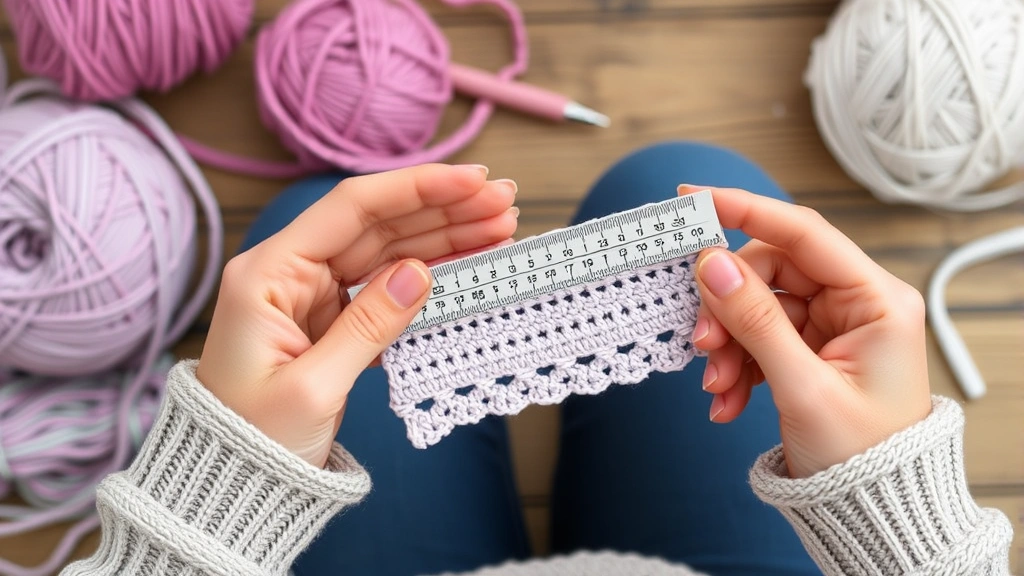
Step 4: Look at the Gauge Swatch This is the part many beginners want to skip, but please don’t. The gauge tells you how many stitches and rows should fit in a 4×4-inch square with the recommended yarn and hook. If your gauge is off, your finished project will be the wrong size. For something like a sweater, getting gauge wrong could mean the difference between it fitting beautifully and not fitting at all.
Let me give you a concrete example. Say you find a simple sweater pattern that calls for 800 yards of worsted weight yarn and recommends a US 8 hook. You fall in love with a different yarn that’s also labeled worsted weight, but it has 1200 yards per pound instead of the typical 180. That’s a problem. Even though it’s technically the same weight, the density is different, and your sweater won’t turn out right. This is why checking actual yardage and doing a gauge swatch matters so much.
Step 5: Make a Gauge Swatch Before Starting I know, I know—you’re excited to start. But trust me on this. Crochet a 4×4-inch square in the stitch pattern the project uses, using the recommended hook and yarn. Measure it (after blocking if the pattern suggests that). Count your stitches and rows. If it matches the pattern’s gauge, you’re golden. If it’s off, adjust your hook size up or down until it matches. A few minutes now saves hours of frustration later.
Checking Yardage and Gauge
Okay, these two things are so important they deserve their own section because they’re genuinely the difference between a successful project and one that goes sideways.
Understanding Yardage: Yardage is how far the yarn will stretch. It’s measured in yards (or meters) and listed on every yarn ball band. Here’s where it gets interesting: the same weight yarn from different brands can have wildly different yardage. One worsted-weight yarn might have 180 yards per 100 grams, while another has 220. This matters because if you’re substituting yarn, you need to match yardage, not just weight.
Let’s say you’re making a blanket and the pattern calls for 1000 yards of worsted weight. You find a yarn you love, but the ball band says 150 yards per 50 grams. Quick math: 150 yards × 2 = 300 yards per 100 grams. So you’d need roughly 3.3 balls (1000 ÷ 300). But if you picked a yarn with 200 yards per 100 grams, you’d need only 5 balls. Same weight, different yardage, different number of balls needed. This is why reading that ball band matters every single time.
Understanding Gauge: Gauge is your project’s DNA. It’s the number of stitches and rows in a 4×4-inch square, and it determines the final size of your project. Patterns are tested with specific yarn, hook size, and stitch tension to achieve a certain gauge. If you crochet tighter than the pattern designer, your stitches will be smaller, and your project will be too small. If you crochet looser, it’ll be too big.
Here’s a practical example: A sweater pattern might say “18 stitches and 12 rows = 4 inches with a US 8 hook.” If you crochet tighter and get 20 stitches and 13 rows in 4 inches, your gauge is off. The sweater will be smaller than intended. To fix it, go up a hook size and test again. Keep adjusting until your gauge matches.
I can’t stress this enough: gauge matters more for garments than for blankets or scarves. If your blanket is off by an inch, who cares? But if your sweater is 2 inches smaller in the chest, that’s a problem. Do the swatch. It takes 15 minutes and saves your whole project.
Common Mistakes and How to Avoid Them
After years of crocheting and watching others learn, I’ve seen the same mistakes pop up repeatedly. Let’s talk about them so you don’t have to learn the hard way.
Mistake 1: Assuming All Worsted Weight Is the Same This is huge. Worsted weight is a category, not a specific standard. Yarn A might be 180 yards per 100 grams, while Yarn B is 220. They’re both worsted, but they’re not interchangeable in every situation. Always check the yardage, not just the weight category.
Mistake 2: Ignoring the Ball Band That little label has everything you need. Fiber content, yardage, care instructions, recommended hook size, and gauge information. Take a photo or write it down. Don’t throw it away until the project is completely finished. You might need it.
Mistake 3: Skipping the Gauge Swatch “But it’ll take forever!” No, it won’t. A gauge swatch takes 15 minutes and prevents hours of ripping and restarting. Do it. Your future self will thank you.
Mistake 4: Choosing Yarn Based Only on Color Color matters, absolutely. But fiber content, yardage, and weight matter more. A gorgeous yarn that doesn’t have enough yardage or the right weight for your project is just expensive heartbreak. Fall in love with color, but verify the specs before you buy.
Mistake 5: Not Accounting for Fiber Characteristics Different fibers behave differently. Acrylic is affordable and low-maintenance. Wool is warm and elastic. Cotton is cool and crisp. Blends offer compromise. A pattern designed for wool might not work beautifully in acrylic because acrylic doesn’t have wool’s bounce and memory. Think about what the finished project needs to do.
Mistake 6: Underestimating How Much Yarn You Need Always buy a little extra. Dye lots vary, and you might need to frog and restart. Plus, running out of yarn one skein before finishing is genuinely heartbreaking. Buy one extra ball. It’s worth the peace of mind.
Substituting Yarn Weights Successfully
Sometimes you find the perfect yarn for a project, but it’s not the exact weight the pattern calls for. Can you make it work? Yes, but there’s a process.
Step 1: Know Why You’re Substituting Are you substituting because you love a specific yarn, or because you can’t find the recommended weight? Are you trying to save money or use stash yarn? Your reason matters because it’ll determine how much flexibility you have.
Step 2: Match Yardage First This is the most important rule. If the pattern calls for 800 yards of worsted weight, you need 800 yards of whatever you’re substituting, even if it’s a different weight. Yardage determines how much fabric you get. Weight determines how thick that fabric is.
Step 3: Test with a Gauge Swatch Make a swatch using the substitute yarn and the hook size the pattern recommends. If the gauge matches, you might be fine. If it doesn’t, try adjusting your hook size. Sometimes going up or down one size makes all the difference.
Step 4: Understand the Trade-offs If you’re using a heavier yarn than recommended, your project might be stiffer or warmer. If you’re using a lighter yarn, it might be drapier and take longer. These aren’t necessarily bad things—they’re just different. Think about whether the change serves your project.
Step 5: Be Prepared to Adjust Dimensions If you’re substituting a significantly different weight, your finished project size might change. A blanket might be slightly smaller or larger. A garment might fit differently. You might need to add or remove rows to get the right finished dimensions. It’s doable, but it requires thinking through the math.
Here’s a real example: You want to make a beginner-friendly blanket that calls for bulky weight, but you have stash yarn in worsted weight. Worsted is thinner, so you’ll need more yardage to get the same size blanket. If the pattern calls for 1000 yards of bulky, you might need 1500+ yards of worsted. Make a gauge swatch with your worsted yarn, adjust your hook if needed to get the right gauge, and then do the math on how many rows you’ll need to reach your target blanket size. It’s totally possible; it just requires a little planning.
The key to successful substitution is understanding that weight and yardage are different things, and both matter. You can’t just grab a different yarn and hope for the best. But if you’re thoughtful about it, you can absolutely make substitutions work.
Advanced Tips and Tricks
Once you’ve mastered the basics of yarn weight, here are some expert-level insights that’ll take your projects to the next level.
Mixing Yarn Weights: Some patterns intentionally use multiple yarn weights in the same project. An amigurumi project might use a heavier yarn for the body and a lighter yarn for embroidery details. As long as you follow the pattern’s instructions for where each weight goes, this works beautifully. But don’t mix weights randomly—that way lies chaos.
Understanding Yarn Twist: Yarn weight isn’t just about thickness; it’s also about how tightly twisted the fibers are. A tightly twisted yarn feels denser than a loosely twisted yarn of the same weight. This affects how the finished fabric feels and drapes. Tightly twisted yarn tends to be more durable; loosely twisted yarn is often softer and more delicate.
Considering Yarn Structure: Yarn comes in different structures: single-ply, multi-ply, novelty, and textured. A single-ply yarn feels different and behaves differently than a multi-ply yarn of the same weight. Novelty yarns (fuzzy, sparkly, bumpy) can hide or emphasize stitch definition. Understanding these differences helps you choose yarn that’ll show off your stitches beautifully.
Thinking About Fiber Blends: Pure fibers are wonderful, but blends offer practical advantages. A wool-acrylic blend combines wool’s elasticity with acrylic’s affordability and easy care. A cotton-acrylic blend is less limp than pure cotton. A silk-wool blend is luxurious and durable. Understanding what different fibers bring to the table helps you choose yarn that’ll perform the way you need.
FAQ
What’s the difference between yarn weight and yarn thickness?
They’re basically the same thing. Yarn weight is the official term that measures how thick the yarn strand is. Thickness is a more casual way of describing it. Both refer to the same concept.
Can I use any hook size with any yarn weight?
Technically yes, but you probably shouldn’t. Using a much larger or smaller hook than recommended will create fabric that’s too loose or too tight, and your project won’t match the pattern. Hook size and yarn weight work together to create the intended fabric. The pattern’s recommendation exists for a reason.
What happens if my gauge is off?
If your gauge is off, your finished project will be the wrong size. If your gauge is too tight (more stitches per inch than recommended), your project will be smaller than intended. If it’s too loose (fewer stitches per inch), it’ll be larger. This is why making a gauge swatch before starting any project—especially garments—is so important.
Is it okay to mix yarn weights in one project?
Only if the pattern specifically calls for it. If you’re improvising, you need to think through how the different weights will work together. Generally, mixing weights in the same section of fabric creates an uneven appearance. But using different weights for different parts (like a lighter weight for lace and a heavier weight for a border) can work beautifully.
How do I know if I’m holding yarn weight correctly?
You don’t hold yarn weight—yarn weight is a property of the yarn itself, not how you hold it. What you might be thinking of is yarn tension, which is how tightly you hold the yarn while crocheting. Tension affects gauge, so if your tension is very tight, your gauge will be tighter than the pattern recommends, and you might need a larger hook.
What’s the best yarn weight for beginners?
Worsted weight (weight 4) is ideal for beginners. It’s affordable, widely available, forgiving of tension inconsistencies, and works up fast enough that you see progress. It’s not so light that it’s fiddly, and not so heavy that it’s overwhelming. Start with worsted, and once you’re comfortable, explore other weights.
Can I substitute a yarn weight if I adjust my hook size?
Adjusting your hook size can help match gauge, but it doesn’t solve the fundamental problem of yarn weight substitution. If you’re using a significantly lighter or heavier yarn than the pattern calls for, adjusting your hook size might help your gauge match, but your finished project might still feel or look different. Always make a gauge swatch with your substitute yarn to see if it works.
What’s the relationship between yarn weight and yardage?
Yarn weight (thickness) and yardage (length) are different measurements. A heavier yarn has fewer yards per pound because the strands are thicker. A lighter yarn has more yards per pound because the strands are thinner. This is why two yarns labeled the same weight can have different yardage—they might have slightly different densities or fiber content.
How do I read a yarn ball band?
Most ball bands include: the yarn name and brand, weight category (like “worsted” or “DK”), yardage and weight (like “180 yards / 100g”), fiber content, recommended hook or needle size, gauge information, care instructions, and dye lot number. Read from top to bottom, and don’t hesitate to Google anything you don’t understand.
Is it better to choose yarn by weight or by feel?
Both matter, but weight comes first. The pattern dictates the weight you need. Then, within that weight category, you can choose based on feel, color, fiber content, and price. Don’t let feel override the weight requirement—that’s how projects go sideways.