Last week, I was teaching my neighbor how to crochet, and she asked me something that stopped me in my tracks: “What’s the difference between single crochet and double crochet?” It seems like such a basic question, but honestly, it’s one of the most important things to understand when you’re starting out. These two stitches are the foundation of almost everything you’ll make, and once you get the hang of them, a whole world of patterns opens up.
I remember when I first started crocheting, I’d see patterns calling for “sc” and “dc” and feel completely lost. The abbreviations looked like a foreign language, and I had no idea why one stitch was “better” than another for different projects. After years of making everything from baby blankets to intricate amigurumi patterns, I can tell you that understanding these fundamental stitches will save you so much frustration down the road.
The truth is, single crochet and double crochet aren’t just different techniques – they create completely different textures, use different amounts of yarn, and work up at totally different speeds. Knowing when to use each one can mean the difference between a project that turns out exactly as you imagined and one that leaves you wondering what went wrong.
Quick Answer
Single crochet creates a tight, dense fabric that’s perfect for structured items like bags and amigurumi, while double crochet works up faster and creates a more open, flexible fabric ideal for blankets and scarves. Single crochet uses less yarn but takes longer, while double crochet uses more yarn but finishes projects quicker.
Height and Structure Differences
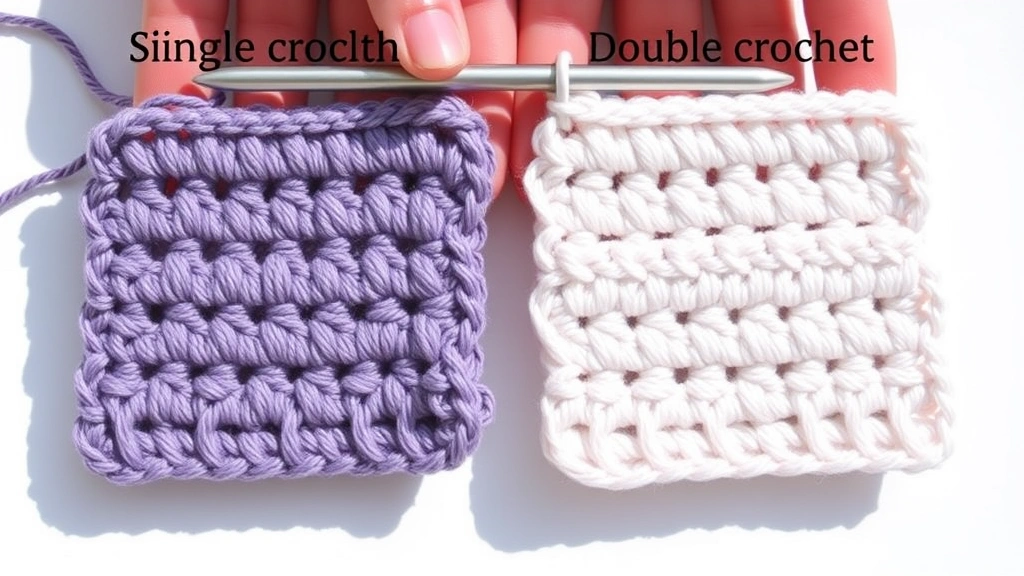
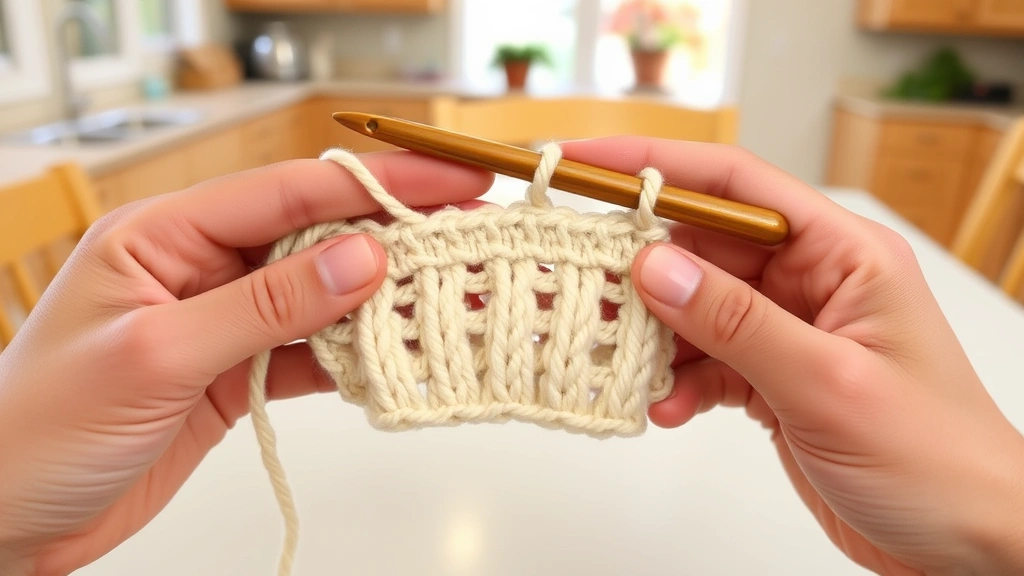
The most obvious difference between single crochet and double crochet is height. A single crochet stitch is about as tall as it is wide, creating a square-ish appearance. Double crochet stitches are roughly twice as tall, which is where the name comes from. But this height difference affects way more than just how your work looks.
Single crochet creates what I like to call a “brick wall” effect. Each stitch sits snugly next to its neighbors, creating a dense, sturdy fabric with minimal gaps. This makes it perfect for items that need structure and stability. When I’m making crochet bags or containers, single crochet is my go-to because it won’t stretch out of shape or develop holes over time.
Double crochet, on the other hand, creates a more open fabric with natural drape. The taller stitches leave small spaces between them, making the finished piece more flexible and breathable. This openness isn’t a flaw – it’s exactly what makes double crochet perfect for shawls and lightweight garments that need to move with your body.
Pro Tip: Hold a swatch of single crochet up to the light, then do the same with double crochet. You’ll immediately see how much more light passes through the double crochet fabric – this visual really drives home the structural differences.
Stitch Definition and Appearance
Single crochet stitches have a very defined, uniform appearance. Each stitch creates a small “V” shape on the right side of your work, and these V’s stack neatly on top of each other. This creates clean, straight lines that are perfect for colorwork and detailed patterns.
Double crochet stitches are taller and create a more textured surface. The posts of the stitches are more prominent, giving your work a subtle ribbed effect. This texture can add visual interest to simple projects, but it can also make it harder to see mistakes or count stitches accurately.
Step-by-Step Technique Comparison
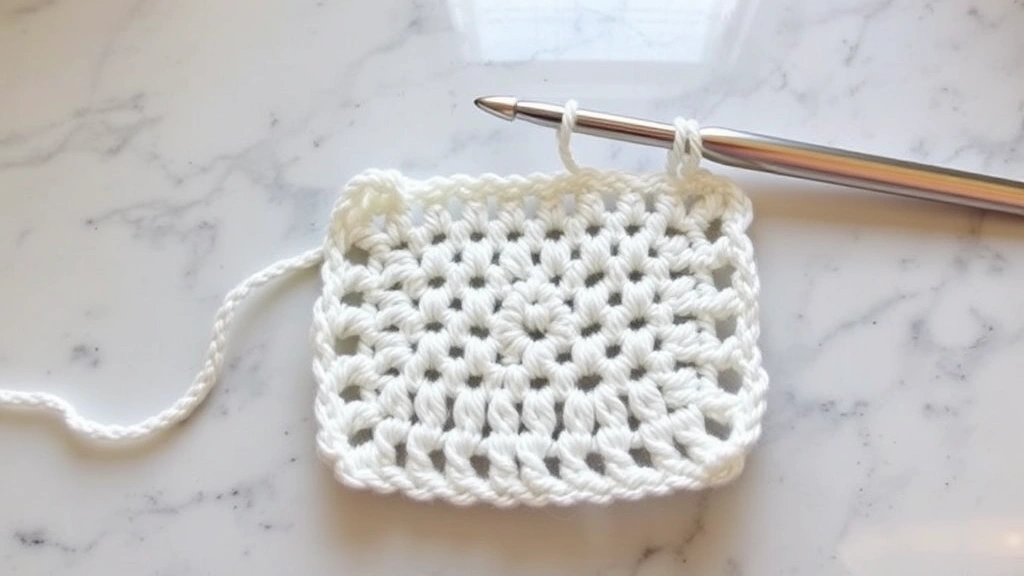
Let me walk you through both techniques so you can see exactly where they differ. I’ll assume you already know how to make a foundation chain and hold your hook comfortably.
Single Crochet Technique
- Insert Hook
Insert your hook into the designated stitch (usually the second chain from your hook for the first row). Your hook should go under both loops of the chain unless the pattern specifies otherwise.
- Yarn Over and Pull Through
Yarn over and pull through the stitch. You should now have two loops on your hook – no more, no less.
- Yarn Over and Complete
Yarn over again and pull through both loops on your hook. You’re left with one loop on your hook, and you’ve completed one single crochet stitch.
Double Crochet Technique
- Yarn Over First
Before inserting your hook anywhere, yarn over. This is the key difference – you start with a yarn over, not end with one.
- Insert Hook
Insert your hook into the designated stitch (usually the fourth chain from your hook for the first row, since you need those extra chains to account for the height).
- Yarn Over and Pull Through
Yarn over and pull through the stitch. You now have three loops on your hook.
- First Yarn Over and Pull
Yarn over and pull through the first two loops on your hook. You should have two loops remaining.
- Final Yarn Over and Complete
Yarn over one more time and pull through the last two loops. One loop remains on your hook, and you’ve completed one double crochet stitch.
Memory Trick: I tell my students to remember “Single = Simple” (one yarn over to finish) and “Double = Do it twice” (yarn over at the beginning, then two more times to complete).
Yarn Usage and Project Time
Here’s where things get really practical. Double crochet uses significantly more yarn than single crochet – we’re talking about 25-40% more yarn for the same coverage area. This happens because each double crochet stitch is literally longer, requiring more yarn to form.
| Stitch Type | Yarn Usage | Time to Complete | Fabric Density |
|---|---|---|---|
| Single Crochet | Less yarn needed | Slower to work | Very dense |
| Double Crochet | More yarn needed | Faster to work | More open |
But here’s the trade-off: double crochet works up much faster. Since each stitch is taller, you cover more ground with each row. When I’m making a large afghan, I often choose double crochet because I can finish the project in about half the time it would take with single crochet.
Let me give you some real numbers. Last month, I made two identical 12-inch squares – one in single crochet, one in double crochet, both using worsted weight yarn and a size H hook. The single crochet square took me about 45 minutes and used approximately 50 yards of yarn. The double crochet square took only 25 minutes but used about 65 yards of yarn.
Cost Considerations
When planning a project, factor in both yarn cost and your time. If you’re using expensive yarn, single crochet might be more budget-friendly. But if you’re working with affordable yarn and want to finish quickly, double crochet could be the better choice. For large projects like blankets, the yarn cost difference can be substantial – sometimes $20-30 more for double crochet.
Best Projects for Each Stitch
Choosing the right stitch for your project can make or break the final result. I’ve learned this through plenty of trial and error, and I want to save you from making the same mistakes I did.
Single Crochet Excels At:
- Amigurumi and Toys: The tight fabric prevents stuffing from showing through, and the structure holds shapes well. Amigurumi patterns almost always call for single crochet for this reason.
- Bags and Baskets: You need that density and structure to hold weight without stretching out of shape.
- Dishcloths and Washcloths: The tight weave makes them more absorbent and durable for scrubbing.
- Colorwork Patterns: The shorter stitches make it easier to create clean lines and detailed images.
- Fitted Garments: Less stretch means better shape retention in items like fitted tops or structured cardigans.
Double Crochet Works Best For:
- Blankets and Afghans: The drape is perfect for cuddling, and you’ll finish much faster than with single crochet.
- Scarves and Shawls: The natural drape and flexibility make these accessories comfortable to wear.
- Lightweight Sweaters: The breathability prevents overheating, and the fabric moves nicely with your body.
- Home Decor Items: Think curtains, table runners, or decorative throws where you want elegant drape.
- Quick Gift Projects: When you need something beautiful but don’t have weeks to complete it.
I once made a baby blanket in single crochet because I thought “denser = warmer.” It took me three months and felt more like a rug than a blanket. When I remade it in double crochet, it was soft, cuddly, and took only three weeks to complete.
Common Mistakes and How to Fix Them
Let me share the mistakes I see most often, because catching these early will save you hours of frustration.
Single Crochet Mistakes
Skipping the First Stitch: This is huge. In single crochet, your turning chain doesn’t count as a stitch, so you work into the very first stitch of the previous row. I can’t tell you how many students lose stitches because they skip that first one, thinking the turning chain “counts.”
Working Too Tightly: Single crochet naturally creates a dense fabric, but if you work too tightly, it becomes stiff and difficult to work into. Your stitches should slide easily on your hook. If you’re struggling to insert your hook into previous rows, loosen up your tension.
Inconsistent Height: Make sure you’re always working under both loops of the stitch unless specified otherwise. Working under just one loop changes the appearance and can make your rows uneven.
Double Crochet Mistakes
Forgetting the Initial Yarn Over: This is the big one. Double crochet starts with a yarn over before you insert your hook. Miss this step, and you’re essentially making a half-double crochet instead.
Incorrect Turning Chain Count: Double crochet needs a turning chain of 3 to match the height of the stitches. Using 1 or 2 chains will pull your work and create uneven edges. That turning chain of 3 usually counts as your first double crochet of the new row.
Losing Track of Steps: Double crochet has more steps than single crochet, and it’s easy to lose track. Practice the rhythm: yarn over, insert, yarn over and pull through (3 loops on hook), yarn over and pull through 2 loops (2 loops on hook), yarn over and pull through last 2 loops (1 loop on hook).
Fixing Tension Issues: If your single crochet is too tight, try going up one hook size. If your double crochet is too loose and gappy, try going down a hook size. The Craft Yarn Council provides excellent guidelines for hook sizes with different yarn weights.
How to Choose the Right Stitch
When I’m planning a new project, I ask myself a few key questions that help me decide between single and double crochet.
Consider Your Project’s Purpose
Think about how the finished item will be used. Does it need to hold its shape under stress? Single crochet. Does it need to drape elegantly or move with the body? Double crochet. Will it be washed frequently and need to maintain structure? Single crochet wins again.
Factor in Your Timeline
Be honest about your available time. If you’re making a Christmas gift in November, double crochet might be your friend. If you’re working on a summer project with plenty of time, you can choose based on other factors.
Consider Your Yarn Choice
Some yarns work better with certain stitches. Fuzzy yarns like mohair can get lost in the density of single crochet, but they create beautiful texture in double crochet. Smooth cotton yarns show off the clean definition of single crochet beautifully.
When working with chunky yarn, double crochet often works better because single crochet can create an overly stiff, thick fabric. With delicate threads, single crochet might give you the precision you need for detailed work.
Think About Your Skill Level
Single crochet is generally easier for beginners because there are fewer steps to remember and fewer places to make mistakes. Once you’re comfortable with single crochet, double crochet becomes much easier to learn because you already understand the basic motions.
Troubleshooting Tips
Even experienced crocheters run into problems. Here are solutions to the issues I encounter most often.
When Your Single Crochet Curves
If your single crochet work is curving or not laying flat, you’re probably adding or losing stitches. Count your stitches at the end of each row – you should have the same number as your foundation chain (minus one if you’re not counting the turning chain).
Another common cause is inconsistent tension. Try to maintain the same grip pressure throughout your work. If one section is tighter than another, it will pull and cause curving.
When Your Double Crochet Has Gaps
Large gaps between double crochet stitches usually mean your tension is too loose, or you’re using a hook that’s too large for your yarn weight. Try going down one hook size and see if that tightens things up.
Sometimes gaps appear because you’re not inserting your hook in the right place. Make sure you’re going under both loops of the stitch from the previous row, not just one loop or into the space between stitches.
Uneven Edges
This is often a turning chain issue. In single crochet, your turning chain of 1 doesn’t count as a stitch, so you work into the first actual stitch. In double crochet, your turning chain of 3 usually does count as the first stitch of the new row, so you skip the first actual stitch and work into the second one.
Practice Makes Progress: Don’t aim for perfection right away. Make practice swatches with different yarn weights and hook sizes. Keep a little notebook of what combinations work best for your tension and style.
Common Questions
How much more yarn does double crochet use compared to single crochet?
Double crochet typically uses 25-40% more yarn than single crochet for the same coverage area. For a baby blanket, this could mean the difference between 800 yards and 1,100 yards of yarn. The exact amount depends on your tension, yarn weight, and hook size, but it’s always significantly more.
Which stitch is better for beginners?
Single crochet is generally better for beginners because it has fewer steps and fewer opportunities for mistakes. Once you master single crochet and feel comfortable with basic tension and stitch recognition, double crochet becomes much easier to learn. I always recommend starting with beginner-friendly patterns that use single crochet.
Can I substitute single crochet for double crochet in a pattern?
You can, but your finished project will look and behave very differently. It will be much denser, smaller, and take longer to complete. You’ll also need significantly less yarn. If you do substitute, make a gauge swatch first and be prepared to adjust your hook size and possibly the number of stitches in your foundation chain.
Why does my single crochet look different from the pattern photos?
This usually comes down to tension or hook size. If your stitches look too tight and small, try going up a hook size. If they look too loose and gappy, try going down a hook size. Also, make sure you’re working under both loops of each stitch unless the pattern specifies otherwise. Different yarn weights can also dramatically change the appearance.
How long should it take to crochet a scarf in single crochet vs double crochet?
A typical adult scarf (about 6 inches wide by 60 inches long) takes me about 12-15 hours in single crochet using worsted weight yarn. The same scarf in double crochet takes about 6-8 hours. These times assume you’re working at a comfortable, steady pace without rushing. Your speed will vary based on experience level and how complex the pattern is.
Which stitch uses less yarn for dishcloths?
Single crochet uses less yarn for dishcloths and creates a better scrubbing texture. A typical cotton dishcloth in single crochet uses about 50-60 yards of worsted weight cotton, while the same size in double crochet would use 70-80 yards. Plus, the denser fabric of single crochet holds up better to frequent washing and scrubbing.
Can I mix single crochet and double crochet in the same project?
Absolutely! Many patterns combine different stitch heights to create texture and visual interest. Textured stitch patterns often alternate between single and double crochet to create raised and recessed areas. Just remember that you’ll need different turning chain heights for each type of row.
What’s the best hook material for each stitch type?
For single crochet, I prefer aluminum or steel hooks because they slide smoothly through the tight stitches. Bamboo hooks can catch on the dense fabric. For double crochet, bamboo or wood hooks work beautifully because the yarn flows easily, and the natural grip helps maintain consistent tension. However, this is very personal – try different materials to see what feels best in your hands.
Making Your Choice
After all these years of crocheting, I’ve learned that there’s no “right” choice between single and double crochet – only the right choice for your specific project, timeline, and goals. Some of my favorite pieces use single crochet for its clean lines and durability, while others showcase the elegant drape and quick satisfaction of double crochet.
The most important thing is to understand what each stitch brings to your work. Single crochet gives you precision, structure, and yarn efficiency. Double crochet gives you speed, drape, and beautiful texture. Both have their place in every crocheter’s toolkit.
My advice? Master both stitches thoroughly. Practice them until they feel natural in your hands, and don’t be afraid to experiment. Make swatches with different yarns, try various hook sizes, and see how each combination changes the fabric you create. The more you understand these fundamental stitches, the more confident you’ll become in choosing the perfect technique for each new project.
Remember, every expert crocheter started exactly where you are now, wondering about these same basic questions. Take your time, be patient with yourself, and enjoy the process of learning. Before you know it, you’ll be helping someone else understand the difference between single and double crochet, and the cycle of crochet knowledge continues.