You know that moment when you’re scrolling through Instagram and see the most gorgeous crochet blanket, and you think “I could totally make that”? Then you click on the pattern and see it’s written in what might as well be ancient hieroglyphics. Trust me, I’ve been there. The difference between a pattern that makes you want to throw your hook across the room and one that becomes your new favorite project often comes down to one thing: how well it’s written.
I’ve been crocheting for over fifteen years, and I’ve encountered every type of pattern imaginable – from beautifully clear instructions that feel like having a friend guide you through each step, to confusing messes that left me questioning my sanity. The truth is, not all crochet patterns are created equal, and knowing how to spot the good ones (and avoid the disasters) can save you hours of frustration and potentially expensive yarn mistakes.
Whether you’re a complete beginner trying to decipher your first pattern or an experienced crocheter who’s tired of wrestling with poorly written instructions, understanding what makes a pattern truly user-friendly is a game-changer. A well-written pattern doesn’t just tell you what to do – it anticipates your questions, explains the tricky parts, and gives you the confidence to tackle new techniques without fear.
Quick Answer
The best crochet patterns include clear stitch counts, detailed gauge information, helpful photos or diagrams, and use standard abbreviations consistently. Look for patterns that specify skill level, yarn weight, and hook size upfront, with step-by-step instructions that include stitch counts for each round or row.
Essential Elements Every Good Pattern Needs
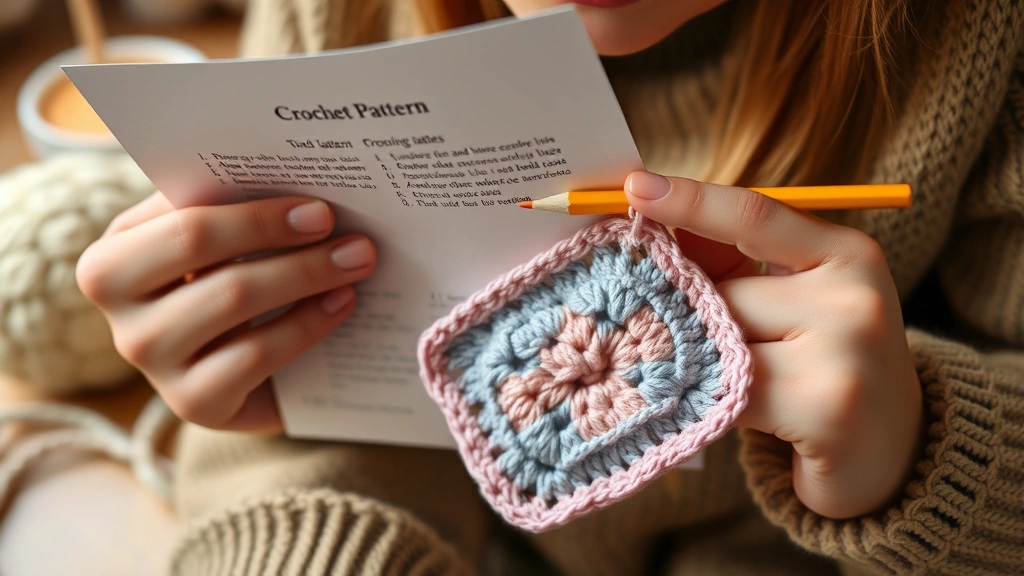
A well-written crochet pattern is like a good recipe – it gives you everything you need to succeed right from the start. The best patterns I’ve worked with always include a comprehensive materials list that goes beyond just “worsted weight yarn.” They specify the exact yarn used (like “Red Heart Super Saver in Soft White”), the yardage needed, and even suggest suitable substitutions.
The hook size should be clearly stated in both US and metric measurements. I can’t tell you how many times I’ve seen patterns that only list “H hook” without mentioning it’s 5.0mm, leaving international crocheters guessing. When working with different hook sizes, this clarity becomes crucial for achieving the right gauge.
Finished measurements are another non-negotiable element. A good pattern tells you exactly how big your finished project will be – not just “baby blanket size” but “approximately 36 inches by 42 inches.” This is especially important when you’re planning gifts or working on home decor items where size really matters.
Pro tip: Always check if the pattern includes both written instructions and charts. Some people are visual learners who prefer charts, while others need the written directions. The best patterns cater to both learning styles.
Stitch counts for each round or row are absolutely essential, particularly for projects worked in the round. I’ve abandoned more patterns than I care to admit because they didn’t include stitch counts, leaving me to guess whether I was on track. When you’re learning how to crochet in the round, these counts become your safety net.
Understanding Pattern Structure and Layout
The way a pattern is organized can make or break your crafting experience. Well-structured patterns follow a logical flow that mirrors how you’ll actually work the project. They start with an overview, move through the setup, then guide you through each section in the order you’ll complete them.
Most patterns begin with a brief description of the project and any special techniques you’ll need to know. This is where you might see notes about starting with a magic ring or working specific stitch combinations. Pay attention to these introductory notes – they often contain crucial information that isn’t repeated in the main instructions.
The instructions themselves should be broken into clear sections. For a blanket, you might see sections for the center motif, border rounds, and finishing. Each section should have a clear heading, and complex sections should be broken into smaller, manageable steps. When patterns jump around or combine multiple techniques in single paragraphs, they become much harder to follow.
Repetition instructions deserve special attention. You’ll often see phrases like “repeat from * to end of round” or “work [dc, ch 2, dc] in next ch-2 space.” The best patterns make these repetitions crystal clear, often using brackets, asterisks, or parentheses consistently throughout.
Decoding Abbreviations and Symbols
Crochet abbreviations can feel like learning a foreign language, but they’re actually designed to make patterns more concise and easier to follow. The key is finding patterns that use standard abbreviations consistently and provide a complete abbreviation list.
Standard abbreviations include ch for chain, sc for single crochet, dc for double crochet, and tr for treble crochet. However, patterns can get tricky when they introduce special stitches or combinations. A good pattern will define any unusual abbreviations clearly. For example, if a pattern uses “shell” to mean “5 dc in same stitch,” it should spell this out the first time it’s used.
International differences in terminology can cause confusion. US patterns use different terms than UK patterns – what Americans call a “double crochet,” the British call a “treble crochet.” Always check which terminology the pattern uses. Most good patterns will state “US terminology” or “UK terminology” right at the beginning.
| US Term | UK Term | Abbreviation |
|---|---|---|
| Single Crochet | Double Crochet | sc (US) / dc (UK) |
| Double Crochet | Treble Crochet | dc (US) / tr (UK) |
| Treble Crochet | Double Treble | tr (US) / dtr (UK) |
Symbol charts use visual representations of stitches, which can be incredibly helpful once you learn to read them. Each stitch has a specific symbol – chains look like ovals, single crochets are X’s, and double crochets are vertical lines with a cross. When working on complex projects like granny square patterns, these visual guides can be much clearer than written instructions.
Gauge and Sizing Information
Gauge is probably the most overlooked aspect of crochet patterns, but it’s absolutely critical for projects where size matters. Your gauge is how many stitches and rows you get per inch with a specific yarn and hook size. Even small differences in gauge can dramatically affect your finished project size.
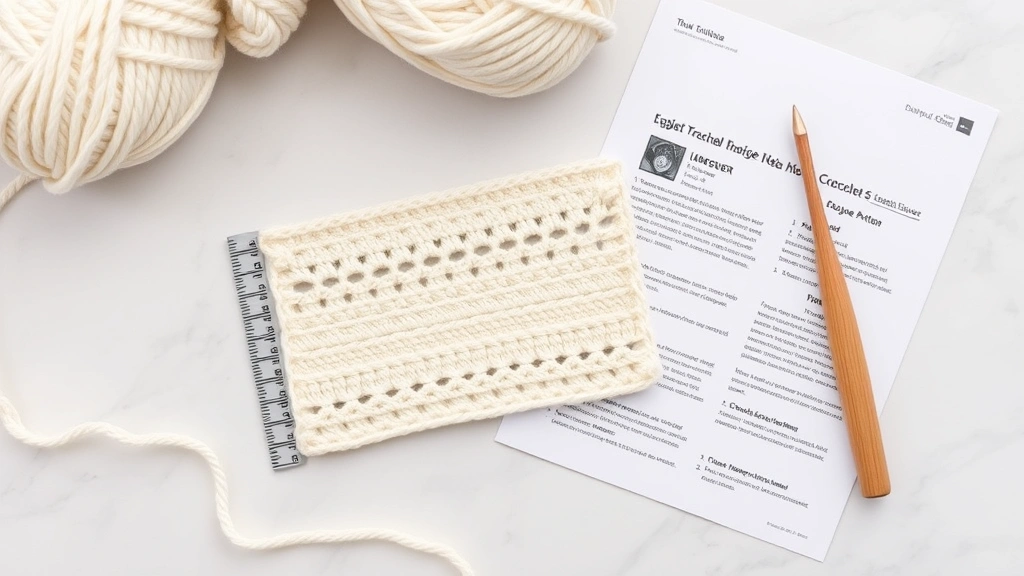
A good pattern provides detailed gauge information, usually measured over a 4-inch square. For example: “Gauge: 16 sc and 18 rows = 4 inches with size H-8 (5.0mm) hook.” This tells you exactly what to aim for. Some patterns also include gauge information for pattern repeats, which can be helpful for lace or textured stitches.
Don’t skip the gauge swatch, even if you’re tempted. I learned this lesson the hard way when I made a sweater that ended up fitting my teenage nephew instead of me. The extra time spent on a gauge swatch is nothing compared to frogging an entire project because it’s the wrong size.
If your gauge is off, try changing hook sizes rather than adjusting your tension. Going up one hook size typically gives you fewer stitches per inch, while going down gives you more stitches per inch.
For projects where exact sizing isn’t crucial, like scarves or dishcloths, gauge is less critical. But for fitted items like sweaters, hats, or blankets with specific dimensions, getting gauge right is essential. When working with chunky yarn projects, even small gauge differences can result in dramatically different finished sizes.
Skill Level and Difficulty Ratings
Skill level indicators help you choose appropriate patterns and set realistic expectations. The Craft Yarn Council has established standard skill levels that most reputable pattern designers use: Beginner, Easy, Intermediate, and Experienced.
Beginner patterns use basic stitches like single crochet, double crochet, and chains. They typically work in simple shapes like rectangles or basic rounds. These patterns are perfect when you’re just learning to crochet and want to focus on mastering basic techniques without getting overwhelmed by complex shaping or stitch combinations.
Easy patterns introduce simple stitch combinations and basic shaping. You might encounter techniques like increasing and decreasing, working in both directions, or simple color changes. The instructions should still be very clear and detailed at this level.
Intermediate patterns assume you’re comfortable with basic techniques and introduce more complex stitches, shaping, and construction methods. You might work with multiple colors, create textured patterns, or tackle more complex construction techniques. These patterns often require you to read charts or follow more complex written instructions.
Experienced patterns use advanced techniques and assume you can problem-solve independently. They might use complex stitch patterns, intricate shaping, or require you to make modifications based on your measurements. The instructions may be less detailed, expecting you to understand concepts like “work even” or “maintain pattern as established.”
Photos, Charts, and Diagrams
Visual aids can transform a confusing pattern into a clear roadmap. The best patterns include multiple types of visual support: progress photos showing key stages, detailed stitch diagrams, and clear charts when applicable.
Progress photos are incredibly valuable, especially for beginners. Seeing what your work should look like after completing round 5 or row 12 gives you confidence that you’re on the right track. Look for patterns that show both close-up detail shots and overall progress views. When you’re working on projects like amigurumi basics, these photos become essential for understanding shaping and construction.
Stitch diagrams use symbols to show exactly how stitches connect to each other. These are particularly helpful for lace patterns, granny squares, or any project with complex stitch relationships. A good diagram clearly shows where each stitch goes and how the pattern repeats.
Construction diagrams help you understand how pieces fit together. For garments, this might show how sleeves attach to the body. For blankets, it might show how motifs connect. These diagrams prevent the confusion that comes from trying to visualize three-dimensional construction from written instructions alone.
If you’re a visual learner, prioritize patterns with good photo support. If you prefer following written instructions, make sure the text is detailed enough to guide you without relying on images.
Color-coded charts can be particularly helpful for colorwork patterns. Different colors or shadings show where to use each yarn color, making complex color patterns much easier to follow than written instructions that say “work 3 stitches in color A, 2 stitches in color B” repeatedly.
Red Flags: What Makes a Pattern Confusing
After years of working with patterns, I’ve developed a sixth sense for spotting problematic ones. The biggest red flag is inconsistent terminology. If a pattern calls the same stitch by different names or uses abbreviations inconsistently, you’re in for frustration.
Missing stitch counts are another major problem. Patterns that don’t tell you how many stitches you should have at the end of each round or row leave you guessing whether you’re making mistakes. This is especially problematic in shaped pieces where stitch counts change with increases and decreases.
Vague instructions like “work even until piece measures desired length” might work for experienced crocheters, but they leave beginners lost. Good patterns provide specific measurements and round/row counts, even if they also mention that you can adjust to your preferences.
Poor organization makes patterns unnecessarily difficult to follow. Instructions that jump back and forth between different parts of the project, or that bury important information in the middle of long paragraphs, create confusion and increase the likelihood of mistakes.
Inadequate materials lists are frustrating and can be expensive. Patterns that don’t specify yarn weight, don’t provide yardage requirements, or don’t mention notions like stitch markers or tapestry needles leave you making multiple trips to the craft store.
Choosing Patterns as a Beginner
When you’re just starting out, pattern selection can make the difference between falling in love with crochet and giving up in frustration. Start with patterns specifically labeled for beginners that use basic stitches and simple construction methods.
Rectangle-based projects like dishcloths or simple scarves are excellent first projects. They let you practice consistent tension and basic stitches without worrying about shaping or complex construction. The repetitive nature helps build muscle memory, and mistakes are easy to spot and fix.
Look for patterns from established designers or reputable sources. Ravelry is an excellent resource where you can read reviews from other crocheters who have made the pattern. Pay attention to comments about pattern clarity, accuracy, and whether the finished size matched the pattern specifications.
Consider starting with patterns that have video tutorials available. Many designers now offer video support for their patterns, walking you through tricky sections or demonstrating special techniques. This combination of written pattern and video guidance can be incredibly helpful when you’re learning.
Choose your first few patterns based on techniques you want to learn, not just the finished product. A simple dishcloth that teaches you proper tension is more valuable than a complex blanket that leaves you confused and frustrated.
Free patterns can be great for beginners, but be selective. Look for patterns from established yarn companies like Lion Brand or Yarnspirations, which typically have good quality control and clear instructions.
Common Questions
How do I know if a crochet pattern is well-written before I buy it?
Look for detailed pattern descriptions that include skill level, finished measurements, yarn requirements with yardage, and hook sizes. Good patterns often show multiple photos and include gauge information. Read reviews if available, and check if the designer or publisher has a good reputation. Patterns from established yarn companies or well-known designers are generally more reliable.
What should I do if I find an error in a crochet pattern?
First, double-check your work to make sure the error isn’t on your end. If you’re confident it’s a pattern error, check the designer’s website or social media for errata (corrections). Many designers post corrections when errors are found. You can also reach out to the designer directly – most are happy to help clarify confusing instructions.
Are free crochet patterns as good as paid ones?
Free patterns can be excellent, especially those from established yarn companies or experienced designers. However, they’re less likely to have been professionally edited or tech edited, so they may contain more errors. Paid patterns often include better visual aids, more detailed instructions, and customer support, but price doesn’t always guarantee quality.
How much yarn do I need if the pattern doesn’t specify?
This is a red flag for a poorly written pattern. As a general rule, simple projects like dishcloths need 50-100 yards, scarves need 300-600 yards, baby blankets need 1000-1500 yards, and adult sweaters need 1200-2000 yards depending on size and yarn weight. Always buy extra – it’s better to have leftovers than to run out mid-project.
What does it mean when a pattern says “work in pattern as established”?
This means continue following the stitch pattern that’s already been set up in previous rows or rounds. For example, if you’ve been alternating single crochet and double crochet stitches, continue that alternating pattern. This phrase assumes you understand the established pattern and can continue it without detailed instructions for every stitch.
Should I always make a gauge swatch?
For projects where size matters (garments, fitted items, blankets with specific dimensions), yes, always make a gauge swatch. For projects where exact size isn’t crucial (dishcloths, scarves, decorative items), you can often skip the swatch. However, swatching helps you get familiar with the yarn and pattern before committing to the full project.
How do I read crochet charts and symbols?
Crochet charts use symbols to represent different stitches, with each symbol showing both the stitch type and where it connects to other stitches. Start by learning basic symbols: chains (ovals), single crochet (X), double crochet (vertical line with one cross). Read charts from right to left for flat pieces, and counterclockwise for rounds. Most patterns include a symbol key explaining what each symbol means.
What’s the difference between US and UK crochet terminology?
The main difference is in stitch names: US single crochet equals UK double crochet, US double crochet equals UK treble crochet, and so on. UK terms are generally one step “higher” than US terms. Always check which terminology a pattern uses – it should be clearly stated at the beginning. Using the wrong terminology will result in a completely different finished size and appearance.
Finding Your Perfect Patterns
Learning to identify well-written crochet patterns is a skill that develops over time, but it’s one of the most valuable things you can learn as a crocheter. A good pattern feels like having an experienced friend guide you through each step, anticipating your questions and providing clear answers before you even think to ask them.
Remember that everyone learns differently. Some people thrive with detailed written instructions, while others prefer visual charts and diagrams. The best patterns often provide both, giving you the flexibility to use whatever method works best for you. Don’t be afraid to try patterns from different designers to find the writing style that clicks with your learning preferences.
As you gain experience, you’ll develop an intuition for spotting quality patterns. You’ll know to look for complete materials lists, clear stitch counts, and consistent terminology. You’ll appreciate designers who include helpful tips and troubleshooting advice, and you’ll learn to avoid patterns with vague instructions or missing information.
Most importantly, remember that crochet should be enjoyable. If a pattern is causing you stress or frustration, it might not be the right pattern for you at this time – and that’s perfectly okay. There are thousands of wonderful patterns out there waiting for you to discover them. Take your time, choose patterns that match your current skill level, and don’t be afraid to challenge yourself when you’re ready for the next step.